



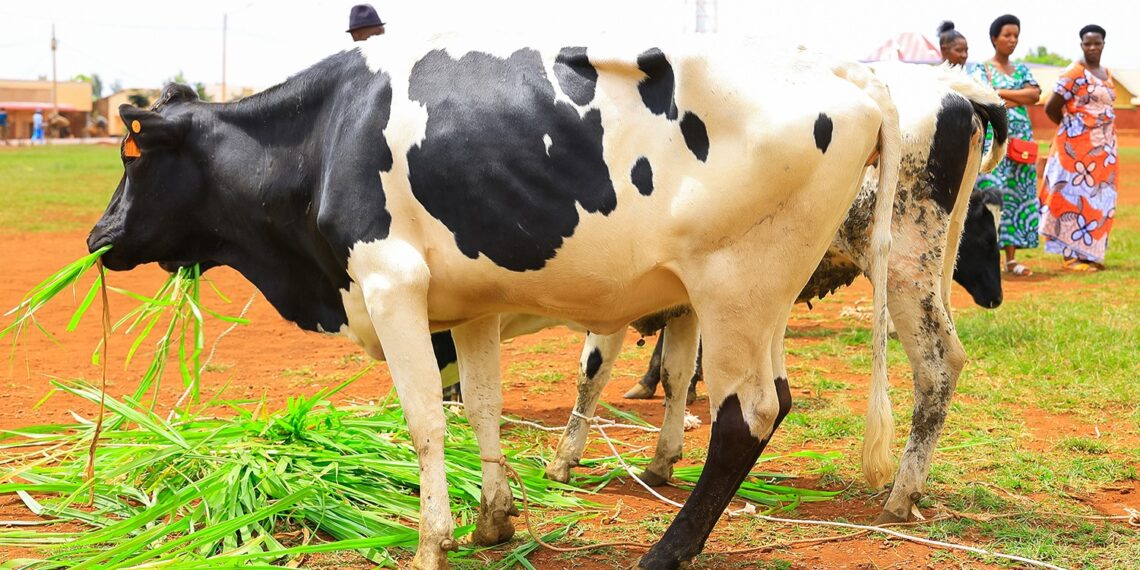
In Kirehe District, 90 families received cows through Rwanda’s Girinka program, also known as “One Cow per Poor Family.” The initiative, run under the RDDPII project in partnership with Heifer International Rwanda, aims to improve nutrition, provide fertilizer, and support local livelihoods.
Cows Delivered Across Three Sectors
On January 14, 2026, officials delivered cows to families in Gahara, Gatore, and Kirehe sectors. Each sector received 30 cows. Beneficiaries expressed excitement, saying the cows would provide milk, improve soil fertility, and help them support neighbors.
Emmanuel Hanyurwimfura, a resident of Nyabikokora Cell, said:
“Receiving a cow has made me very happy. I will take good care of it and use it to support my neighbors. Milk will help fight malnutrition among children.”
Similarly, Verediana Kankera from Gahama Cell added:
“I am thrilled. I have always wanted milk but had no source. Now I can raise this cow properly, share its offspring with neighbors, and ensure my children get nutritious milk.”
District Officials Highlight Economic and Nutritional Benefits
Mayor Bruno Rangira explained that the cows will increase milk production and provide natural fertilizer for farms. Additionally, they will help reduce malnutrition in young children.
He said:
“These cows will boost milk production and improve agriculture. They will also enhance child nutrition by providing essential nutrients.”
Mayor Rangira also noted that district officials closely monitor the program to prevent misuse or corruption.
Progress Towards Annual Goals
The Girinka program started in 2006 to improve nutrition, livelihoods, and economic well-being in Rwanda. For the 2025–2026 year, Kirehe District aims to distribute 631 cows. So far, officials have handed out 461 cows, reaching 73% of the target, with seven months remaining.
The Girinka program continues to help families in Kirehe by giving them sustainable sources of nutrition, income, and agricultural support. Moreover, it strengthens community cooperation as neighbors help each other raise the cows.
SOURCE: MUHAZIYACU
MORE STORIES:
 Apply for clinical role job
 Pi Network: Innovation and Decentralization at the Edge of Web3
 Rwanda Moves to Establish a Social Protection System for Informal Workers
 ByteDance Signs Deal to Prevent TikTok Ban in the United States
Apply for Teaching job at Rwikubo
ByteDance Signs Deal to Prevent TikTok Ban in the United States
Apply for Teaching job at Rwikubo
 The Power of Community: How Pi Network’s GCV Ecosystem Is Redefining Crypto Value
 Pi Hackathon 2025: Fueling Innovation for the Future of Web3
 Pi Network’s Predictive Leap: Redefining Currency, Industry, and Human Purpose
 Alcohol-Related Deaths in Europe
 French Military Evacuates Madagascar’s President Rajoelina Amid Escalating Unrest