

The Rwanda Utilities Regulatory Authority (RURA) has directed all public and private institutions to harmonize their USSD service codes across all mobile networks by February 15, 2026.
The directive aims to simplify access to digital services and reduce confusion among customers who currently struggle to remember multiple USSD codes for similar services.
What Are USSD Codes?
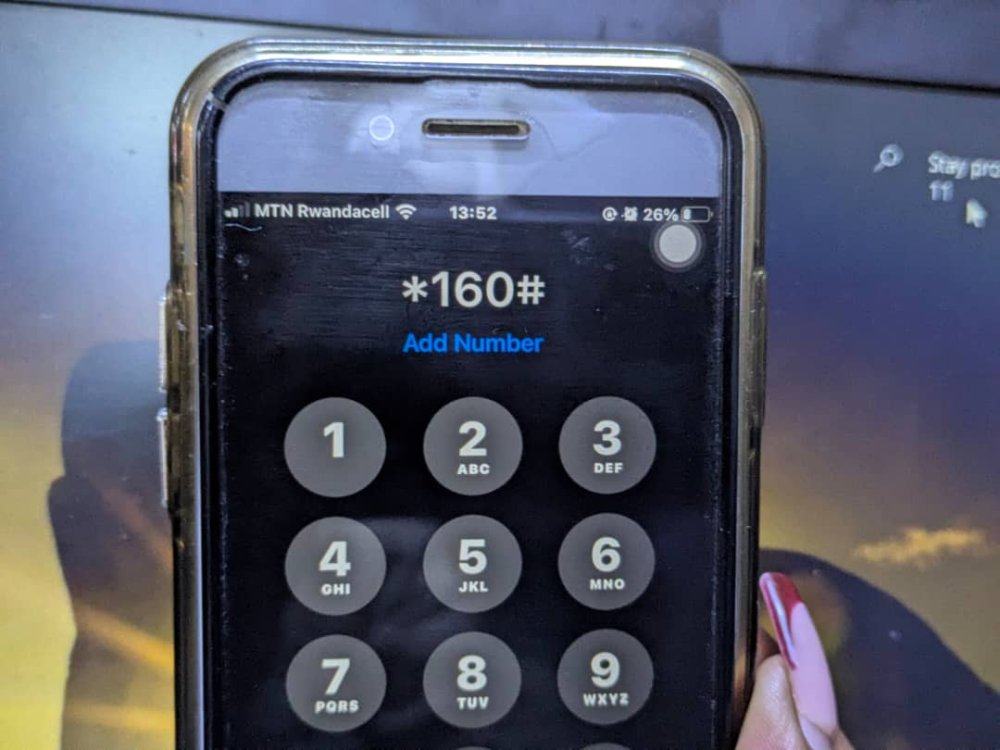
USSD codes, known locally as “star codes,” are short commands that begin with an asterisk (*) and end with a hash (#). They allow users to access services such as mobile money, banking, and payments directly from their phones.
These services do not require internet access and work on all types of mobile phones, including basic feature phones.
Current Challenges for Mobile Users
At present, many USSD codes work only on specific mobile networks. A code that functions on MTN Rwanda may not work on Airtel Rwanda, forcing users to memorize multiple codes or carry more than one SIM card.
For example, *182# is commonly used on MTN Rwanda for mobile money services, while *500# is mainly used for Airtel Money. Using these codes on the wrong network often results in service denial.
The same challenge applies to banking services. Bank of Kigali uses *334#, I&M Bank Rwanda Plc operates *227#, while Equity Bank uses *555#. This variety makes it difficult for customers to remember the correct codes.
New Rules for Telecom Operators
In a statement released on January 14, 2026, RURA announced that all approved USSD codes must operate across every licensed telecom network in Rwanda. These include MTN Rwanda, Airtel Rwanda, and KT Rwanda Network (KTRN).
RURA also stated that any new USSD code must first be integrated into all authorized telecom networks before it is officially launched to the public.
Deadline and Compliance Measures
Institutions that already use USSD codes have been instructed to work with telecom operators to ensure full compatibility across all networks by the February deadline.
RURA emphasized that customers must be informed promptly about these changes. Institutions that fail to comply risk facing penalties, including fines, under Rwanda’s telecommunications laws.
Building on Existing Regulations
Although regulations introduced in 2014 already required USSD interoperability, RURA says the new directive strengthens enforcement to ensure full and consistent implementation.
The regulator believes that harmonized USSD codes will improve service delivery, enhance financial inclusion, and reduce inconvenience for millions of mobile phone users across Rwanda.
MORE STORIES:
 Alcohol-Related Deaths in Europe
 Pi Network: Innovation and Decentralization at the Edge of Web3
 Pi Network Gears Up for Game Changing Announcements at Consensus 2025
 Job Opportunities at National Land Authority
 Rwanda: Education as a Cornerstone for Sustainable Development
 French Military Evacuates Madagascar’s President Rajoelina Amid Escalating Unrest
 Samsung Launches Three-Panel TriFold Phone to dominate Apple and Huawei
 Japan Could Soon Have Its First Female Prime Minister
 Pi Network’s Predictive Leap: Redefining Currency, Industry, and Human Purpose
 Samsung to Invest $73 Billion in AI Semiconductor Development