


Zurich – FIFA
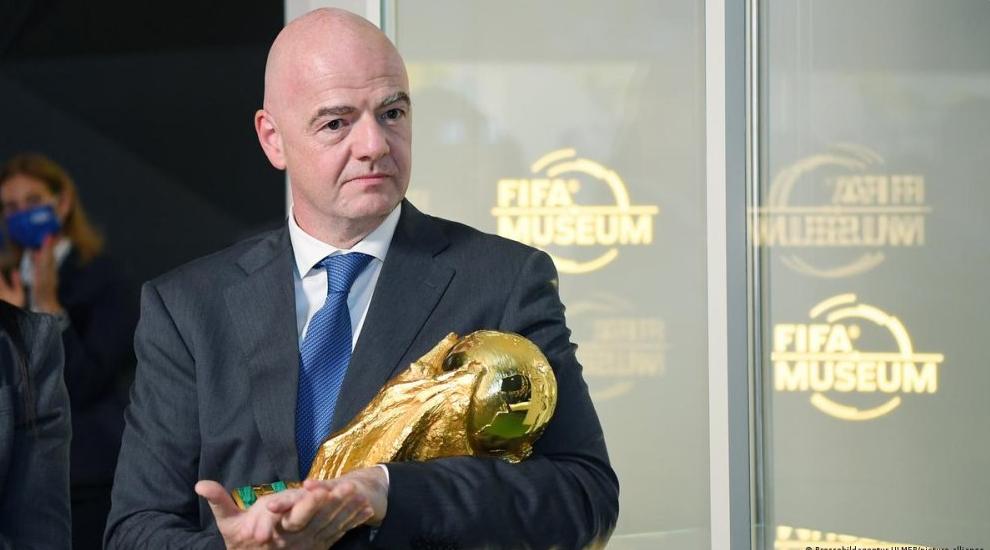
The salary of FIFA President Gianni Infantino has risen sharply over the years and now stands at nearly $6.1 million (about Rwf 8.9 billion) per year, according to an investigation by French newspaper Le Monde.
Infantino’s earnings have increased significantly since he took office in 2016, highlighting how leadership compensation at world football’s governing body has evolved over the past decade.
Salary Has Quadrupled Since 2016
Gianni Infantino was elected FIFA President on February 26, 2016, replacing Sepp Blatter, who left office amid corruption allegations.
At the time, Blatter earned about $1.4 million per year, which is equivalent to roughly Rwf 2.1 billion today. In contrast, Infantino’s income has more than quadrupled due to salary increases and performance-related bonuses.
Breakdown of Infantino’s 2024 Earnings
In 2024, Infantino earned a total of $6.1 million, made up of several components:
- Base salary: $2.9 million
- Performance bonuses: $1.8 million
- Additional incentives: $1.1 million
- Benefits and allowances: $155,000
These payments reflect FIFA’s current compensation structure, which rewards leadership based on tournament performance and financial growth.
World Cup Revenue Boosts FIFA Income
One of the major contributors to FIFA’s financial growth was the 2022 World Cup in Qatar, which generated record revenue.
During that year alone, Infantino reportedly received bonuses worth €1.77 million, as the tournament became the most profitable World Cup in history.
FIFA has since expanded its global competitions and commercial partnerships, further strengthening its financial position.
Eye on the 2026 World Cup
FIFA is currently preparing for the 2026 World Cup, which will be jointly hosted by the United States, Canada, and Mexico.
If the tournament meets financial expectations, Infantino is likely to benefit from additional bonuses. He may also seek re-election in 2027, which would be his final term under FIFA rules.
A Powerful Figure in Global Sports
At 55 years old, Gianni Infantino has become one of the highest-paid executives in international sports governance. His leadership has reshaped FIFA’s commercial strategy, though it continues to attract debate over transparency and executive pay.
As FIFA’s revenues grow, scrutiny over how its leaders are compensated is also expected to increase.
MORE STORIES:
 Cycling: World Number One, Tadej Pogačar, Arrives in Kigali for the World Championships
 Basketball Africa League: A Catalyst for Economic Transformation in Africa
 Businesses Eye Tour du Rwanda 2026 Boom
 AFCON Final Chaos Overshadows Senegal’s Title Win
 Transfer news, Arsenal agree Gyokeres deal; Man Utd in £92m talks; De Bruyne will not play for Man City at Club World Cup
 Senegal vs Morocco Set for AFCON Final
 European transfer Gossip, Lucas and Real Madrid it’s over
 Man United Hold Talks With Trio Over Caretaker Role
 Kagame Highlights Football’s Role in Promoting Peace
 How Al Hilal and Al-Merrikh Could Transform the Rwanda Premier League