




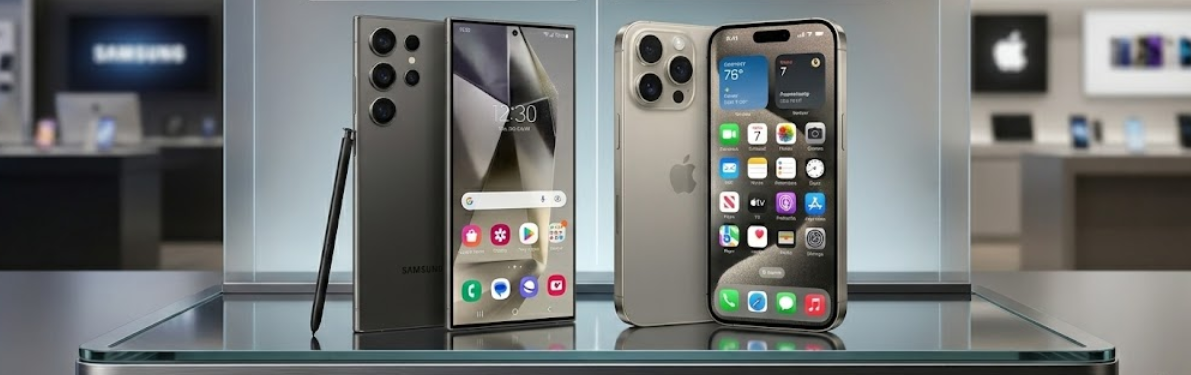
The smartphone camera race continues to intensify. The Samsung Galaxy S26 Ultra and the iPhone 17 Pro Max both deliver flagship-level performance. However, they differ significantly in color science, zoom flexibility, AI editing and low-light processing.
Here is a structured breakdown of how they compare across real-world photography and video use.
Primary Camera in Good Light
Both phones capture excellent detail and dynamic range, meaning they preserve highlights and shadows without losing information.
Samsung applies stronger color processing. Photos look vibrant and contrast-heavy, ideal for users who want bold images ready for social sharing.
Apple takes a more neutral approach. The iPhone preserves natural tones and avoids over-saturation, giving users more flexibility during editing.
The iPhone shoots at 24 megapixels by default, producing sharper crops immediately. Samsung defaults to 12 megapixels unless users enable higher resolution manually. At maximum resolution, Samsung’s 200-megapixel sensor enables extreme cropping while retaining clarity through pixel binning technology.
Verdict in good light:
- Default detail: iPhone advantage
- Extreme cropping flexibility: Samsung advantage
- Color accuracy: iPhone
- Punchy visuals: Samsung
Primary Camera in Low Light
Samsung introduces anti-lens flare coatings that significantly reduce distracting flare artifacts in backlit night scenes. This improves clarity in difficult lighting.
However, the iPhone generally produces sharper and more detailed low-light photos. Samsung sometimes relies on longer shutter speeds, which increases brightness but can introduce motion blur.
The iPhone balances exposure and noise reduction more effectively, producing cleaner textures in bricks, walls and indoor environments.
Low-light winner: iPhone 17 Pro Max
Ultrawide Camera Performance
Samsung clearly dominates in ultrawide photography. Images appear sharper with stronger edge definition and better noise control.
In bright scenes, Samsung handles sky detail better. In low light, the gap widens further. The iPhone’s ultrawide softens noticeably, while Samsung maintains texture clarity.
Macro photography is strong on both devices, but Samsung’s processing gives it a sharper look overall.
Ultrawide winner: Samsung Galaxy S26 Ultra
Telephoto and Zoom Capabilities
This is where Samsung pulls ahead in versatility.
The iPhone includes one 4x optical zoom lens. Samsung offers both 3x and 5x optical zoom, providing more flexibility.
- 2x zoom: Both rely on sensor cropping. Performance is similar.
- 3x zoom: Samsung wins due to dedicated lens.
- 4x zoom: iPhone’s optical zoom performs strongly.
- 5x zoom: Samsung’s optical lens is highly competitive.
In extended zoom under good light, Samsung produces cleaner results at 10x, 40x and even 100x thanks to AI upscaling.
In low light at 10x and 20x, the iPhone produces cleaner, more readable images. Samsung’s AI can over-sharpen and blur fine details like text.
Zoom winner overall: Samsung in daylight, iPhone in low light
Portrait Mode
Both devices perform strong computational edge detection for subject separation.
Samsung’s portraits look brighter and slightly sharper. However, it can clip highlights in bright areas.
The iPhone preserves dynamic range better and delivers more natural skin tones and hair gradients.
Portrait preference:
- Natural look: iPhone
- Sharper look: Samsung
Selfie Camera
Both produce strong selfies.
The iPhone offers a wider field of view, making it better for group shots. It also supports seamless switching between portrait and landscape orientations thanks to its center-stage sensor design.
In low light, the iPhone captures sharper selfies with better noise control.
Selfie winner: Slight edge to iPhone
AI Editing Tools
Samsung leads decisively in AI-powered photo editing.
Its Generative Edit tool removes objects cleanly and allows prompt-based changes, such as altering clothing colors or blending styles. Apple’s Cleanup tool remains more basic.
Apple focuses more on in-camera Photographic Styles for aesthetic customization rather than generative edits.
AI editing winner: Samsung
Video Recording
In 4K at 30fps, both deliver excellent quality. Samsung’s HDR export sometimes introduces a blue tint.
In low light, the iPhone produces sharper and cleaner footage.
Samsung offers 8K recording across multiple lenses, giving more flexibility for cropping in post-production.
Samsung’s Super Steady mode with horizontal lock is highly impressive for action shots. The iPhone’s stabilization remains strong but more traditional.
Audio tools differ as well. Samsung offers Audio Eraser for background removal. Apple provides Audio Mix presets such as In-Frame and Studio.
Video summary:
- Low-light video: iPhone
- Stabilization innovation: Samsung
- 8K flexibility: Samsung
Final Verdict
Both smartphones rank among the best camera systems available.
Choose the iPhone 17 Pro Max if you prioritize:
- Low-light photography and video
- Natural color science
- Cleaner telephoto in dim conditions
- Consistent processing without manual setup
Choose the Samsung Galaxy S26 Ultra if you value:
- Superior ultrawide performance
- Extended daylight zoom flexibility
- Advanced AI editing tools
- 8K recording and stabilization innovation
Neither device disappoints. The difference comes down to whether you prefer natural refinement or feature-packed versatility.
MORE STORIES:
 JOB VACANCY: Relationship Officer at COPEDU
 The Unstoppable Growth of Pi Network: Pioneers Driving the Digital Economy
Enumerators Save the Children
Sales and Marketing Officer job
The Unstoppable Growth of Pi Network: Pioneers Driving the Digital Economy
Enumerators Save the Children
Sales and Marketing Officer job
 CALL FOR APPLICATIONS: HATANA PROGRAM
Primary Teaching job at Kigali International Community School
CALL FOR APPLICATIONS: HATANA PROGRAM
Primary Teaching job at Kigali International Community School
 Scholarship opportunities: Apply and Study at EAUR
Apply for job at GoKabisa
Teaching job for Nursery teacher, Language teacher and Physics & ICT teacher
Scholarship opportunities: Apply and Study at EAUR
Apply for job at GoKabisa
Teaching job for Nursery teacher, Language teacher and Physics & ICT teacher
 Tech Intern – QA engineering (quality assurance and testing)