




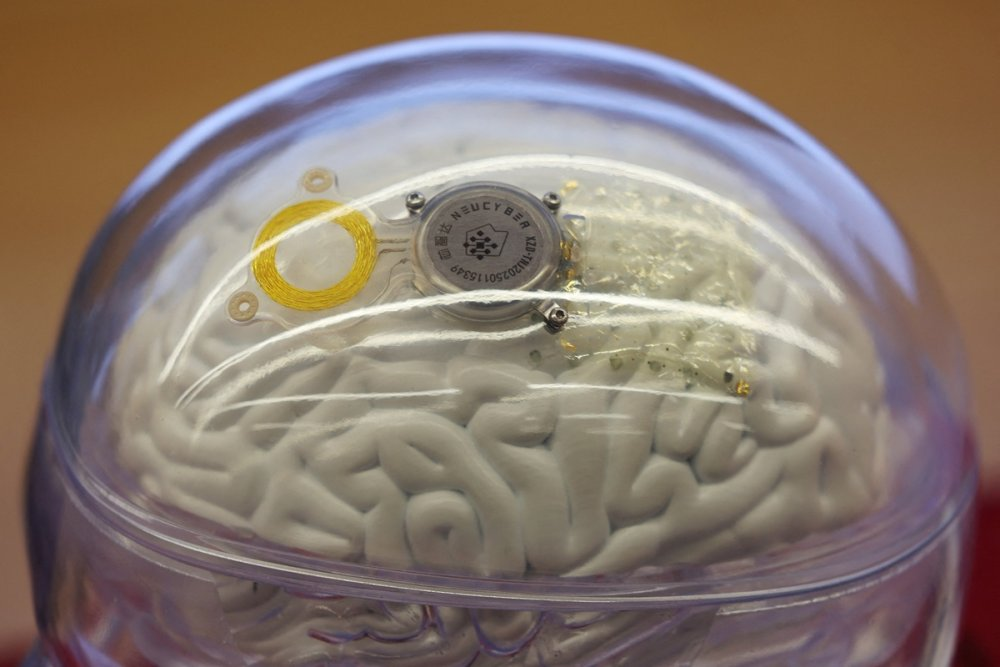
China’s push into brain-computer interface technology is accelerating, even as it remains behind global leaders like Neuralink. A Chinese firm, NeuCyber Neurotech, has acknowledged that its brain chip technology currently lags Neuralink’s by about three years, highlighting the growing global race in neurotechnology innovation.
Neuralink, founded by Elon Musk, has already implanted its fully integrated brain chip in 21 human patients. These devices aim to restore neurological functions and enable direct communication between the brain and computers. In contrast, NeuCyber’s most advanced fully implanted system remains in the animal testing phase, with human trials expected to begin in approximately two years.
Despite this gap, China continues to invest heavily in brain-computer interface development. The country has made notable progress by approving the commercial use of a brain implant designed for patients with spinal cord injuries. This milestone positions China as a key player in the field, even as it works to close the technological gap with Western innovators.
NeuCyber has also developed a partially implanted device that works alongside an external component. The company has already tested this system on seven human patients. Early results show promising outcomes, as some individuals who lost mobility due to accidents regained partial use of their hands within six months. These results suggest that even intermediate technologies can deliver meaningful health benefits.
Looking ahead, the company plans to expand clinical trials to 50 patients within the year. This step could accelerate regulatory approval and increase adoption, especially in China’s growing healthcare technology sector. Government support has also played a critical role, with NeuCyber receiving funding of approximately 200 million yuan, about 29 million US dollars, to advance its research and development efforts.
The rapid progress in this field reflects broader global competition in neurotechnology. Brain-computer interfaces offer significant opportunities in healthcare, particularly for treating paralysis, neurological disorders, and cognitive impairments. At the same time, they raise important concerns around data privacy, ethics, and long-term safety. Questions about how brain data will be stored, protected, and potentially used remain central to ongoing discussions.
As both Chinese and international companies continue to innovate, the next few years will likely determine leadership in this emerging sector. While Neuralink currently leads in human application, China’s aggressive investment strategy and expanding clinical trials could narrow the gap faster than expected.
The evolution of brain chip technology may transform medicine, communication, and human interaction with machines. However, balancing innovation with ethical safeguards will remain essential as the technology moves closer to widespread use.
MORE STORIES:
 Job: Executive Assistant Water Access Rwanda
 North Korea Unveils Hwasong20, Its Most Powerful Missile Yet
Hotel Cleanliness Expert Four Points By Sheraton Kigali
North Korea Unveils Hwasong20, Its Most Powerful Missile Yet
Hotel Cleanliness Expert Four Points By Sheraton Kigali
 Fred Gisa Rwigema: A Hero’s Sacrifice for Rwanda’s Peace
 China Accuses U.S. of Long-Term Cyberattacks on National Time Agency
 Russia Targets WhatsApp in Growing Battle With Foreign Tech Giants
 Grok Admits Security Flaw After AI-Generated Images of Minors Appeared on X
Job opportunities at AB Bank Rwanda Plc
Grok Admits Security Flaw After AI-Generated Images of Minors Appeared on X
Job opportunities at AB Bank Rwanda Plc
 Pi Wallet: Beyond Storage The Cornerstone of Meritocracy and Shield of GCV Stability
 Security Alert: Google Subpoena Scam Targets Users with Sophisticated Phishing Tactics