



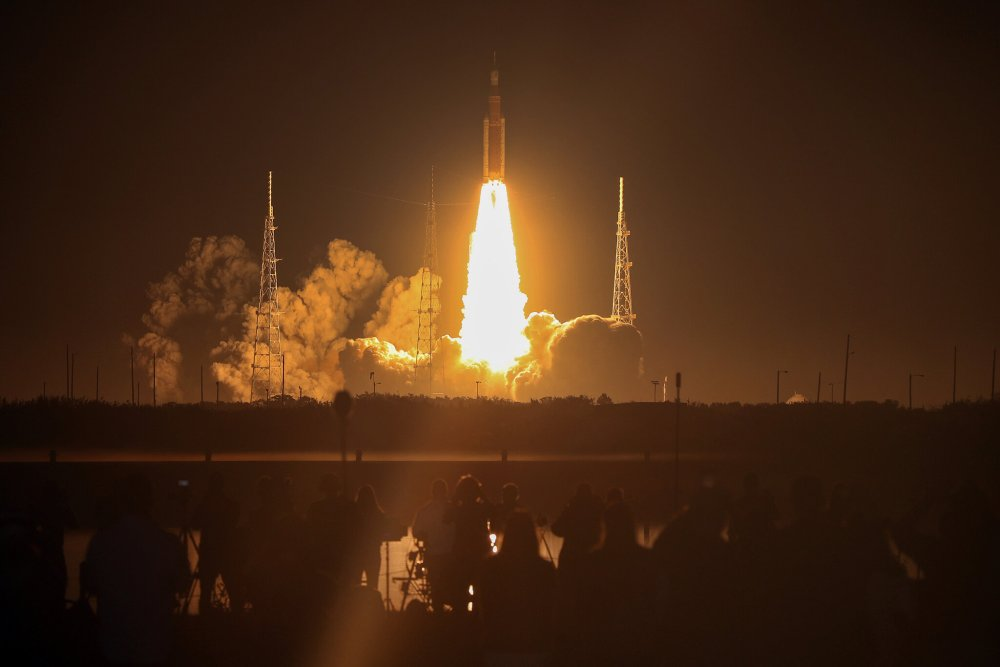
NASA has successfully launched its Artemis II mission, marking a historic step in humanity’s return toward the Moon after more than five decades. The spacecraft lifted off from Kennedy Space Center following a brief delay to resolve technical issues at the launch pad.
The launch took place on April 1, 2026, at 12:35 AM Kigali time. This mission represents the first attempt in 54 years to send astronauts back toward the Moon, signaling renewed ambition in space exploration.
A Journey Powered by Advanced Technology
The spacecraft, one of the most powerful ever built, generated massive thrust equivalent to nearly four million kilograms. It quickly reached speeds of over 16,000 kilometers per hour as it entered space.
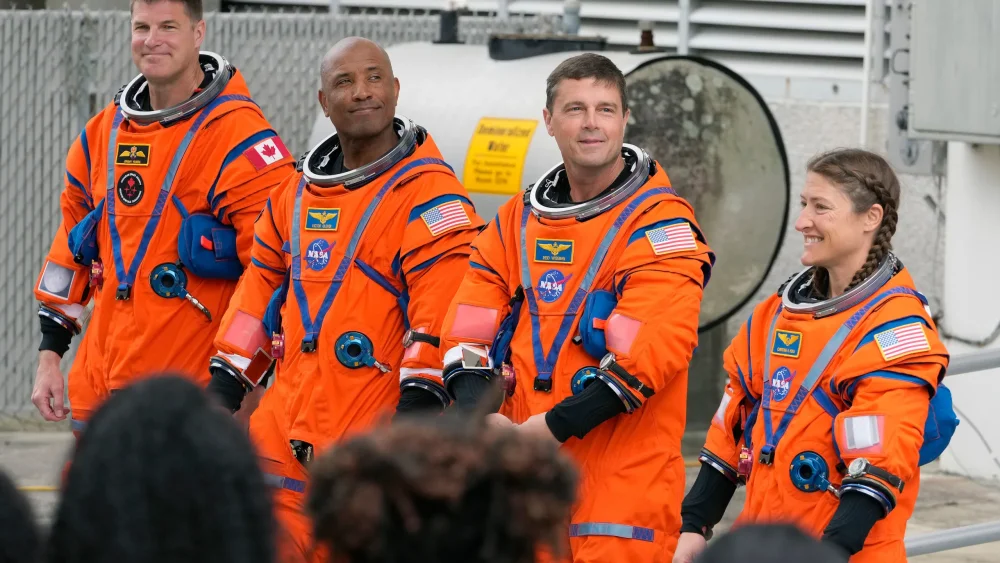
Within two hours of launch, the four astronauts on board safely reached orbit and began observing Earth from space. The crew described the view as breathtaking, highlighting the clarity of continents such as Australia.
Mission Progress and Early Challenges
As the mission progressed, engineers resolved minor technical issues, including temporary communication disruptions and a system alert triggered in the spacecraft’s onboard facilities. Teams addressed these challenges quickly, ensuring mission stability.
During the first 24 hours, the spacecraft completed two orbits around Earth to test critical systems. Astronauts also practiced manual control operations to prepare for future mission scenarios.
Preparing for Lunar Orbit
After initial system checks, the spacecraft will travel approximately 400,000 kilometers from Earth toward the Moon. The mission will last 10 days, with astronauts performing a flyby rather than landing.
As part of the journey, the crew will conduct a backflip maneuver to test docking techniques for future missions. Safety remains a priority, with advanced spacesuits designed to sustain astronauts for up to six days in case of emergencies.
Close Approach to the Moon
Upon reaching lunar orbit, the spacecraft will circle the far side of the Moon at distances between 6,500 and 9,500 kilometers. The astronauts will have about three hours to observe and capture images of the lunar surface.
This phase will provide valuable data for future missions, including potential crewed landings.
Return to Earth and Mission Goals
The return journey will take approximately four days. As the spacecraft reenters Earth’s atmosphere, it will travel at speeds exceeding 40,000 kilometers per hour before landing in the Pacific Ocean.
The Artemis II mission aims to deepen scientific understanding of the Moon and test technologies that will support future exploration.
Global Significance and Future Outlook
The mission highlights a new era in space exploration, with renewed focus on lunar research and long term human presence beyond Earth. Leaders, including Donald Trump, praised the mission team and astronauts for their achievement.
Looking ahead, Artemis II will play a critical role in preparing for future missions that may include lunar landings and eventual journeys to Mars. Success in this mission could accelerate international collaboration and innovation in space technology.
MORE STORIES:
 China Accuses U.S. of Long-Term Cyberattacks on National Time Agency
 Job opportunities at AB Bank Rwanda Plc
 OpenAI Discontinues GPT-4o Over Safety Concerns
Job: Executive Assistant Water Access Rwanda
OpenAI Discontinues GPT-4o Over Safety Concerns
Job: Executive Assistant Water Access Rwanda
 Fred Gisa Rwigema: A Hero’s Sacrifice for Rwanda’s Peace
 Epstein Survivors Demand Full Release of Investigation Files
 MasterCard scholarship for Intake 2
 The Myth of “Hard Work Pays”: Why Effort Alone Isn’t Enough
 Security Alert: Google Subpoena Scam Targets Users with Sophisticated Phishing Tactics
Hotel Cleanliness Expert Four Points By Sheraton Kigali
Security Alert: Google Subpoena Scam Targets Users with Sophisticated Phishing Tactics
Hotel Cleanliness Expert Four Points By Sheraton Kigali
I always look forward to your posts. Keep it coming!
bu konuda bu kadar net bilgiler internette malesef yok bu yüzden çok iyi ve başarılı olmuş teşekkürler.
Yazdığınız yazıdaki bilgiler altın değerinde çok teşekkürler bi kenara not aldım.
hocam gayet açıklayıcı bir yazı olmuş elinize emeğinize sağlık.
Takipteyim kaliteli ve güzel bir içerik olmuş dostum.