



The Science Behind Height Changes
Many people do not notice it, but the human body undergoes small physical changes throughout the day. One surprising example involves height. A person is usually slightly taller in the morning and becomes shorter by the evening.
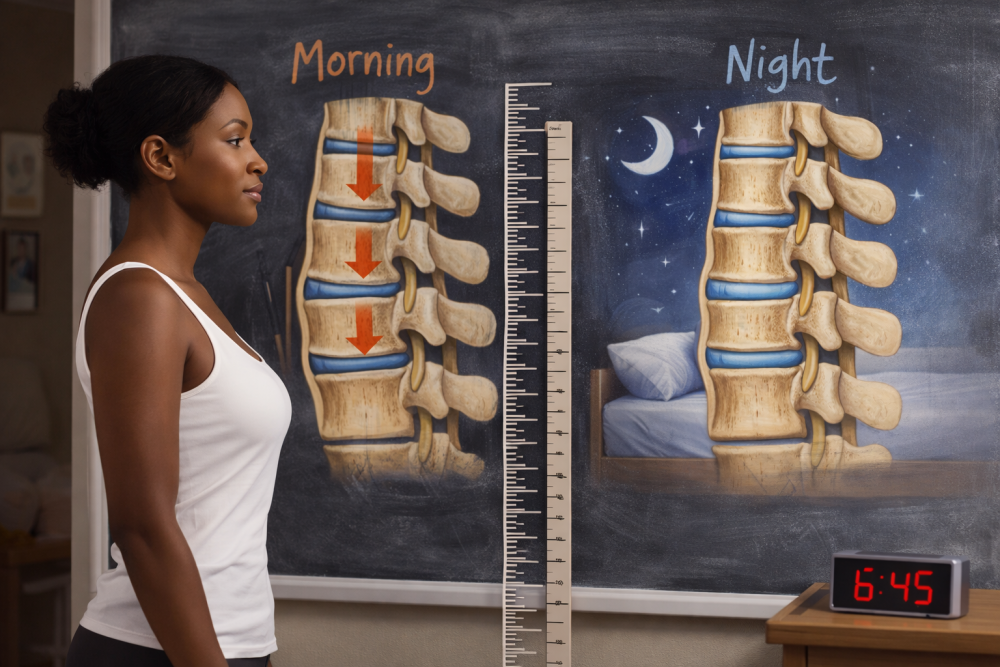
This change happens gravity, which constantly pulls the body downward. As soon as you wake up and stand, this force begins to act on your body, especially on your spine.
How the Spine Responds to Daily Activities
The human spine plays a central role in this process. It consists of small bones called vertebrae. While children have 33 bones in the spine, some fuse as they grow, leaving 24 movable vertebrae in adulthood.
Between these bones are soft discs filled with fluid, known as intervertebral discs. These discs act as cushions and allow flexibility in movement.
During the day, activities such as walking, sitting, and running place pressure on these discs. The upper body weight, combined with gravity, compresses them gradually. As a result, the discs lose a small amount of fluid and become slightly thinner.
Why You Lose Height During the Day
This process, known as spinal compression, causes the spine to shorten slightly. By the end of the day, a person can lose about one to two centimeters in height compared to the morning.
Although the change is small, it is measurable and happens to everyone. The more physically active your day is, the more noticeable the compression can be.
How the Body Recovers Overnight
At night, the situation changes. When you lie down, the pressure on your spine reduces significantly because your body is no longer upright.
Without constant compression, the discs begin to absorb fluid again. This process restores their original shape and size. Scientists refer to this recovery process as osmotic imbibition.
By the time you wake up, your spine has regained its full length, making you slightly taller again.
Implications and Health Insights
This natural cycle highlights how dynamic the human body is. While the height difference is harmless, it can provide insights into spinal health.
For example, excessive compression or poor recovery could signal issues such as back strain or posture problems. Maintaining good posture, staying active, and getting enough rest can support spinal health and reduce discomfort.
Future Understanding of the Human Body
Research into spinal mechanics continues to improve our understanding of human physiology. It also influences areas such as sports science, ergonomics, and medical treatment for back-related conditions.
As scientists learn more, these insights may lead to better ways to protect the spine and improve overall well-being.
Related posts:
 Apple Unveils MacBook Neo: Its Most Affordable Modern Laptop Yet
 OpenAI Secures Data Center Partnership to Power ChatGPT
 Canada Voices Growing Worry It Could Be Next After Trump’s Greenland Signals
 RBC Warns Barefoot Wetland Farmers of Rising Bilharzia Infection Risk
 AI Tutors Reshape the Future of Education
 France Sees More Deaths Than Births in 2025
 AI Mammography Improves Breast Cancer Detection While Reducing Radiologist Workload
 Grok Admits Security Flaw After AI-Generated Images of Minors Appeared on X
 Security Alert: Google Subpoena Scam Targets Users with Sophisticated Phishing Tactics
 How Close Is Rwanda to Becoming Africa’s FinTech Innovation Center?
 NASA Delays Artemis 2 Moon Mission Due to Severe Weather Conditions
 NSO Group Banned from Targeting WhatsApp Users Again
 Russia Targets WhatsApp in Growing Battle With Foreign Tech Giants
 How AI Is Transforming App Creation Through “Vibe Coding”
 Gicumbi Residents Raise Safety Concerns Over Stray Dogs
 Free live TV on mobile devices expands as streaming platforms grow
 Samsung Galaxy S26 series Pricing Rises as Storage Doubles
 Landowners and Communities Push Back Against AI Driven Power Line Expansion
 China and the United States Compete to Build Data Storage Facilities in Space
 OpenAI Discontinues GPT-4o Over Safety Concerns