



Guinea is preparing to send students and researchers to Rwanda to study science and technology, marking a new step in strengthening educational cooperation between the two countries.
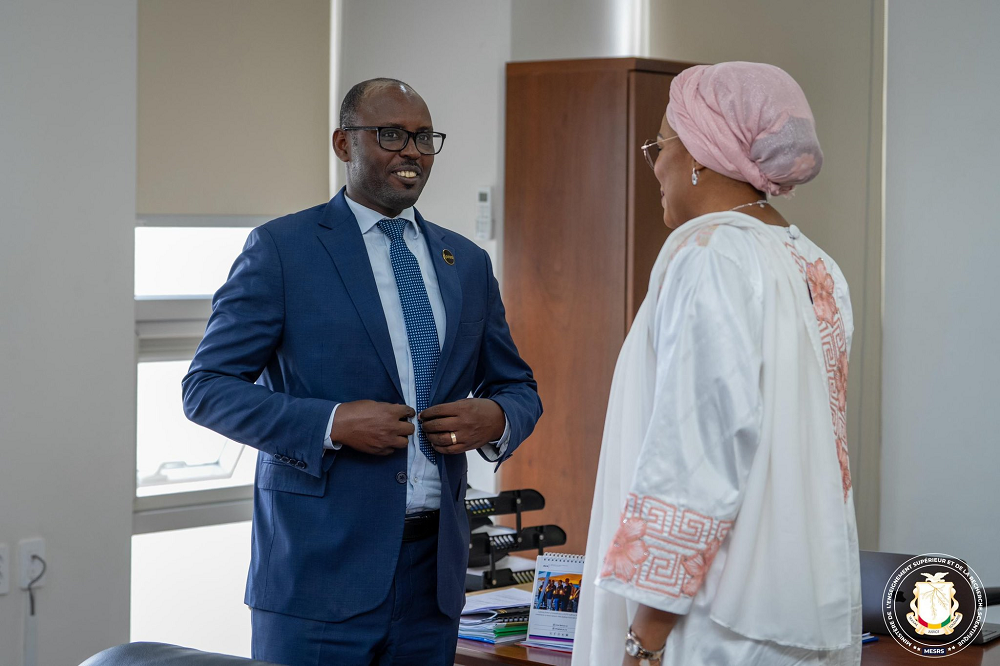
The announcement came from Guinea’s Minister of Higher Education and Scientific Research, Dr. Diaka Sidibé, following an official visit to Rwanda on April 10, 2026. During the visit, discussions focused on building partnerships in higher education and advancing skills in key technological fields.
Strengthening Academic Collaboration
Dr. Sidibé met with leadership from the University of Rwanda, including Vice Chancellor Didas Kayihura Muganga and senior officials from the College of Science and Technology. Their discussions explored opportunities for collaboration through formal agreements aimed at improving education quality and research capacity.
The initiative aligns with Guinea’s broader development strategy under the Simandou Academy program. This program focuses on equipping students, researchers, and educators with skills that support national economic goals.
Focus on Science and Technology
Under the proposed plan, Guinea will send talented students and academics to Rwanda to pursue studies in areas such as science, engineering, data analytics, mining, and technology.
The first group of students is expected to arrive in Rwanda at the beginning of the next academic year. They will join programs at the College of Science and Technology, which has become a regional hub for advanced learning.
Rwanda has invested heavily in education and digital transformation, positioning itself as a leader in technology driven development in Africa. This makes it an attractive destination for countries seeking to build technical expertise.
Opportunities for Both Countries
This partnership presents clear benefits for both nations. Guinea will gain access to quality education and technical training, while Rwanda strengthens its role as a center for academic excellence in the region.
In addition, such collaboration encourages knowledge exchange, innovation, and regional integration. Students trained in Rwanda are expected to return home with practical skills that can support economic growth and industrial development.
Broader Bilateral Cooperation
The education partnership builds on existing cooperation agreements between Rwanda and Guinea. These agreements cover multiple sectors, including agriculture, investment, tourism, energy, and trade.
By expanding collaboration into education and technology, both countries aim to create long term value and strengthen their economic ties.
Challenges and Considerations
While the initiative offers strong potential, its success will depend on effective implementation. Key factors include funding, student selection, and ensuring that acquired skills match Guinea’s workforce needs.
There is also a need to maintain strong institutional partnerships and provide continuous support to students throughout their studies.
Future Outlook
If successfully implemented, this program could serve as a model for regional cooperation in education and technology. Other African countries may adopt similar strategies to build local expertise and reduce reliance on external training systems.
As demand for digital skills continues to rise, partnerships like this will play a critical role in shaping the future workforce across the continent.
Conclusion
Guinea’s decision to send students to Rwanda highlights the growing importance of regional collaboration in education and technology. By investing in human capital, both countries are taking a strategic step toward sustainable development and innovation.
Related posts:
 Rwanda Integrates Unitree G1 EDU U6 Humanoid Robot into Education System
 Rwanda Launches Home-Based Cervical Cancer Self-Screening Program
 Concerns About AI Technology That Could Surpass Human Intelligence
 ByteDance Signs Deal to Prevent TikTok Ban in the United States
 Why Humans Become Slightly Shorter at Night
 SEO Title: Elon Musk Found Liable for Misleading Tweets in Twitter Acquisition Case
 Samsung to Invest $73 Billion in AI Semiconductor Development
 Samsung Launches Three-Panel TriFold Phone to dominate Apple and Huawei
 Airbus Plans to Stop Using Google Cloud Over Data Security Concerns
 France Fines Google and Shein Over 800 Billion Rwandan Francs for Privacy Violations
 How Programming Evolved Into AI Prompts
 AI Device Translates Animal Sounds to Help Humans Understand Their Needs
 China Launches Advanced Satellite to Test High-Level Communications
 Artemis III Mission to Orbit the Moon Marks Major Step in Space Exploration
 Airtel Africa Partners With SpaceX to Expand Satellite Internet Across Africa
 Google Not Required to Sell Chrome or Android, U.S. Court Rules
 Digital platforms reshape how job seekers connect with employers
 WhatsApp to Introduce Stronger Privacy Controls to Protect User Messages
 Meta set to acquire Chinese AI firm Manus in major artificial intelligence push
 OpenAI Accuses DeepSeek of Using Its AI Technology
I just like the helpful information you provide in your articles