


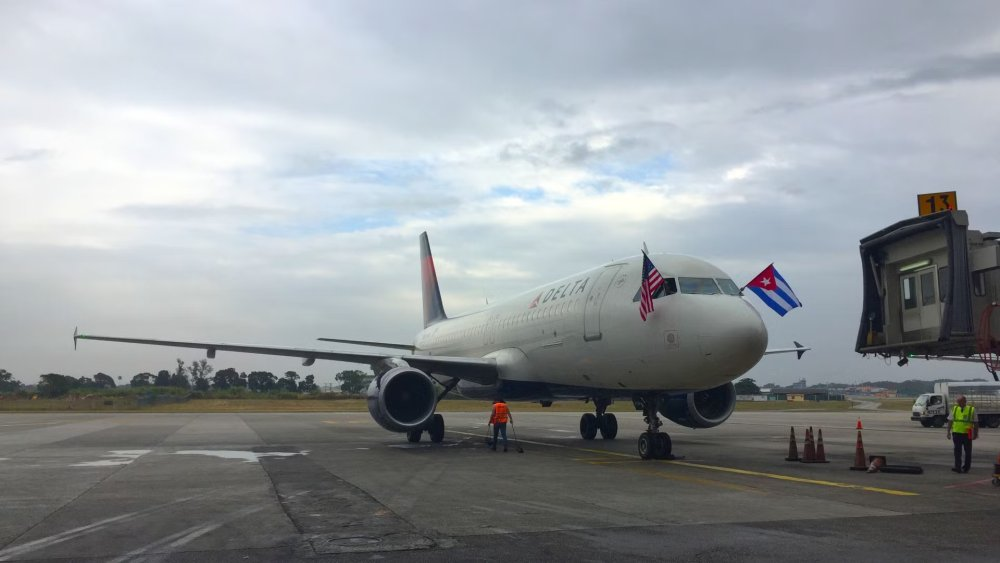
Cuba is facing a growing shortage of aviation fuel after new United States sanctions disrupted petroleum supplies to the island, raising concerns over air transport operations and broader economic stability.
Cuban aviation authorities have warned airlines operating in the country to prepare for serious fuel constraints, with several airports expected to run short of jet fuel in the coming weeks.
Airports Warn of Limited Fuel Supplies
In a notice issued on February 8, 2026, Havana’s José Martí International Airport informed aviation operators that nine airports across Cuba will not have sufficient jet fuel to service aircraft starting February 9, 2026.
According to the statement, the shortage is expected to persist until the end of March 2026, significantly affecting both domestic and international flights.
US Sanctions Target Oil Shipments to Cuba
The fuel crisis follows a decision by US President Donald Trump, who in late January 2026 declared a new national emergency granting Washington expanded authority to penalize Cuba and its trading partners.
Under the new executive order, the United States imposed severe tariffs and penalties on any country or company that supplies petroleum products to Cuba, either directly or indirectly.
The policy is aimed at tightening economic pressure on Havana and discouraging third-party states from assisting Cuba’s energy sector.
Airlines Seek Alternative Refueling Options
Some airlines flying to Havana have attempted to refuel aircraft in neighboring countries, including Mexico and the Dominican Republic, to maintain operations.
However, industry sources warn that this workaround could lead to higher ticket prices, longer travel times, and reduced flight frequency, potentially affecting tourism and passenger mobility.
Economic and Social Impact Feared
Experts caution that if alternative fuel supplies are not secured soon, Cuba could face serious economic disruption, with ripple effects across transportation, tourism, and essential services.
Aviation fuel shortages could also exacerbate existing social and energy challenges, adding pressure to an economy already strained by inflation, power outages, and limited foreign currency reserves.
Washington Cites Security and Ideological Concerns
The US government has justified the sanctions by accusing Cuba of hosting a major Russian intelligence facility, allowing extremist groups to operate within its territory, and promoting communist ideology in Latin America and beyond.
Washington argues that these actions pose regional security risks and conflict with US foreign policy objectives.
Cuban authorities have repeatedly rejected the accusations, describing the sanctions as economic warfare that disproportionately harms ordinary citizens.
As the standoff continues, Cuba’s aviation sector now finds itself at the center of escalating geopolitical tensions.
MORE STORIES:
 The Myth of “Hard Work Pays”: Why Effort Alone Isn’t Enough
 Hotel Cleanliness Expert Four Points By Sheraton Kigali
 MasterCard scholarship for Intake 2
Job opportunities at AB Bank Rwanda Plc
MasterCard scholarship for Intake 2
Job opportunities at AB Bank Rwanda Plc
 Experts Warn on Long-Term Effects of Weight Loss Drugs
 China Accuses U.S. of Long-Term Cyberattacks on National Time Agency
 Russia Targets WhatsApp in Growing Battle With Foreign Tech Giants
Senior Researcher job at KOKO Network
Russia Targets WhatsApp in Growing Battle With Foreign Tech Giants
Senior Researcher job at KOKO Network
 U.S. Launches Largest Offensive against North Korean Cybercrime, Targeting Massive Crypto Heists
 Grok Admits Security Flaw After AI-Generated Images of Minors Appeared on X