




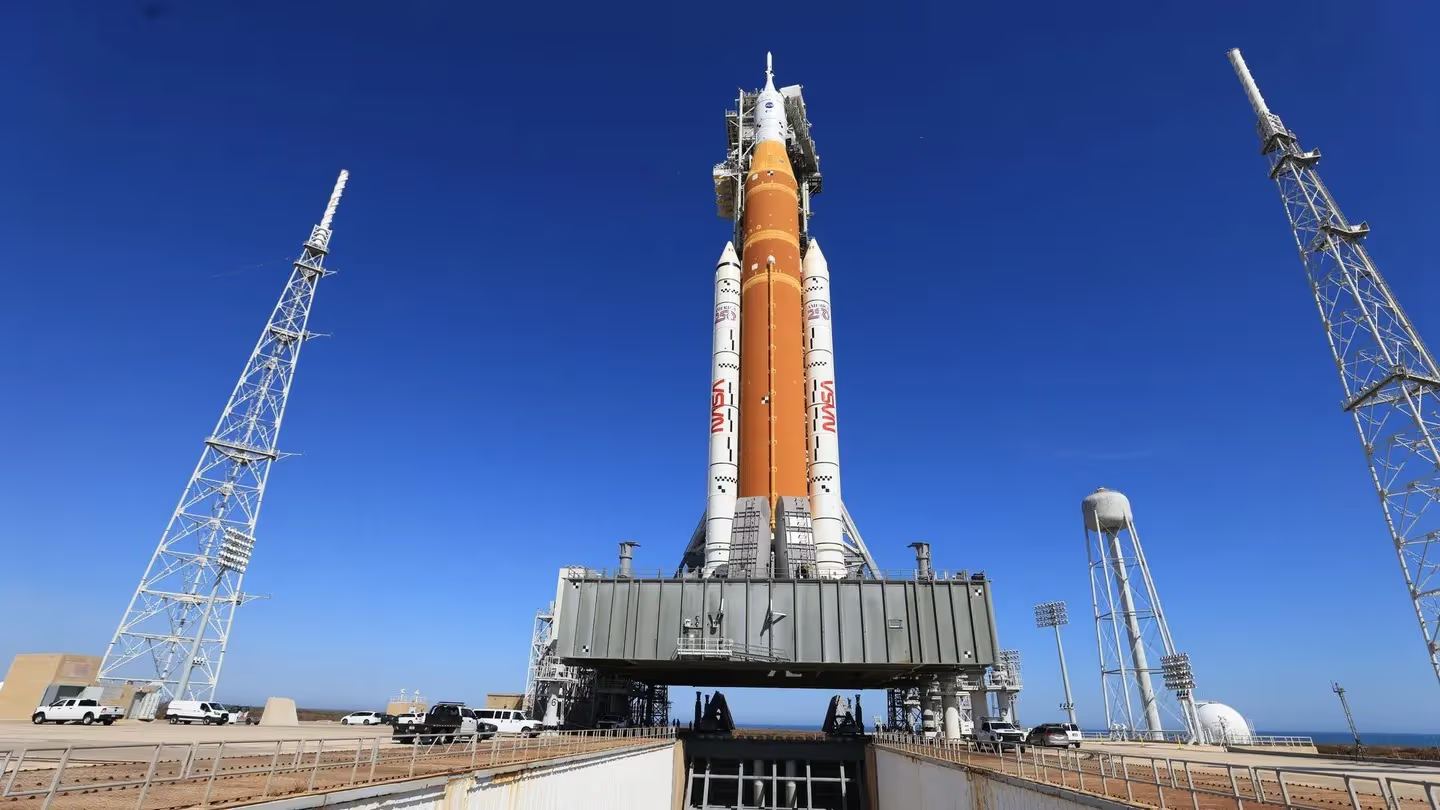
NASA has postponed its Artemis II mission, the first crewed flight around the Moon in more than 50 years, due to a technical issue with the rocket’s helium system. The agency now targets early or late April for the 10-day mission, replacing the previously scheduled March launch window.
NASA Administrator Jared Isaacman said engineers identified a potential fault involving a filter, valve, or connection plate within the system. To inspect and repair the issue, teams must roll the 98-meter Space Launch System rocket back to its hangar at Kennedy Space Center. He confirmed that the March launch window is no longer viable.
First Crewed Lunar Flyby in Decades
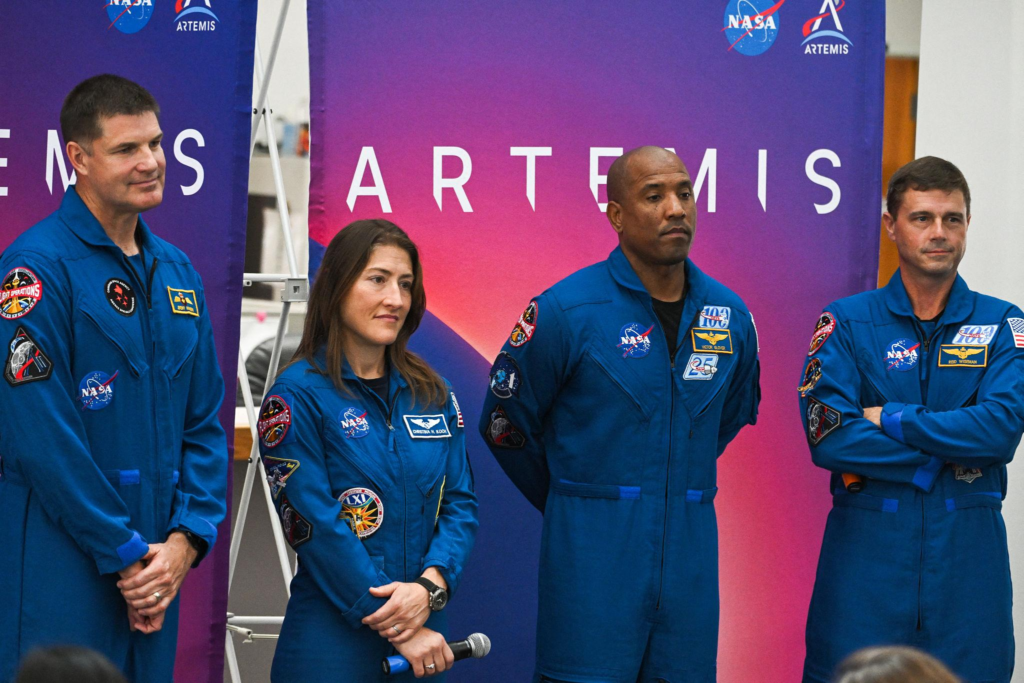
The Artemis II mission will carry four astronauts. The crew includes Americans Reid Wiseman, Victor Glover and Christina Koch, alongside Canadian astronaut Jeremy Hansen.
The spacecraft will orbit the Moon’s far side, a region never visible from Earth. The mission will test life support, navigation, and communication systems that are essential for future lunar landings. Artemis II will mark humanity’s farthest journey into space since the Apollo program ended in 1972.
A Key Step Toward Future Moon Landings
Artemis II serves as a precursor to Artemis III, NASA’s planned return to the lunar surface, currently scheduled for 2028. The Artemis program aims to establish a sustainable human presence on the Moon and prepare for future crewed missions to Mars.
The program has already faced several setbacks. Engineers previously addressed hydrogen fuel leaks and delayed launch rehearsals. A recent wet dress rehearsal under full fueling conditions had cleared the rocket for a potential March launch before the helium issue emerged.
Growing Global Competition
The delay occurs as international competition in lunar exploration intensifies. China has announced plans for a crewed Moon landing by 2030, alongside uncrewed missions starting in 2026.
Despite the new timeline, NASA emphasizes that Artemis II remains critical. The agency views the mission as a necessary step to validate spacecraft systems, crew operations, and mission planning before attempting another lunar landing.
MORE STORIES:
 Why Pope Francis’ Death Leaves Argentina Feeling ‘Orphaned’
 Pi Network’s Bold $314,159 Valuation Signals a New Era for Crypto and Decentralized Trust
 Beyond the Resume: Unveiling the Courageous Journey of Dr Justin Nsengiyumva, The new prime minister of Rwanda.
 Job opportunities: Apply at Rwanda Procurement Coordinator One Acre Fund
 Traoré Attends Moscow’s Victory Day Parade
 Pi Network Soars to 11th in Global Crypto Rankings with $12.8B Market Cap
 Mastercard and Microsoft Team Up to Bring AI Shopping to Consumers
 Pi Network and Web3: Embracing Change in the Crypto Era
Job of Billing and Recovery Accountant at AOS Ltd
Pi Network and Web3: Embracing Change in the Crypto Era
Job of Billing and Recovery Accountant at AOS Ltd
 WhatsApp Starts Testing AI Feature on Android Beta!
deegarciaradio.com trở thành địa điểm giải trí trực tuyến hàng đầu của rất nhiều hội viên trong giới cá cược online bởi mang lại thế giới săn thưởng sự mới mẻ, đặc sắc. 188v com Anh em khi tham gia sẽ được trải nghiệm từng cung bậc cảm xúc khác nhau. TONY03-11O