




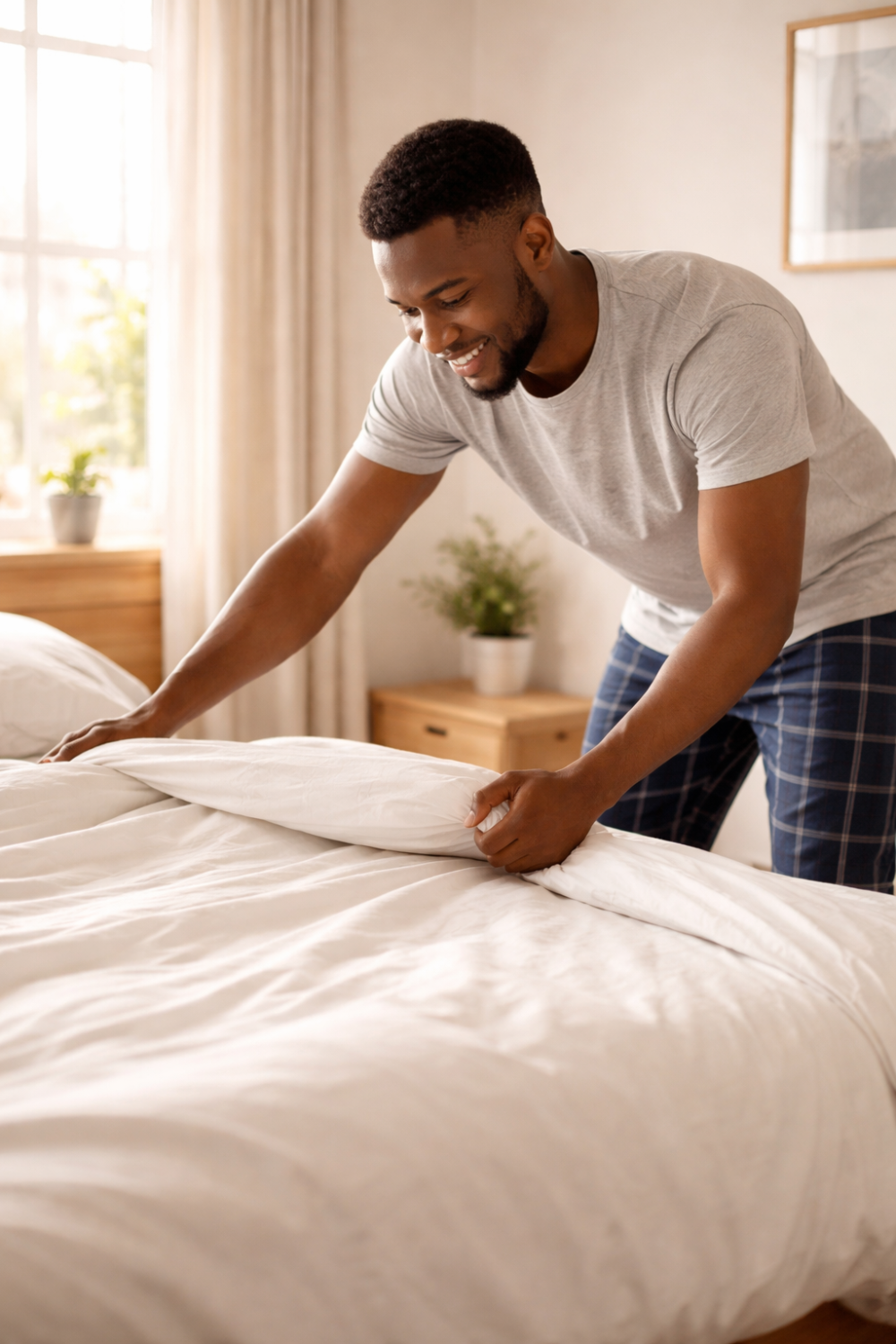
Many people believe that making the bed immediately after waking up is a sign of discipline and cleanliness. However, research suggests that this common habit may unintentionally create a healthier environment for dust mites microscopic organisms that live in bedding.
Even if you sleep alone, you are not the only occupant of your mattress. A typical mattress can host between 100,000 and 10 million dust mites.
What Are Dust Mites and Why Do They Matter?
Dust mites are tiny creatures invisible to the naked eye. They feed on dead skin cells and moisture from sweat released during sleep. While they do not bite, their waste particles can trigger allergic reactions and asthma symptoms.
If your pillow is more than two years old, studies suggest that up to 10% of its weight could consist of dust mites and their debris. Each night, you may unknowingly be exposed to millions of these microscopic organisms.
How Morning Bed-Making Can Trap Moisture
When you wake up, your bedding typically contains moisture from sweat accumulated overnight. If you immediately make your bed, you trap that moisture under the covers.
Warmth and humidity create ideal conditions for dust mites to thrive. By sealing in moisture, you may be encouraging their growth rather than reducing it.
Research indicates that many asthma cases are not solely inherited but may be influenced by environmental factors including bedding conditions.
A Healthier Alternative
Experts recommend waiting two to three hours before making your bed. Leaving your sheets open allows air circulation and sunlight to help dry out moisture, making the environment less hospitable for dust mites.
Additionally, maintaining proper bedroom hygiene is crucial:
- Wash bed sheets and pillowcases at least once a week.
- In humid climates, consider washing them every three days.
- Use hot water when possible to reduce allergens.
- Replace old pillows regularly.
Improving Bedroom Hygiene
Simple habits can significantly reduce dust mite populations:
- Allow natural ventilation in your bedroom.
- Expose bedding to sunlight occasionally.
- Vacuum mattresses and carpets regularly.
- Consider hypoallergenic covers for mattresses and pillows.
Balance Cleanliness With Health
Making your bed is not harmful in itself. However, timing matters. Allowing your bedding to air out before covering it can help minimize moisture buildup and reduce the risk of allergies and asthma symptoms.
A small change in your morning routine may contribute to better respiratory health and a cleaner sleeping environment in the long run.
MORE STORIES:
 Kenya Receives 21,000 Doses of Lenacapavir, a New HIV Prevention Drug
 RBC Warns Barefoot Wetland Farmers of Rising Bilharzia Infection Risk
 Rwanda: 28 Dead, Over 200 Hospitalized After Drinking Toxic Alcohol
 Zimbabwe’s E-Tricycle Crackdown Threatens Rural Women’s Livelihoods
 University Teaching Hospital of Butare to Begin Treating Complex Diseases Including Cancer
 Body Spray, Mist, Deodorant and Perfume: Key Differences Explained
 Why Do People Get Acne?
 Artificial lung keeps patient alive after removal of both lungs
 How Smartwatches Help Detect Hidden Heart Problems
 AI Mammography Improves Breast Cancer Detection While Reducing Radiologist Workload
Pour tout vous dire, je dois dire que j’ai enfin exploré ce
incroyable plinko game après différents commentaires positifs un peu
partout. Il s’agit d’ un moment vraiment sympathique parce que tout coup génère sa dose d’émoplinko casino“>avantage spécial pour maximiser les chances dès le début. D’après mon expérience, le secret consiste à bien piloter sa bankroll au lieu de tenter de trop gagner immédiatement. Je remarque que la variante plinko france demeure bien plus transparente que beaucoup de slots standards. Et vous, quel demeure le meilleur gain le plus haut réalisé ? Pensez-vous que les réglages de volatilité élevé valent sincèrement le coup sur le long terme ?
Wenn ich so zurückblicke, konnte ich mitten in dieser letzten Monaten total viele verschiedene Dinge innerhalb vom Bereich iGaming mitmachen, denn vor allem
die Wandlung bezüglich modernen Seiten bleibt massiv kurzweilig.
Welcher Punkt mir prompt ins Auge springt, stellt dar,
inwiefern sämtliche Ladezeiten aktuell schlichtweg
genial sein sollten, zumal jeder andernfalls schnell die
Geduld beim Zocken einbüßt. Wer oft neue Games checkt, sollte eventuell einen Check auf spinmama casino erfahrungen riskieren, da dort alle spinmama casino review oft ziemlich positiv wirken und
ein spinmama promo code den Spielern tatsächlich einen starken Boost während des Start geben kann.
Der weiterer Faktor wäre dieses Interface, da ohne die gute Logik bringt jeder
spinmama casino login allein wenig so großen Spaß. Ich überlege ehrlich, wie ihr lieber via spinmama online app unterwegs spielt und inwiefern das traditionelle Desktop-Gaming immer noch das Favorit fungiert?
Und auf welche Weise seht man sämtliche aktuellen Regeln im Markt generell?
Dies würde uns wirklich interessieren, sofern wir
an dieser Stelle kurz hinsichtlich dieser Punkte sprechen planen!