




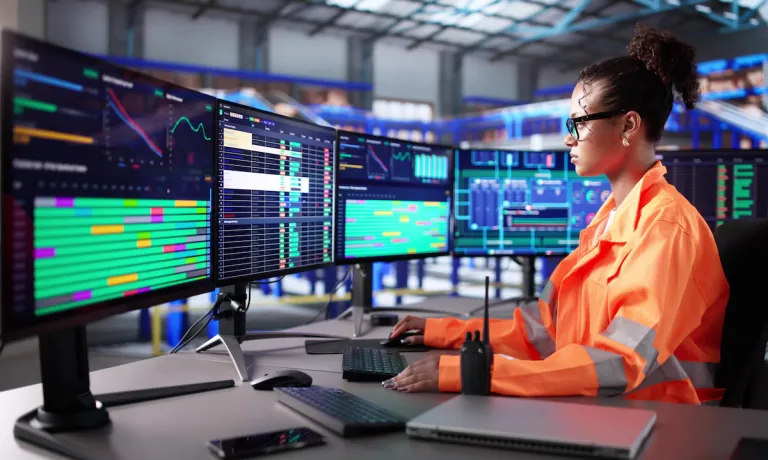
Automation has shaped logistics and manufacturing for decades. The first Automated Storage and Retrieval Systems appeared in the 1950s and introduced machines that could store and retrieve goods efficiently. Over time, warehouses adopted robotic arms, conveyor systems, autonomous forklifts and mobile robots to increase productivity and reduce labor costs.
Today, artificial intelligence is reshaping that model. Instead of focusing only on installing more machines, companies now emphasize intelligent coordination between systems. AI allows warehouses and factories to manage operations dynamically by analyzing large volumes of data.
This shift marks a major change in supply chain strategy. Businesses increasingly ask how intelligent platforms can coordinate workers, robots and logistics flows in real time rather than simply increasing hardware capacity.
Samsung’s Vision for AI Driven Factories
Samsung Electronics recently announced a long term strategy to convert all of its manufacturing facilities into AI driven factories by 2030. The initiative aims to create autonomous production environments where artificial intelligence systems analyze operational conditions and make decisions without human intervention.
According to company leadership, the next stage of manufacturing innovation will rely on systems that understand operational context and automatically select the most efficient actions. This approach allows factories to adapt to supply disruptions, changing demand and global trade uncertainty.
Instead of relying solely on physical automation equipment, Samsung plans to strengthen the data infrastructure that coordinates operations across its production network.
Data Layer Integration Reshapes Warehouse Operations
Modern supply chains now depend on integrated digital ecosystems. Robotics, sensors, analytics platforms and warehouse management software are increasingly connected within unified operational environments.
Samsung’s initiative includes the use of digital twin technology. Digital twins create virtual replicas of manufacturing systems, allowing operators to simulate processes and predict outcomes before implementing changes in the real world.
Specialized AI agents will also monitor production quality, manage predictive maintenance and coordinate logistics flows. These systems analyze operational data continuously to detect inefficiencies or disruptions before they spread across the supply chain.
Warehouse operations are undergoing similar transformations. Computer vision technology allows cameras and sensors to monitor facility activity and track inventory movement. This data provides insights into congestion points, equipment performance and worker safety conditions.
Building Resilient Supply Chains
Data layer integration addresses one of the most persistent problems in logistics, fragmented information systems. Traditional supply chains often store procurement, production and distribution data in separate systems. AI driven integration connects these systems and allows companies to view operations in real time.
Predictive maintenance is one of the most valuable outcomes of this approach. Sensors embedded in machines generate performance data that artificial intelligence systems analyze to predict equipment failures. Companies can repair or replace components before breakdowns disrupt production.
AI also improves operational flexibility. If congestion develops inside a warehouse, automated systems can reroute tasks and rebalance workloads. If suppliers delay shipments, the system can adjust inventory allocations across distribution centers.
Challenges and Future Outlook
Despite strong interest in AI driven automation, companies still face financial and strategic challenges. Global trade uncertainty and tariffs have increased operational risk in many industries. Research shows that around 60 percent of product leaders believe tariff uncertainty limits their ability to invest in automation technologies.
However, most business leaders expect artificial intelligence to become essential for internal operations. Recent industry studies indicate that nearly all product executives believe generative AI will improve workflow efficiency within the next three years.
Samsung’s AI factory strategy reflects this broader shift toward intelligent supply chains. As manufacturing systems become more connected, the competitive advantage will depend less on the number of machines deployed and more on how effectively companies orchestrate data across their operations.
In the coming years, organizations that integrate AI, robotics and real time analytics into unified platforms may gain stronger resilience against disruptions and greater flexibility in global markets.
MORE STORIES:
 Macron India Visit Centers Africa AI Partnership
 Rwanda Seeks Re Election to ITU Council
 Ascent Africa Invests in Clarence AI Platform
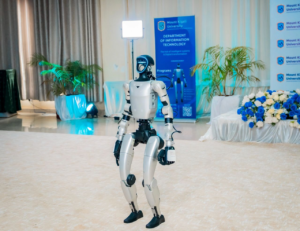 Mount Kigali University Unveils Humanoid Robot for AI Education
 Apple Prepares AI Powered Siri With Agent Like Capabilities
 Intron Expands Sahara AI Speech Platform to 57 Languages
 Google Reports Surge in AI-Driven Cyberattacks by State Hackers
 How AI Tools Work and How to Use Them Effectively
 MTN Forum Urges Women to Shape AI Leadership Not Just Access
 Hidden Workers Behind AI: The Data Labelers’ World
lwxfjr
Chỉ trong 5 năm ngắn ngủi, 66b đăng nhập đã ghi nhận hơn 5,2 triệu người dùng đăng ký trên toàn hệ thống, với mức tăng trưởng trung bình 48% mỗi quý – một con số ấn tượng mà không phải tân binh nào cũng làm được. TONY03-18O
Lovely just what I was looking for.Thanks to the author for taking his time on this one.
WOW judt what I waas looking for. Came ere byy searchhing for