


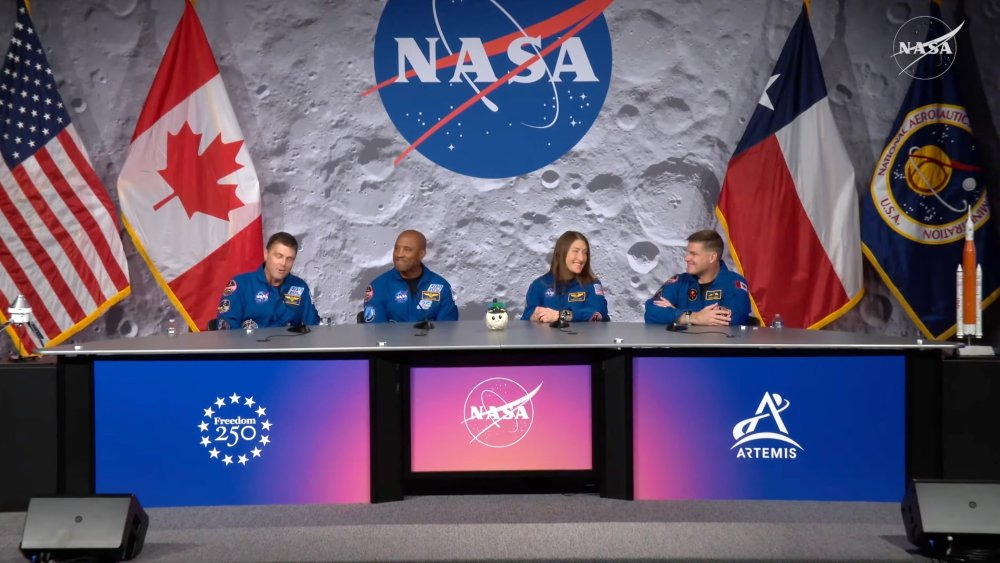
Astronauts from the Artemis II mission have shared detailed insights into their 10 day journey in space, offering a rare look at life beyond Earth. The crew traveled around Earth and reached the Moon’s vicinity, marking a major step in modern space exploration.
During their first press briefing, the astronauts described the mission as both scientifically important and emotionally powerful. They emphasized that the journey strengthened a sense of global unity and inspired people around the world.
Historic Achievements by the Crew
The mission included several historic milestones. Victor Glover became the first Black astronaut to travel this far into space. Christina Koch made history as the first woman to reach that distance, while Jeremy Hansen became the first Canadian to achieve the same milestone.
These achievements highlight growing diversity in space exploration and reflect broader efforts to include more representation in global missions.
Emotional Moments in Space
The astronauts described several emotional experiences during the mission. Hansen said he felt overwhelmed when witnessing a solar eclipse from space at a distance of more than 400,000 kilometers from Earth. He noted that such moments reveal how much remains unknown about the universe.
Koch also shared a personal moment when her husband told her that their journey had brought people on Earth closer together. This message reinforced the mission’s symbolic importance beyond science.
Adjusting Back to Earth
Returning to Earth presented unexpected challenges. Koch explained that after spending time in microgravity, she instinctively expected objects to float. She recalled dropping a shirt and feeling surprised when it fell to the ground instead of hovering.
The crew also shared lighter moments, including how they managed minor technical issues such as a temporary problem with the spacecraft’s onboard facilities.
Confidence in Spacecraft Technology
Despite small challenges, the astronauts expressed strong confidence in their spacecraft, Orion spacecraft. Mission commander Reid Wiseman stated that the spacecraft performed reliably and could have supported a safe lunar landing if required.
This confidence reinforces trust in the systems that will support future missions to the Moon and beyond.
Implications for Future Missions
The Artemis II mission provides valuable data and human experience that will guide upcoming lunar exploration efforts. It also demonstrates that astronauts can operate effectively during deep space missions, which is essential for long term exploration goals.
Opportunities and Challenges Ahead
The success of Artemis II opens new opportunities for international collaboration and scientific discovery. However, challenges remain, including the cost of space missions, technical risks, and the need for continued innovation.
As space agencies and private companies expand their ambitions, maintaining safety and sustainability will be critical.
Future Outlook
Looking ahead, the experiences shared by the Artemis II crew will play a key role in shaping future missions, including potential lunar landings and preparations for Mars exploration.
Their journey not only advances science but also reminds the world of the shared curiosity that drives human progress.
Related posts:
 U.S. Senators Urge Apple and Google to Remove X and Grok
 RURA Orders Standardized USSD Codes Across All Networks
 SpaceX Considers Merger With xAI Ahead of IPO
 Apple Introduces RCS Messaging Support in iOS 26.5 Update
 Trump’s 2028 Space Plan: Ensuring American Space Superiority Amid Global Competition
 Starlink Offers Free Internet Access in Iran
 Tech Giants Agree to Pay for Wikipedia Data
 WhatsApp Starts Testing AI Feature on Android Beta!
 Valentine’s Day 2026: 8 digital safety tips to avoid online scams
 Court Orders Meta and Google to Pay Damages Over Social Media Addiction Case
 Apple Devices That Transformed Global Technology Over 50 Years
 Tesla to Begin Selling Optimus Robots by 2027
 4.3 Million Rwandans Have Gained Digital Literacy
 ChatGPT to Introduce Adult-Oriented Erotic Content
 UGHE Launches Rwanda’s First HD²SS System
 Rwanda invests 300 billion Rwf in towers: A solution to Internet issues
 Rwanda Signs Landmark Deal to Establish Drone Testing and Innovation Center with Zipline
 Flying Cars on the Way: XPeng’s Ambitious Roadmap Wins Over Investors
 How Do Social Media Algorithms Work?
 Rwanda Launches International Cybersecurity Training Center (Cyber Academy)