



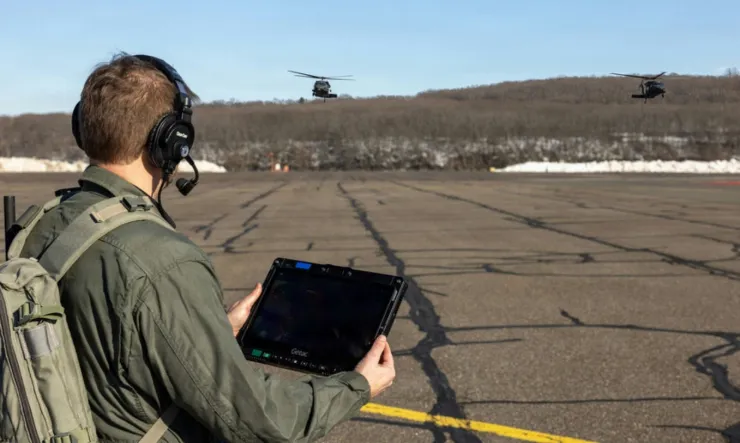
On March 19, 2026, the U.S. Army received its first autonomous-ready H-60Mx Black Hawk at Fort Eustis, Virginia. This helicopter introduces an “Optimally Piloted Vehicle” (OPV). It can fly with a pilot, operate by remote control, or complete missions on its own. The project comes from over ten years of research. The goal is simple: reduce pilot workload, improve safety, and expand mission options. The Army now moves closer to using autonomous systems in daily operations.
ALSO READ: AI Mammography Improves Breast Cancer Detection While Reducing Radiologist Workload
Advanced Technology: MATRIX System and Fly-by-Wire Controls
Sikorsky developed the MATRIX system, which acts as a digital co-pilot. It can control the helicopter from takeoff to landing. Engineers replaced traditional mechanical controls with a fly-by-wire system. This change improves stability and handling, especially in poor visibility. The helicopter works in three modes. Pilots can fly it normally. Ground teams can control it remotely. It can also fly fully on its own. This flexibility makes it useful in many mission types.
From Research to Real-World Deployment
DARPA first developed this technology under the ALIAS program. The goal was to create a system that could fit into existing aircraft. After years of testing, including pilotless flights, the system is now ready for real use. The Army will use the H-60Mx in the SAFE program. This program aims to build a standard autonomy kit for many helicopters. Testing has started at Fort Eustis. Teams will check how it performs in real missions. The Army also plans to use this technology in emergencies like firefighting.
Related posts:
 Skilla Africa Platform Builds Creator Economy for Educators
 Full list of winners at the 2026 Grammy Awards
 Fela Kuti Becomes First African Grammy Lifetime Honoree
 Over 1.8 Million Registered in Rwanda’s e-Ndangamuntu Digital ID Project
 Rwanda High Commission in UK Introduces AI Chatbot to Enhance Service Delivery
 Nicole Kidman and Keith Urban Split After 19 Years of Marriage
 Bad Bunny Makes Super Bowl History as Trump Criticises Show
 Bruce Melodie Reveals How President Kagame’s Name Helped His Music Career Globally
 The 10 Best Places to Travel in 2025
 AI Gender Gap Emerges as Women Show Greater Skepticism Toward Workplace Tools
 Alyn Sano attends NAMM Show 2026 in Los Angeles
 Bad Bunny criticizes ICE during Grammy acceptance speech
 What a Netflix Warner Bros Acquisition Could Mean for the Future of Cinema
 IShowSpeed Plans to Visit Rwanda’s Mountain Gorillas
 Bad Bunny to Star in Film Inspired by Puerto Rican Revolutionary
 Bruce Melodie: The Rise of Rwanda’s Music Icon – Biography, Career, and Achievements
 Platini and Nel Ngabo Shoot Videos in Zanzibar
 Cardi B pregnant with Stefon Diggs’ child, replacing Offset
 Rwanda Introduces New Tender Framework to Prioritize Innovation
 Kenyan Music Stars Bensoul and Nviiri The Storyteller to Perform in Kigali During UCI Road World Championships
I’ll be sharing this with a few friends.
This was incredibly useful and well written.