





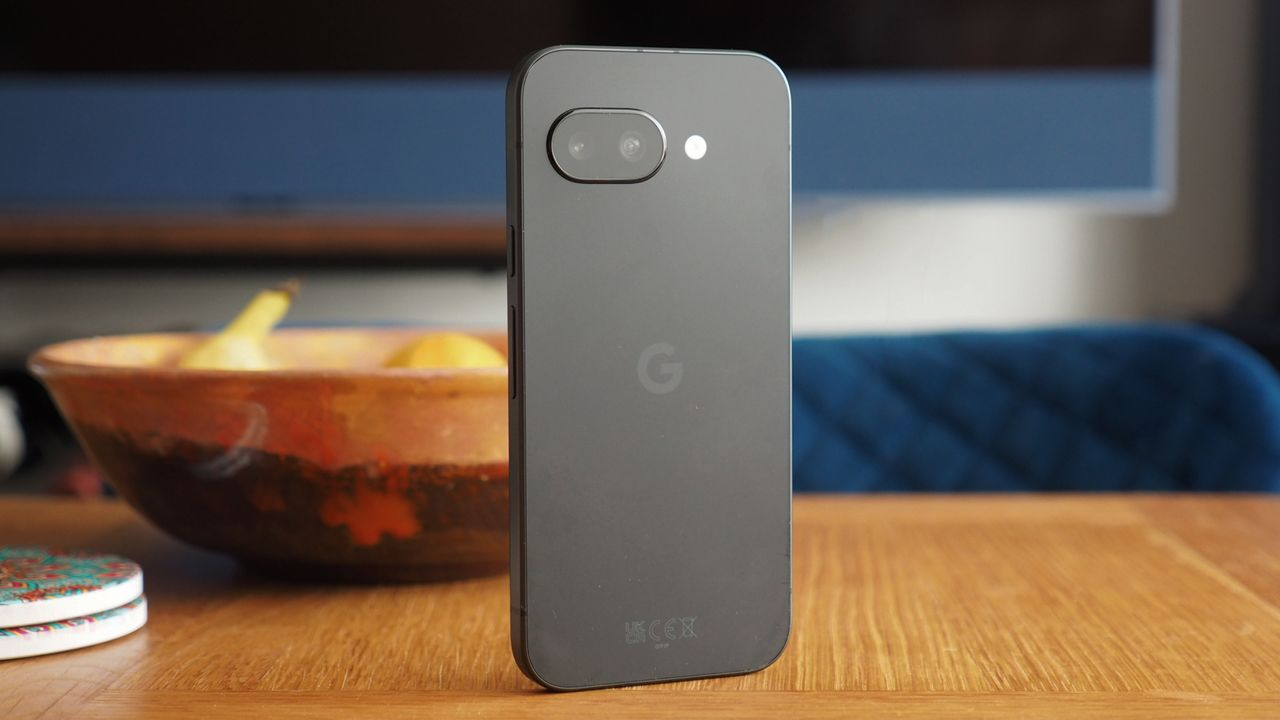
At first glance, the Pixel 10a looks almost identical to the Pixel 9a. That is not an accident. Google chose continuity over reinvention, keeping the same size, shape and overall design language. For many users, that means familiarity and zero learning curve.
The phone remains flat and minimal, with aluminum sides and a plastic back. While some may prefer glass, plastic reduces weight and lowers the risk of shattering. As a result, the Pixel 10a stays durable and practical, especially for budget-conscious buyers.
Interestingly, Google slightly increased the phone’s thickness. This allowed the company to remove the camera bump completely. The dual cameras now sit flush with the back, creating a smoother profile. At the same time, the thicker body accommodates a 5100 mAh battery, ensuring all-day endurance.
Buttons, ports and speaker placement remain unchanged. In addition, the IP68 rating carries over, meaning the device resists dust and can survive water submersion up to 1.5 meters for 30 minutes.
Display: Brighter and Tougher
The Pixel 10a keeps its 6.3-inch display with rounded corners and moderate bezels. However, Google introduced subtle but meaningful improvements.
First, peak brightness increases by about 10 percent, reaching roughly 3000 nits. Consequently, outdoor visibility improves under direct sunlight. Second, the phone now uses Gorilla Glass 7i, which provides better drop and scratch resistance compared to older versions.
The display still supports a variable refresh rate between 60 Hz and 120 Hz. While 60 Hz saves battery by default, users can enable 120 Hz for smoother scrolling and gaming. The resolution remains unchanged, which helps Google maintain stable pricing without sacrificing clarity.
Overall, the upgrades focus on usability rather than headline-grabbing numbers.
Cameras and Core Hardware: No Major Changes
On the back, the Pixel 10a continues with a 48 MP main camera and a 13 MP ultrawide lens. Hardware remains the same, but Google relies heavily on computational photography. Pixel phones are known for strong image processing rather than raw megapixel competition.
Internally, the device runs on the Tensor G4 chip with 8 GB of RAM and 128 GB of base storage. Again, this mirrors the Pixel 9a.
Google’s strategy is clear. Instead of chasing higher benchmarks, it optimizes for AI-powered features and long-term software support. By keeping hardware consistent, the company avoids pushing the price above $499.
Practical Upgrades That Matter
Although the overall formula stays the same, Google made several targeted improvements:
- Peak brightness increased to around 3000 nits
- Gorilla Glass 7i replaces older protection
- Wired charging rises to 30W
- Wireless charging increases to 10W
- Satellite SOS becomes available in select regions
- More recycled materials are used in construction
These adjustments enhance everyday reliability without drastically altering the device.
Software: The Real Pixel Advantage
The Pixel 10a continues to lean on software as its biggest strength.
Powered by the Tensor G4 chip, it includes AI-driven features such as:
- Auto Best Take, which combines multiple group shots into one ideal image
- Camera Coach, offering composition tips
- Call Screening and Hold For Me
- Clear Calling for background noise reduction
- Now Playing for automatic song identification
- Quick Share for fast cross-device file transfers
Perhaps most importantly, Google promises seven years of software and security updates. This long-term support adds value that many competitors cannot match in the same price range.
For many users, these tools create strong ecosystem loyalty.
Missed Opportunities
Despite the improvements, some areas feel conservative.
The base storage remains at 128 GB, which may feel limited in 2026. In addition, the device does not include built-in magnets for Qi2-style accessory alignment. Some buyers may also have expected a newer chip.
However, Google appears to follow the philosophy: if it works, refine it rather than reinvent it.
Final Verdict
The Pixel 10a is not a dramatic upgrade. Instead, it is a refined continuation of a proven formula.
By maintaining the same design, battery and core hardware, Google keeps costs under control. Meanwhile, brighter display performance, stronger glass and faster charging improve daily usability.
At $499, the Pixel 10a remains a strong option for users who prioritize software intelligence, long-term updates and reliable performance over flashy redesigns.
Sometimes, consistency is the feature.
Related posts:
 ChatGPT to Introduce Adult-Oriented Erotic Content
 SpaceX Provides Free Starlink Access During Natural Disasters
 Meta to Shut Down Messenger App on Mac and Windows by December 2025
 Google Not Required to Sell Chrome or Android, U.S. Court Rules
 Amazon to Build 12 Nuclear Energy Plants Similar to Those Planned in Rwanda
 How AI Is Transforming App Creation Through “Vibe Coding”
 Rwanda invests 300 billion Rwf in towers: A solution to Internet issues
 AI Tutors Reshape the Future of Education
 Valentine’s Day 2026: 8 digital safety tips to avoid online scams
 Taking Down “Quackers”: Inside a Global Dark Web Investigation
 Meta to Use Facebook and Instagram User Data to Train Meta AI
 Tesla’s Game-Changing Pi Phone Is Almost Here — Everything CEOs & Innovators Should Know
 SpaceX Considers Merger With xAI Ahead of IPO
 BSC Becomes Authorized Starlink Reseller in Rwanda
 The Most Expensive Phone in the World: A Glimpse Into Ultimate Luxury
 X Launches “About This Account” Feature to Boost Transparency and Fight Fake Profiles
 Security Alert: Google Subpoena Scam Targets Users with Sophisticated Phishing Tactics
 4.3 Million Rwandans Have Gained Digital Literacy
 iPhone 17 Pro: What You Need to Know about iPhone 17 Pro
 AFC/M23 Plans to Establish Telecom Company in Areas Under Its Control