



The Ministry of Justice has launched a new initiative to integrate mental health into the justice system. The programme aims to transform how the sector resolves conflict.
The Ministry partnered with African Peace Partners to roll out the seven-month pilot. The initiative officially launched on December 5 in Kigali.
Training a New Generation of Mediators
The programme will train more than 40 professionals in trauma-informed mediation and restorative justice. In total, 45 participants joined the pilot phase.
They come from the justice, education and healthcare sectors. As a result, the programme brings together diverse expertise to support long-term change.
Rather than focusing only on legal settlements, the initiative promotes deeper social healing. It also supports the implementation of Rwanda’s 2022 Alternative Dispute Resolution Policy.
By doing so, the programme seeks to reduce court backlogs. At the same time, it aims to repair social relationships damaged by historical and collective trauma.
Addressing Root Causes of Crime
Officials said the goal is to ensure mediators address psychological factors behind crime. Instead of stopping at reconciliation ceremonies, they want to tackle underlying emotional triggers.
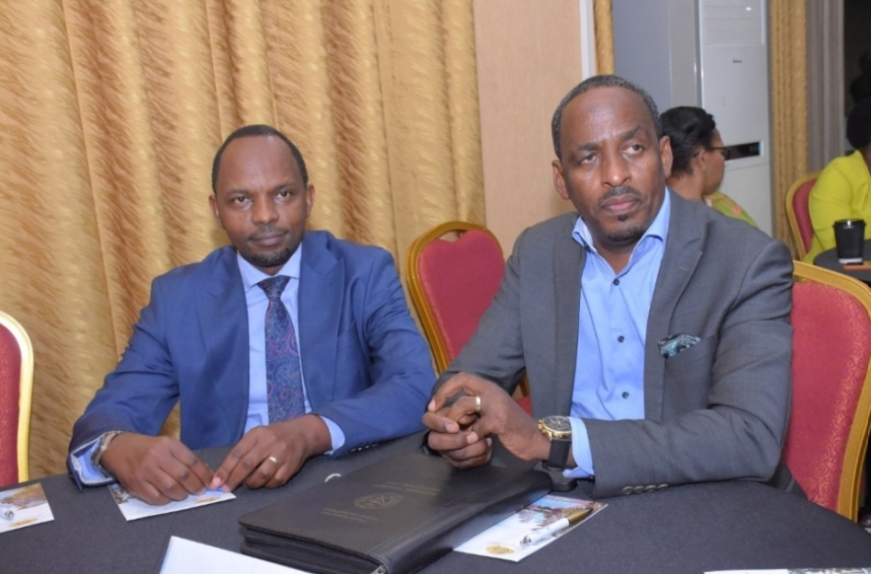
Chantal Mudahogora, a psychotherapist at Solid Mind Clinic, described the initiative as a bridge between healthcare and justice.
She explained that many people entering the justice system struggle with impaired decision-making rather than deliberate wrongdoing.
“Mental health conditions often cause behavioural changes,” Mudahogora said. “In many cases, the individual is not acting freely because the mind is not functioning properly.”
However, she stressed that the approach does not excuse criminal behaviour. Instead, it aims to prevent repeat offences.
By identifying early warning signs, the system can provide follow-up care. Consequently, it reduces the risk of recidivism after sentences end.
Justice Beyond Legal Files
Théophile Mbonera, Permanent Secretary in the Ministry of Justice and Solicitor General, described the training as a continuous learning process.
He said sustainable justice requires understanding the human being behind every case file.
“Effective mediation goes beyond identifying a legal dispute,” Mbonera said. “It requires understanding personal history, trauma and lived experience.”
He added that the programme deliberately includes healthcare and trauma specialists. According to him, mediation is no longer only a legal task.
“Our goal is to ensure that every party feels heard,” he said. “By integrating these skills, we can achieve resolutions that last.”
Returning to Rwanda’s Traditions
Emily J. Gould, co-director of African Peace Partners, said the initiative reflects Rwanda’s historical approaches to justice.
She explained that research showed European-style legal systems often fail to address Rwanda’s unique context. This includes the legacy of colonisation and the 1994 Genocide against the Tutsi.
“Restorative justice is not new to Rwanda,” Gould said. “Communities have always resolved conflicts collectively.”
According to her, the programme blends modern science with cultural wisdom. The aim is to restore social harmony and community cohesion.
Trauma as a Collective Experience
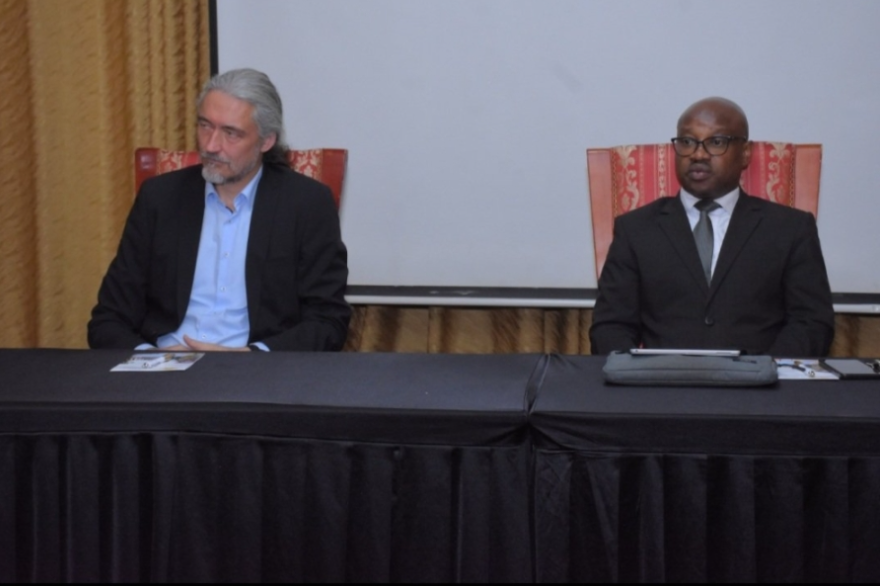
Dr. Thomas Hübl, an international trauma-healing facilitator and co-founder of the Global Restoration Institute, urged a broader view of trauma.
He described trauma as a survival response rather than a disease.
“The nervous system responds to overwhelming situations to protect itself,” Hübl said.
Using the example of physical healing, he argued that societies also have self-healing capacities.
“When we work with that intelligence skillfully,” he said, “communities can reopen pathways to recovery.”
A Shift Toward Human-Centred Justice
Together, officials and experts say the initiative marks a shift toward human-centred justice. By integrating mental health into mediation, Rwanda aims to create a justice system that heals as well as resolves disputes.
If successful, the pilot could shape future reforms across the sector.