


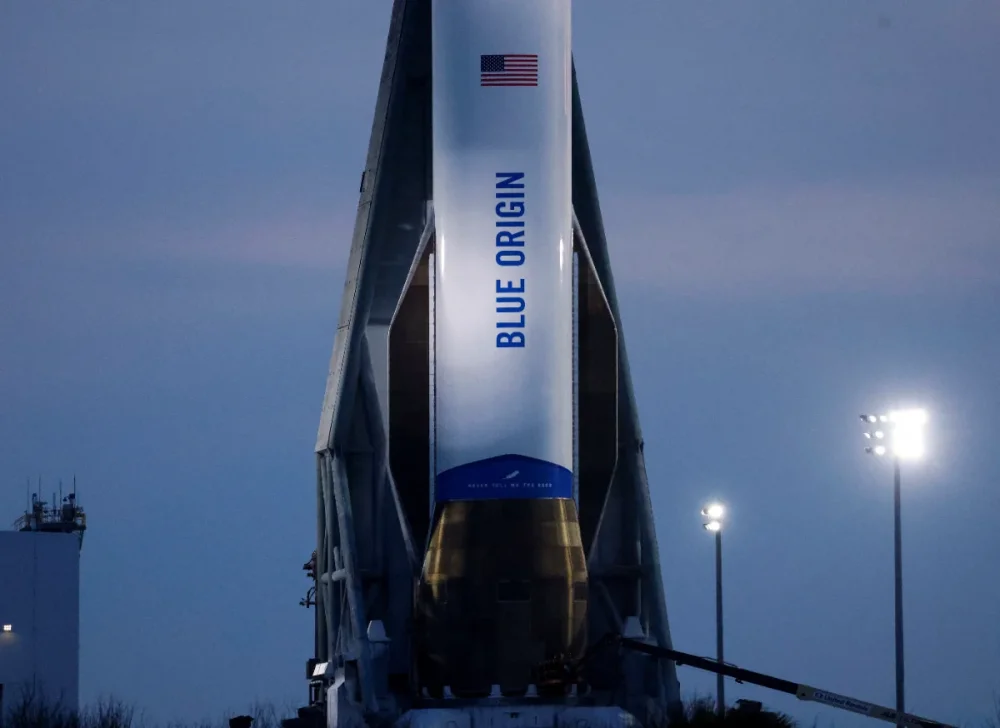
Blue Origin has achieved a major milestone by successfully reusing a booster from its New Glenn rocket. This marks a significant step forward in the company’s efforts to develop cost effective and reusable space technologies.
During the mission, the lower stage booster, which provides the powerful thrust needed for liftoff, completed its role and safely returned to Earth. It landed on a sea based platform about ten minutes after launch, demonstrating precision and reliability.
How the Reusable Booster Works
Large rockets typically consist of multiple stages. The first stage handles the initial launch and separates once it reaches a certain altitude. The second stage then continues the journey, carrying payloads such as satellites or spacecraft into orbit.
In this case, Blue Origin reused a first stage booster that had already flown in a previous mission. This proves that the component can operate more than once, reducing the need to build new hardware for every launch.
The same booster had previously been used during New Glenn’s second mission in November, where it helped deploy two robotic spacecraft for NASA.
Progress and Setbacks in the Same Mission
While the booster reuse marked a breakthrough, the mission also faced technical challenges. The second stage engine, which should have taken over after the first stage separation, failed to perform as expected about an hour into the flight.
As a result, a communication satellite belonging to AST SpaceMobile did not reach its intended orbit. This raises concerns about mission reliability and highlights the complexity of modern space launches.
Implications for the Space Industry
Reusable rocket technology can significantly reduce launch costs and increase the frequency of missions. Companies like Blue Origin aim to compete in a market where efficiency and reliability are critical.
This achievement places Blue Origin closer to rivals that have already invested heavily in reusable systems. However, consistent performance across all rocket stages remains essential for long term success.
Opportunities, Risks, and Future Outlook
The successful reuse of the booster creates opportunities for lower costs and faster turnaround times between launches. This could benefit commercial clients, research institutions, and government space programs.
At the same time, the failure in the second stage highlights ongoing risks. Any technical issue can disrupt missions and affect customer confidence. Blue Origin will need to address these challenges to maintain credibility in a competitive industry.
Looking ahead, the company’s progress shows strong potential. If it improves reliability while expanding reusable technology, it could play a major role in shaping the future of space exploration and satellite deployment.
Related posts:
 Rwanda Signs Landmark Deal to Establish Drone Testing and Innovation Center with Zipline
 Apple Introduces RCS Messaging Support in iOS 26.5 Update
 Starlink Offers Free Internet Access in Iran
 Flying Cars on the Way: XPeng’s Ambitious Roadmap Wins Over Investors
 Tech Giants Agree to Pay for Wikipedia Data
 Trump’s 2028 Space Plan: Ensuring American Space Superiority Amid Global Competition
 WhatsApp Starts Testing AI Feature on Android Beta!
 Rwanda Launches International Cybersecurity Training Center (Cyber Academy)
 Apple Devices That Transformed Global Technology Over 50 Years
 Rwanda invests 300 billion Rwf in towers: A solution to Internet issues
 SpaceX Considers Merger With xAI Ahead of IPO
 4.3 Million Rwandans Have Gained Digital Literacy
 Court Orders Meta and Google to Pay Damages Over Social Media Addiction Case
 U.S. Senators Urge Apple and Google to Remove X and Grok
 ChatGPT to Introduce Adult-Oriented Erotic Content
 Tesla to Begin Selling Optimus Robots by 2027
 Valentine’s Day 2026: 8 digital safety tips to avoid online scams
 UGHE Launches Rwanda’s First HD²SS System
 RURA Orders Standardized USSD Codes Across All Networks
 How Do Social Media Algorithms Work?
excellent publish, very informative. I’m wondering why the other experts of this sector do not understand this.
You must proceed your writing. I’m confident, you have a great readers’ base already!
I’ll immediately take hold of your rss as I can’t to find your email subscription hyperlink or newsletter service.
Do you’ve any? Kindly permit me understand in order that I could subscribe.
Thanks.
I love how clearly you explained everything. Thanks for this.
Hello to every body, it’s my first pay a quick
visit of this webpage; this weblog consists of
remarkable and truly excellent information in favor of readers.