


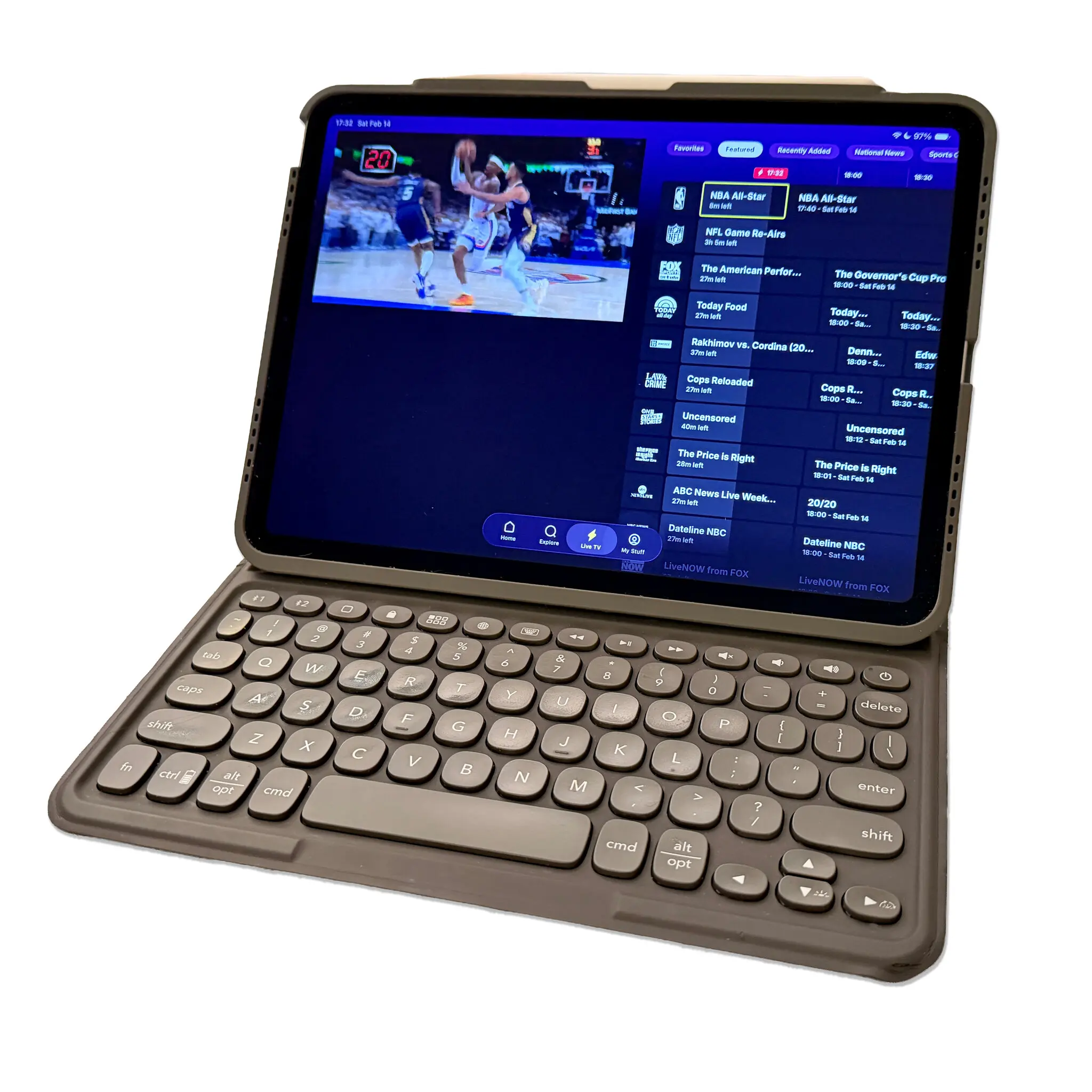
Watching live television on smartphones and tablets has become easier as digital streaming platforms and free ad supported services continue to expand. Consumers who want access to live news, sports, and entertainment no longer need a traditional cable subscription. Instead, a wide range of mobile apps and broadcast technologies now offer budget friendly ways to watch television anywhere.
Industry analysts note that the shift reflects broader changes in the media sector. Audiences increasingly consume content through mobile devices rather than traditional televisions. As a result, media companies and technology platforms continue to introduce new services that deliver live channels through apps, streaming platforms, and even digital antennas.
Cable alternatives also offer mobile viewing
Many viewers who have already replaced traditional cable television with streaming bundles can access live channels on their phones or tablets. Services such as YouTube TV, Hulu + Live TV, DirecTV, Dish Network, Sling TV, and Philo allow subscribers to watch programming through dedicated mobile apps.
Users simply download the relevant application and sign in using their account details. Once logged in, they can stream live broadcasts through Wi Fi or cellular data connections. This feature allows subscribers to watch news coverage, sports events, and entertainment programming while traveling or commuting.
Although these services still require monthly subscriptions, they offer greater flexibility compared with traditional cable packages.
Streaming platforms introduce free live channels
At the same time, several major technology companies have begun offering free television streams supported by advertising. These platforms fall under a category known as Free Ad Supported Streaming Television, commonly referred to as FAST.
FAST services provide a selection of live channels alongside movies and television series. The content typically includes classic shows, older films, and curated channels focused on specific topics such as news, sports, or entertainment.
Among the most widely used platforms are Pluto TV, Plex, The Roku Channel, Tubi, and Xumo Play. Many of these services allow viewers to start watching without creating an account or providing payment details.
Another option comes from Amazon Prime Video, which offers a Live TV section featuring hundreds of channels, including regional news stations across the United States. Some of this content previously appeared on Amazon’s former FreeVee platform, which the company later integrated into its main streaming service.
For households with children, several platforms also provide dedicated family programming sections. Apps such as PBS Kids Video and Sensical offer free educational and entertainment content designed for younger viewers.
News apps provide real time updates
Viewers who primarily want access to breaking news may also rely on apps developed by television networks and local stations. Many broadcasters now operate their own streaming services that deliver live news coverage directly to mobile devices.
This approach helps media organizations reach audiences who no longer rely on cable subscriptions. It also allows viewers to stay informed about current events while away from traditional television sets.
Antennas and tuners remain an alternative
Despite the rapid growth of digital streaming services, traditional broadcast signals remain available through antennas. Some consumers continue to use this method because it provides free access to local television channels.
Technology companies have developed tools that allow users to combine antenna signals with mobile streaming. Applications such as Channels App and Tablo DVR connect home antenna systems to mobile devices through internet networks. This setup allows viewers to watch live broadcasts from their phones or tablets.
In situations where internet access becomes unavailable, small mobile TV tuners may still capture broadcast signals directly. Products such as the MyGica A.T.S.C. Digital Mobile TV Tuner and the GTMedia HDTV Mate A.T.S.C. 3.0 Tuner Stick connect to certain Android smartphones or tablets through USB ports.
These devices rely on the ATSC digital broadcast standard, developed by the Advanced Television Systems Committee, which governs over the air television signals in the United States.
However, compatibility varies widely across devices and regions. Some tuners work only with specific Android phones and may not support products made by certain manufacturers. Apple devices typically do not support these external tuners.
Opportunities and challenges in mobile television
The rapid expansion of mobile television reflects broader trends in digital transformation across the media industry. As smartphone adoption continues to rise worldwide, streaming platforms increasingly compete to capture audiences who prefer flexible viewing options.
Free ad supported streaming services have emerged as a key growth area. These platforms generate revenue through advertising while allowing viewers to access content without subscription fees. Analysts expect FAST services to expand further as media companies search for new ways to distribute content.
Nevertheless, the model also raises several challenges. Advertising interruptions remain unavoidable on most free platforms, and some services collect viewing data to deliver targeted ads. Consumers therefore face tradeoffs between convenience, privacy, and content availability.
Looking ahead, improvements in mobile networks and broadcast technology could further transform how audiences access live television. As 5G connectivity expands and streaming infrastructure improves, mobile viewing may become the dominant way people watch live news and entertainment worldwide.
Related posts:
 National Bank Reports Drop in Digital Payment Fraud Cases
 China’s 16-Ton Jiutian Drone Completes Historic First Flight
 Taiwan suspends RedNote for one year
 Nvidia Invests $1B in Nokia to Boost AI-Driven 6G
 Solar Storms Could Disrupt Satellite and GPS Operations
 Taking Down “Quackers”: Inside a Global Dark Web Investigation
 Google Launches Live Translation Feature for Real-Time Multilingual Conversations
 TikTok US entity deal finalized to avoid ban
 Rwanda Coding Academy (RCA) to Expand Across the Country to Boost Rwanda’s Tech Ambitions
 WhatsApp Plans Advertising Rollout with Optional Paid Subscription
 Scientists Discover Massive Mysterious Rock Beneath the Bermuda Triangle
 NASA Delays Artemis II Moon Flyby to April After Rocket Issue
 Rwanda: Small and Medium Enterprises Unlocking New Opportunities Through Technology
 Tesla’s Game-Changing Pi Phone Is Almost Here — Everything CEOs & Innovators Should Know
 Spotify Invests $10 Billion to Boost Artist and Podcast Monetization
 SpaceX and xAI Join Forces in Elon Musk’s Plan to Build AI Data Centers in Space
 You must have these 5 apps in your phone 2025
 SpaceX Provides Free Starlink Access During Natural Disasters
 iPhone 17 Pro: What You Need to Know about iPhone 17 Pro
 Apple Acquires Israeli AI Audio Startup Q.ai