




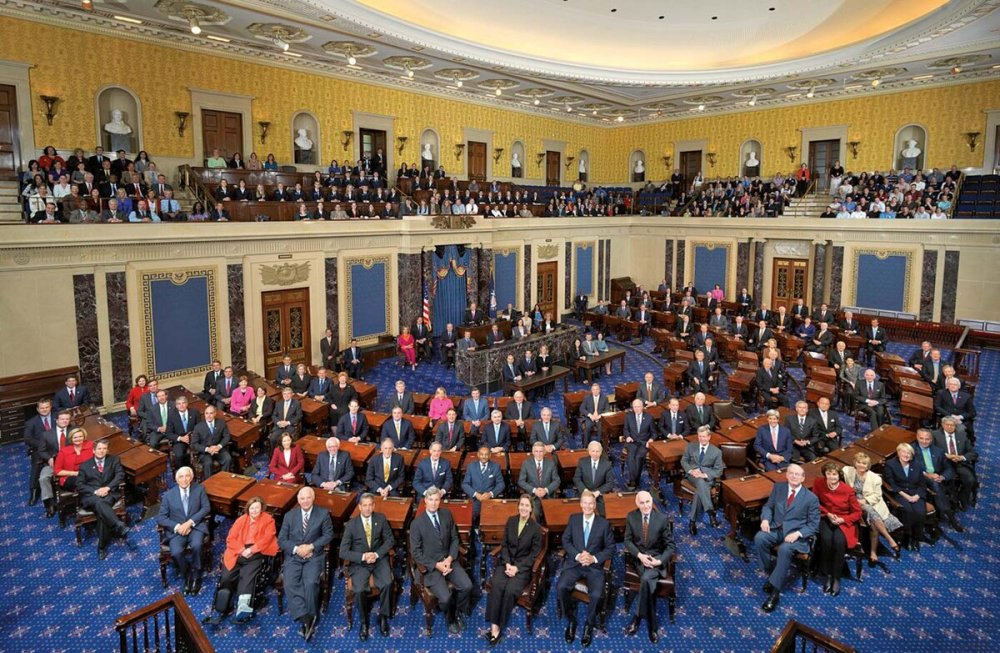
The United States Senate has moved forward with a resolution aimed at limiting President Donald Trump’s authority to take further military action against Venezuela without congressional approval.
The decision follows a controversial US military operation that led to the capture of Venezuelan President Nicolás Maduro and his wife, sparking bipartisan concern over executive war powers. Reuters
Senators Vote to Advance Resolution
On January 8, 2026, the Senate voted 52–47 to advance a War Powers Resolution. The measure would require the president to obtain explicit congressional authorization before deploying US forces against Venezuela again. Reuters
All Democrats supported the resolution. Five Republican senators joined them: Susan Collins, Lisa Murkowski, Todd Young, Josh Hawley, and Rand Paul. CBS News
Response to Maduro Operation
The resolution was introduced after Trump ordered a nighttime military raid in Caracas that resulted in Maduro’s capture and transport to the US to face federal charges. Critics have said the operation lacked legal authority and bypassed Congress. ABC7 San Francisco
Supporters of the measure argue that the U.S. Constitution gives Congress the sole power to authorize war, and that future military actions should be subject to oversight. WSLS
Limited Chance of Becoming Law
Despite advancing in the Senate, the resolution faces major hurdles. It must still pass the Republican-controlled House of Representatives. Even if it reaches President Trump’s desk, he is expected to veto the measure, as it restricts his military authority. Reuters
A presidential veto would require a two-thirds majority in both chambers to be overridden, a difficult task given current party divisions. Reuters
Growing Bipartisan Concern
The Senate action reflects growing unease among lawmakers, including some Republicans, about the expanding scope of executive military actions. Some have questioned recent decisions and the legal framing of operations that extend beyond limited strikes on suspected drug smuggling vessels. WSLS
Supporters of stronger congressional oversight say the War Powers Act is designed to prevent prolonged military engagements without democratic approval. WSLS
What’s Next
The resolution now moves to the House, where its fate remains uncertain. Lawmakers in both parties will continue debating the constitutional balance of war powers and the role of Congress in overseeing military engagements abroad.
Related posts:
 Rwanda to Integrate Mental Health in Justice System
 Touadéra Re-elected President of Central African Republic
 Plot to Kill Burkina Faso Leader Foiled, Junta Says
 MPs Debate Points-Based System for Traffic Offences
 Trump Warns Venezuela’s New President, Threatens Second Military Strike
 Ukraine, France and UK Sign Declaration on Multinational Forces
 Trump to Meet Colombian President at White House
 Trump Announces U.S. Withdrawal from U.N. Agencies
 Ruto Proposes Death Penalty for Drug Traffickers in Kenya