


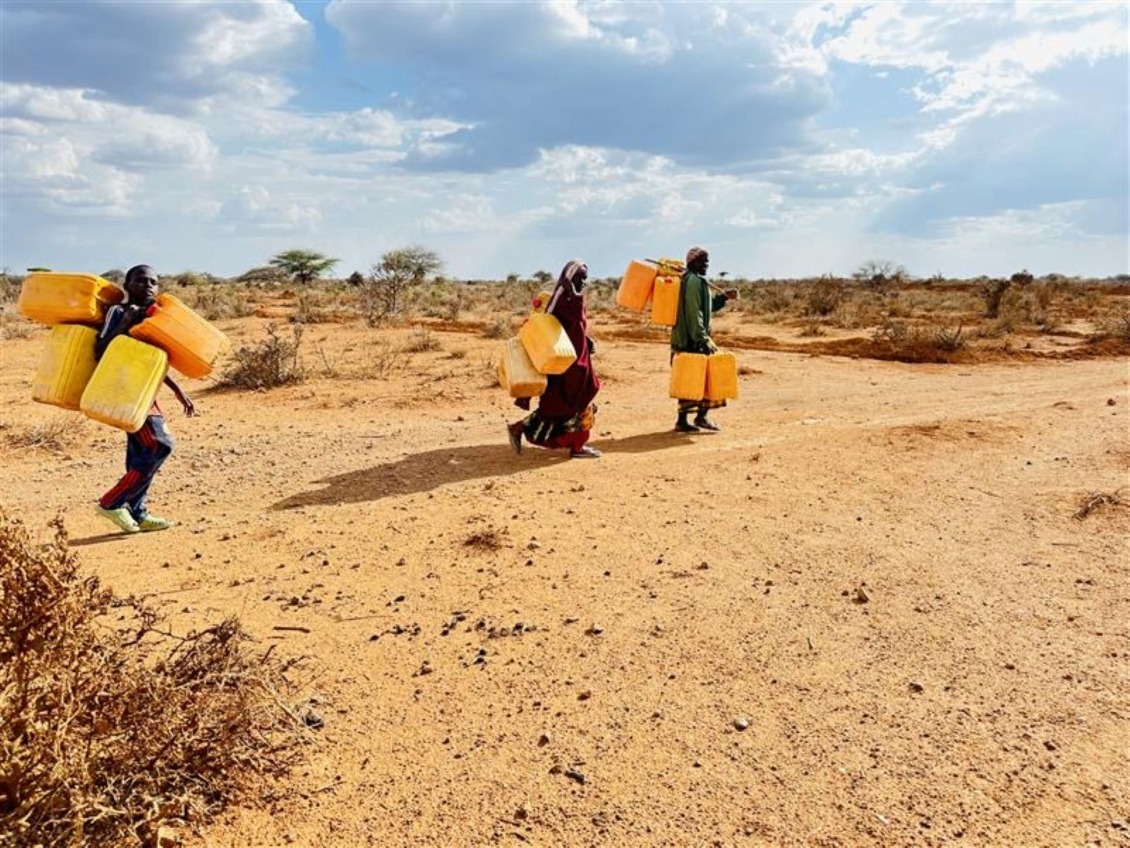
The Somalia drought crisis 2026 has left millions struggling with water shortages, crop failures, and livestock losses. Humanitarian agencies warn that without urgent intervention, parts of the country could face famine.
Millions Affected by Drought
Somali authorities estimate 4.61 million people are affected, including over 490,000 displaced in search of water, food, and pasture. At least 171 boreholes are non-functional nationwide. Hundreds of schools have closed as families migrate or struggle to meet basic needs.
The Shabelle River region is particularly hard-hit. Falling water levels have disrupted farming and livestock production. In Jowhar District, more than 65 villages now rely on shallow wells that are drying quickly, while some boreholes operate beyond capacity.
Humanitarian Response and Funding Gaps
Aid agencies provide emergency food, cash transfers, water trucking, healthcare, shelter, and nutrition services. However, officials report that funding shortfalls are limiting the response.
“The needs are rising faster than available resources,” a humanitarian worker in Mogadishu said. Prolonged shortages could worsen food insecurity and displacement in the coming months.
President Hassan Sheikh Mohamud visited the National Emergency Operations Center this week to assess the situation. He directed financial institutions to exempt all drought-response aid and humanitarian donations from taxation, aiming to speed up relief delivery.
Appeals for Support at Home and Abroad
Somalia’s Deputy Minister of Information, Abdirahman Yusuf Al-Adaala, urged Somalis and the diaspora to contribute through donations and community initiatives.
During her first official visit to Mogadishu, the UK’s Jenny Chapman announced £6 million in additional humanitarian funding. Aid agencies stress that such contributions are crucial but remain insufficient for the full scale of the crisis.
Funding Shortfalls Raise Concerns
The 2026 Humanitarian Needs and Response Plan requires US$852 million, targeting 2.4 million people less than half of those affected. Humanitarian officials warn that millions may receive little or no assistance if additional funding is not secured.
Climate Shocks Worsen the Situation
Recurring droughts, sparse rainfall, and declining river flow compound Somalia’s vulnerability. Regions like Hiran and Mudug have experienced nearly a year without meaningful cultivation. Agriculture Minister Mohamed Abdi Hayir Maareeye called for stronger international cooperation to address food and water loss, citing UN Resolution A/RES/74/209.
Experts warn that the coming months are decisive. Without expanded funding, improved water infrastructure, and sustained international engagement, localized shortages could escalate into a nationwide food security emergency.
MORE STORIES:
 President Kagame warns leaders they will be held accountable at any time
 ”Europe will not accept the law of the strongest” Macron said to Trump
 Minneapolis ICE shootings put Trump immigration crackdown at center of election-year fight
 Ruto Proposes Death Penalty for Drug Traffickers in Kenya
 Khamenei warns protesters as Iran faces widespread internet blackout
 US and Russian Envoys Hold Talks about Ukraine peace plan
 Trump Announces U.S. Withdrawal from U.N. Agencies
 Doha Peace Talks Between DR Congo Government and AFC/M23 May Resume This Weekend
 Hamas Rejects Calls to Disarm Amid Ongoing Israeli Control of Gaza
 Canada Voices Growing Worry It Could Be Next After Trump’s Greenland Signals