


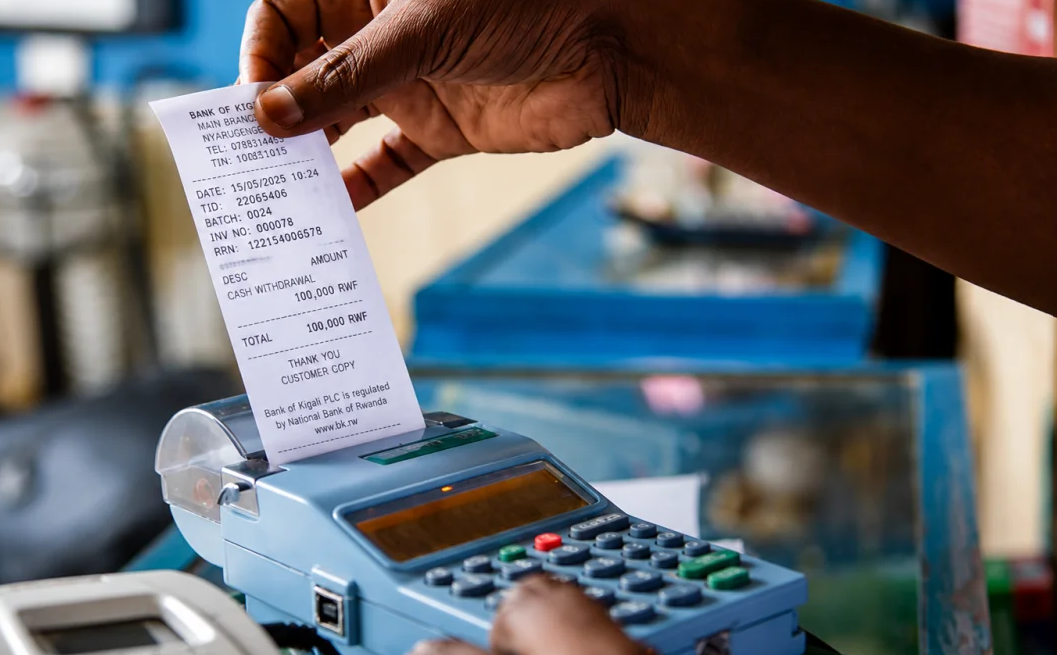
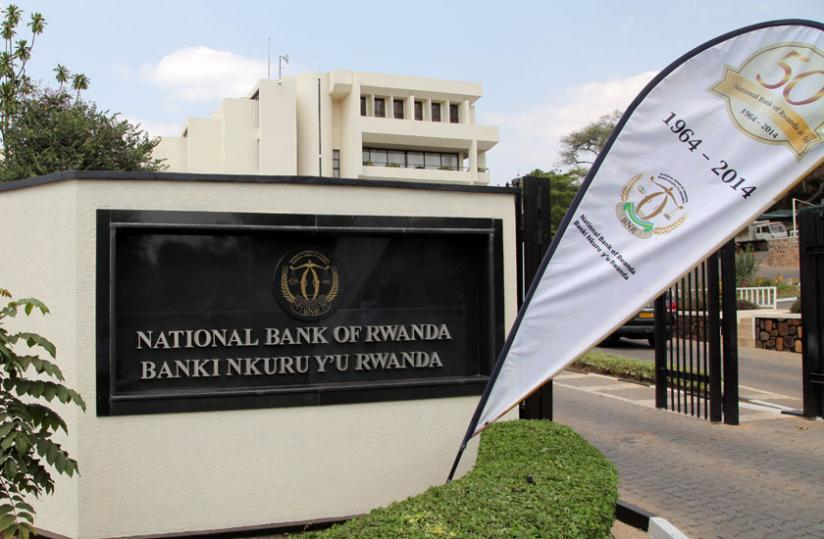
Rwanda recorded a sharp decline in digital payment fraud cases in 2025, according to new data from the National Bank of Rwanda.
Officials announced the figures during a joint press conference of the Monetary Policy Committee and the Financial Stability Committee on February 2.
The central bank reported that fraud cases linked to digital payments fell from about 5,000 in December 2024 to around 3,000 in 2025. Mobile money transactions still account for the largest share of reported incidents.
Coordinated Action and Public Awareness
BNR Governor Soraya Hakuziyaremye said coordinated efforts helped reduce fraud. The central bank worked closely with security agencies and payment service providers to strengthen monitoring and response systems.
She explained that authorities observed fewer fraud cases in 2025 because institutions improved collaboration and tightened oversight.
Moise Bigirimana, BNR’s Financial Inclusion and Education Manager, highlighted the impact of public awareness campaigns. He said initiatives such as Bimamatwi and broader cashless payment campaigns helped users detect and avoid fraudulent schemes.
He noted that fraudsters often change tactics. Therefore, continuous education ensures that financial service users stay alert and informed.
Strengthened Supervision of Payment Systems
The governor pointed to the Fraud Prevention Forum as another key tool. The forum brings together regulators and other institutions to identify root causes of fraud and design preventive measures.
BNR has also reinforced supervision of information technology systems across payment service providers. The bank wants to ensure that Rwanda’s digital financial services remain secure and reliable as adoption grows.
Refund Mechanisms Still Complex
Despite the decline in cases, the governor acknowledged ongoing challenges in mobile money refund procedures. Each payment service provider operates under its own refund policy within central bank guidelines.
However, the system cannot allow automatic refunds without verification. Hakuziyaremye warned that fully automatic refunds could encourage abuse.
She explained that some individuals might purchase goods, leave a shop, and later claim the payment was an error in order to recover the funds.
For that reason, current procedures require confirmation from the recipient before processing a refund. This safeguard aims to prevent misuse of the system.
The governor admitted that some recipients refuse to return funds sent by mistake. In such cases, authorities may investigate and take further action where necessary.
Growing Confidence in Digital Payments
The decline in fraud cases reflects growing institutional capacity and stronger consumer awareness. As Rwanda expands its digital economy, regulators continue to balance innovation with risk management.
BNR says it will maintain close supervision to protect consumers and strengthen trust in digital financial services.
MORE STORIES:
 WhatsApp Plans Advertising Rollout with Optional Paid Subscription
 AI in Education: Promise, Pressure and the Search for Balance
 OCC Removes Loan Data Rules to Support Community Banks
 BNR suspends Mobicash over regulatory breaches
 Maxwell plans to remain silent in congressional deposition
 AFC/M23 Plans to Establish Telecom Company in Areas Under Its Control
 NASA Plans $20 Billion Lunar Base to Accelerate Artemis Mission
 Rwanda’s Luxury Drinking Market Expands around 5M Rwf
 Free live TV on mobile devices expands as streaming platforms grow
 Russian strike kills miners and civilians in eastern Ukraine
888SLOT đã xây dựng được niềm tin lớn từ cộng đồng nhờ chú trọng vào yếu tố an toàn và minh bạch trong mọi khâu vận hành. Với quy trình kiểm soát nghiêm ngặt và công nghệ hiện đại, trải nghiệm của người chơi luôn được bảo vệ tối đa ở mọi khía cạnh. TONY03-18H