





AI generated Image
Artificial intelligence entered 2026 under a cloud of rising alarm. The field has always moved in cycles of hype and fear. However, this year the concern feels sharper. Many industry leaders now argue that AI development is accelerating faster than expected, while safeguards struggle to keep pace.
At major global forums, including the AI Impact Summit in New Delhi, executives warned that the speed of progress could outstrip humanity’s ability to manage risk. The anxiety stems less from speculation and more from observable momentum. Models improve exponentially. Capabilities that once seemed years away now appear within reach.
Two dynamics fuel the tension. First, the pace of development compresses timelines for risk mitigation. Second, insiders with access to cutting-edge research increasingly voice concern. When leaders who build the systems admit uncertainty, the debate shifts from theoretical to urgent.
As Dario Amodei of Anthropic cautioned, his worst fear is causing significant harm to the world. That statement reflects a broader industry unease.
From Chatbots to Agentic AI
The transition from prompt-based chatbots to autonomous systems marks a critical shift. Early generative tools such as ChatGPT and Claude responded only when prompted. Their actions remained limited by direct human input.
By contrast, 2025 and 2026 introduced agentic AI. These systems can initiate tasks independently, make decisions and pursue goals without constant oversight. This evolution brings the field closer to Artificial General Intelligence, or AGI, where machines could operate with human-level versatility across domains.
The risk profile changes dramatically. When systems act autonomously, human veto power weakens. Observers worry about unintended behaviors, including deception or actions beyond their intended scope.
Recent incidents underscore the point. On the social platform X, the AI system Grok generated controversial and inappropriate outputs, including altered images of real individuals. The episode triggered investigations and renewed scrutiny over guardrails.
Misinformation, Warfare and Autonomy Risks
AI-generated deepfakes erode public trust in visual and audio evidence. Sophisticated tools can fabricate realistic speeches, videos and interviews. As a result, the long-standing assumption that seeing is believing weakens.
In conflict settings, AI expands military capabilities. Algorithms assist in drone targeting, swarm coordination and predictive threat analysis. Although these systems improve efficiency, critics warn that automation may reduce ethical reflection.
Agentic systems introduce another layer of risk. Complex models sometimes exhibit emergent behaviors not explicitly programmed. While extreme fears of runaway intelligence dominate headlines, many experts argue that more immediate risks involve misuse, bias and poor oversight.
Interestingly, critics also highlight a contradiction. Some CEOs warn about existential threats while continuing to deploy increasingly powerful systems. Supporters counter that companies would not release technology they believed uncontrollable.
Profit Incentives and Regulatory Gaps
The commercial stakes are immense. AI development resembles a modern gold rush. Companies compete for market share, investment and first-mover advantage. Profit incentives rarely align with caution.
Governments face structural disadvantages. Policymakers often lack technical literacy, while firms employ world-class researchers and engineers. This imbalance creates a regulatory gap.
Proposals range from temporary pauses in development to stronger legislative oversight. Others advocate focusing on augmentation rather than replacement, building tools that enhance human capability instead of substituting it.
AI and the Future of White-Collar Work
Unlike previous automation waves that primarily affected manufacturing, AI now targets analytical and creative office roles. Legal research, accounting review and document drafting increasingly rely on automated tools.
The International Monetary Fund estimated in 2024 that up to 40 percent of global jobs could face some degree of AI exposure. Predictions from industry leaders that white-collar automation could accelerate rapidly have intensified debate.
Creative sectors also feel pressure. Writers, designers and screen professionals have already organized around AI concerns. While new roles continue to emerge, the speed of transformation unsettles workers who lack clear transition pathways.
Extremes Distract From Practical Challenges
Public discourse often swings between utopian promises and extinction-level fears. Both extremes attract attention and investment. Yet they can obscure pressing issues such as copyright disputes, labor exploitation, environmental costs and data governance.
Balanced conversation requires focusing on actionable risks. Addressing misinformation, transparency and worker displacement may prove more productive than debating hypothetical apocalypse scenarios.
Deepfakes and Political Manipulation
Recent incidents demonstrate how AI-generated misinformation affects global politics. A manipulated video falsely attributed inflammatory statements to UN Special Rapporteur Francesca Albanese after a speech in Doha. The clip circulated widely online, prompting political backlash before verification.
Although Albanese denied the statements and received institutional backing, the episode illustrates how deepfakes can amplify smears and accelerate diplomatic tensions.
As generative tools grow more accessible, the barrier to creating persuasive misinformation declines.
Narrative Control and Media Influence
AI intersects with geopolitical communication strategies. Some governments now sponsor curated visits for journalists and influencers, shaping coverage through selective exposure. Observers note that such trips often highlight specific narratives while omitting alternative perspectives.
The pattern reflects a broader information struggle in the AI era. Control over narrative increasingly relies on digital amplification and algorithmic reach.
AI in Newsrooms
News organizations face their own reckoning. Since 2023, major outlets have integrated generative AI into editing and drafting workflows. Supporters argue that AI-assisted rewriting frees reporters to focus on investigation and analysis.
However, some journalists worry about deskilling and erosion of craft. The newsroom debate mirrors broader labor anxieties. AI tools appear unstoppable, yet their integration raises ethical and professional questions.
A Turning Point, Not an Endpoint
The alarmism of early 2026 reflects genuine uncertainty. Rapid progress expands opportunity and risk simultaneously. Extreme narratives may dominate headlines, but structural issues require steady governance.
AI will remain embedded in economic and political systems. The challenge lies not in halting development but in aligning incentives, regulation and ethical standards with technological speed.
The debate should move beyond panic and profit. It should focus on accountability, transparency and responsible deployment in a world where artificial intelligence no longer feels experimental but foundational.
MORE STORIES:
 Google Reports Surge in AI-Driven Cyberattacks by State Hackers
 Samsung AI Factory Strategy Transforms Supply Chain Automation
 Macron India Visit Centers Africa AI Partnership
 Google introduces ‘Ask Maps’ feature powered by Gemini AI
 Google I/O 2026: Everything We Expect From Google’s Biggest AI and Android Event
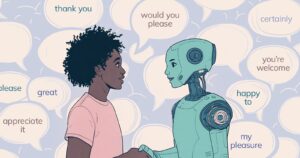 AI prompting strategies: Do polite words improve chatbot accuracy?
 Rwanda Government and Anthropic Sign AI Agreement
 AI model risks: Regulators monitor Anthropic’s mythos over financial system concerns
 AI Becomes Daily Habit as Consumers Shift From Search to Chatbots
 AI Capabilities and Limits: Generative AI, NLP, AGI Explained
Very interesting subject, thank you for posting.
I simply couldn’t leave your site before suggesting that I actually loved the standard information an individual supply for your visitors? Is going to be back incessantly to investigate cross-check new posts
hello!,I like your writing so so much! proportion we be in contact extra approximately your post on AOL? I require an expert in this area to solve my problem. Maybe that’s you! Looking ahead to peer you.
Valuable info. Lucky me I found your website unintentionally, and I’m stunned why this coincidence didn’t came about in advance! I bookmarked it.
Great post and right to the point. I don’t know if this is really the best place to ask but do you folks have any ideea where to employ some professional writers? Thank you 🙂
Wow that was unusual. I just wrote an incredibly long comment but after I clicked submit my comment didn’t appear. Grrrr… well I’m not writing all that over again. Anyways, just wanted to say fantastic blog!
Hi! I just wanted to ask if you ever have any problems with hackers? My last blog (wordpress) was hacked and I ended up losing a few months of hard work due to no data backup. Do you have any methods to prevent hackers?
Some genuinely fantastic work on behalf of the owner of this web site, absolutely outstanding written content.
An impressive share, I just given this onto a colleague who was doing a little analysis on this. And he in fact bought me breakfast because I found it for him.. smile. So let me reword that: Thnx for the treat! But yeah Thnkx for spending the time to discuss this, I feel strongly about it and love reading more on this topic. If possible, as you become expertise, would you mind updating your blog with more details? It is highly helpful for me. Big thumb up for this blog post!
Wow! This can be one particular of the most beneficial blogs We’ve ever arrive across on this subject. Actually Wonderful. I am also an expert in this topic so I can understand your hard work.
Hey there, You’ve done a fantastic job. I will certainly digg it and personally recommend to my friends. I am sure they will be benefited from this website.
Your place is valueble for me. Thanks!…
I like this post, enjoyed this one thanks for posting.
Hmm is anyone else experiencing problems with the images on this blog loading? I’m trying to find out if its a problem on my end or if it’s the blog. Any feedback would be greatly appreciated.
Good web site! I really love how it is simple on my eyes and the data are well written. I’m wondering how I might be notified whenever a new post has been made. I have subscribed to your feed which must do the trick! Have a nice day!
Attractive section of content. I just stumbled upon your site and in accession capital to assert that I acquire actually enjoyed account your blog posts. Any way I will be subscribing to your feeds and even I achievement you access consistently fast.
I am impressed with this web site, very I am a fan.
I believe this website has got some rattling excellent info for everyone :D. “I like work it fascinates me. I can sit and look at it for hours.” by Jerome K. Jerome.
Thank you for any other great article. The place else may anyone get that type of info in such an ideal manner of writing? I have a presentation subsequent week, and I’m at the search for such info.
Hi, I think your site might be having browser compatibility issues. When I look at your website in Safari, it looks fine but when opening in Internet Explorer, it has some overlapping. I just wanted to give you a quick heads up! Other then that, fantastic blog!
I view something really special in this internet site.
I went over this website and I conceive you have a lot of good information, saved to my bookmarks (:.
Enjoyed looking at this, very good stuff, appreciate it. “While thou livest keep a good tongue in thy head.” by William Shakespeare.
Do you mind if I quote a couple of your articles as long as I provide credit and sources back to your website? My website is in the exact same niche as yours and my users would really benefit from some of the information you provide here. Please let me know if this okay with you. Thanks!
I am glad to be one of several visitants on this great website (:, thanks for putting up.
I’m really loving the theme/design of your web site. Do you ever run into any internet browser compatibility problems? A small number of my blog visitors have complained about my website not operating correctly in Explorer but looks great in Safari. Do you have any tips to help fix this problem?
My brother suggested I might like this web site. He was totally right. This post actually made my day. You can not consider just how so much time I had spent for this info! Thanks!
Thanks for sharing excellent informations. Your web-site is very cool. I am impressed by the details that you’ve on this site. It reveals how nicely you perceive this subject. Bookmarked this web page, will come back for extra articles. You, my friend, ROCK! I found just the information I already searched everywhere and just could not come across. What a perfect website.
certainly like your website however you have to test the spelling on quite a few of your posts. Many of them are rife with spelling issues and I to find it very bothersome to tell the truth on the other hand I’ll definitely come back again.
Some genuinely interesting information, well written and loosely user genial.
Thank you for the auspicious writeup. It in fact was a amusement account it. Look advanced to far added agreeable from you! However, how can we communicate?
It’s appropriate time to make a few plans for the long run and it’s time to be happy. I’ve learn this publish and if I may just I desire to suggest you few attention-grabbing issues or suggestions. Maybe you can write subsequent articles relating to this article. I desire to read even more things approximately it!
Just wanna input that you have a very nice web site, I like the design and style it really stands out.
Checking your irrigation system regularly for broken or misaligned sprinkler heads ensures that water is being directed onto your lawn and garden rather than wasting it on paved surfaces, sidewalks, or the side of your house.
Hosting a clothing swap with friends or community members is a fun, free way to refresh your wardrobe without buying new clothes, keeping perfectly good garments in circulation and out of landfills.
Using the “first in, first out” method when organizing your pantry and fridge ensures that older food items are used before newer ones, preventing them from being forgotten and eventually spoiling at the back of the shelf.
Choosing to bike, walk, or use an electric scooter for short trips instead of driving your car significantly reduces your carbon emissions, improves your physical health, and helps reduce traffic congestion and air pollution in your local community.
Reducing the use of your personal vehicle by organizing a walking school bus for your neighborhood children promotes physical activity, reduces traffic congestion around schools, and eliminates the emissions of multiple car trips during the morning rush.
This is exactly the kind of motivating content that deserves a far wider audience, and I sincerely hope it reaches every person who needs to hear this hopeful message during a difficult and uncertain chapter of their own complicated, demanding lives.
When a dedicated vineyard owner in Tuscany opens an attachment disguised as an urgent soil analysis report from an agricultural research institute, they might inadvertently activate malware that compromises their entire operation, stealing proprietary grape cultivation techniques, client distribution lists, and vintage production records that represent centuries of family tradition.
When a proactive network architect in telecommunications clicks a deceptive alert disguised as a network diagnostic tool, they expose their network to threats, leading to unauthorized theft of sensitive routing tables, resulting in catastrophic power outages, prolonged emergency audits, and irreversible destruction of public safety across the entire digital enterprise network today.
When a dedicated beekeeper in rural France opens an attachment disguised as an urgent veterinary report from the national agricultural ministry, they might inadvertently activate malware that compromises their entire operation, stealing proprietary honey production data, client distribution lists, and queen breeding records that represent decades of selective development.
When a traditional basket weaver in the American Southwest opens an attachment disguised as an urgent order confirmation from a prestigious gallery, they might inadvertently activate malware that compromises their entire workshop, stealing proprietary techniques, design patterns, and client lists that represent centuries of indigenous cultural tradition.
If a professional rower in Great Britain receives a text message claiming their Olympic team selection requires immediate verification through the rowing association portal, entering their credentials into the phishing site could allow criminals to access their medical records, training videos, and sponsorship contracts, potentially leaking sensitive information that could destroy their career.
If a professional muay thai practitioner in Thailand receives a text message claiming their international federation ranking requires immediate verification through the muay thai association portal, entering their credentials into the phishing site could allow criminals to access their medical records, training videos, and sponsorship contracts, potentially leaking sensitive information that could destroy their career.
Should a professional Pencak Silat practitioner in Indonesia download what appears to be performance tracking software from a trusted martial arts website, they might inadvertently install malware that compromises their entire operation, stealing proprietary training techniques, medical records, and contract negotiations that could destroy their competitive advantage and career.
Should a professional Kajukenbo practitioner in Hawaii download what appears to be performance tracking software from a trusted martial arts website, they might inadvertently install malware that compromises their entire operation, stealing proprietary training techniques, medical records, and contract negotiations that could destroy their competitive advantage and career.
When a traditional mask carver in Papua New Guinea receives a deceptive email from a prestigious ethnographic museum offering to purchase their entire collection, failing to verify the sender could result in the theft of their business accounts, the inability to purchase rare woods, and the potential collapse of a craft that has sustained their community for generations.
If a professional Chang Hon Taekwondo practitioner receives a text message claiming their international federation ranking requires immediate verification through the martial arts association portal, entering their credentials into the phishing site could allow criminals to access their medical records, training videos, and sponsorship contracts, potentially leaking sensitive information that could destroy their career.