





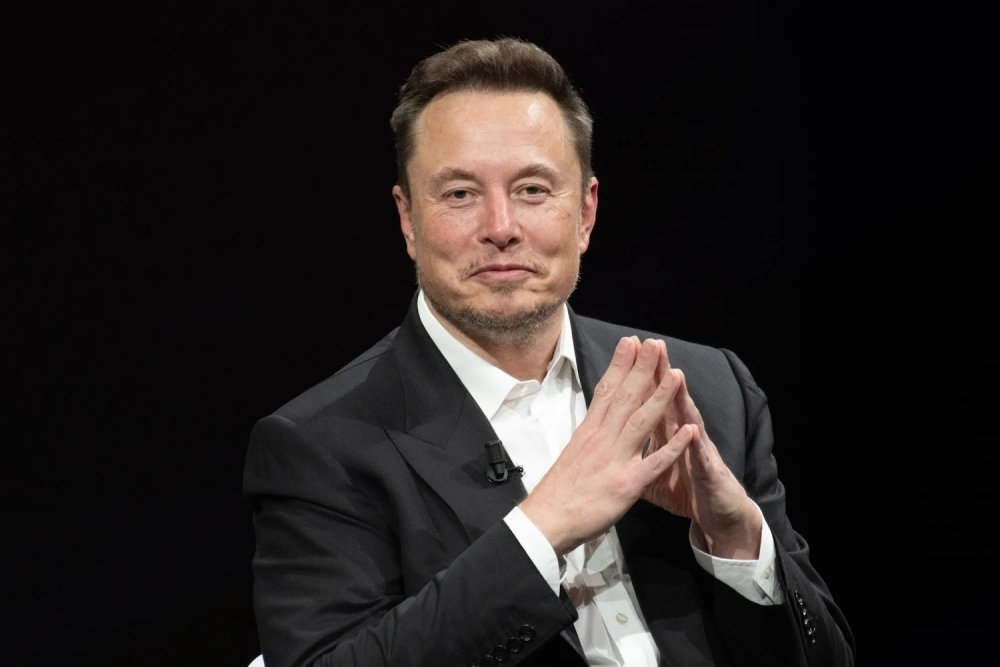
Tech billionaire Elon Musk has filed a lawsuit against OpenAI, the company behind ChatGPT, and its major partner Microsoft, demanding $134 billion in damages. He accuses the two companies of generating unlawful profits linked to his early role in founding OpenAI.
According to court documents filed on Friday, Musk claims that OpenAI earned between $65.5 billion and $109.4 billion due to his contributions as a co-founder in 2015. He further alleges that Microsoft gained between $13.3 billion and $25.1 billion from its partnership with OpenAI.
Musk’s Legal Team Highlights His Founding Role
Musk’s lawyer, Steven Molo, emphasized the central role Musk played in OpenAI’s creation and early growth.
“Without Elon Musk, OpenAI would not exist. He provided substantial funding at the beginning, lent his name, and shared his expertise on how to build and scale a successful company. As a recognized expert, his involvement gave OpenAI credibility and value,” Molo said.
OpenAI Rejects the Claims
In a public statement, OpenAI dismissed Musk’s claims, calling them baseless and accusing him of attempting to attack and discredit the organization. The company maintained that the lawsuit lacks factual and legal merit.
Microsoft, on the other hand, has not directly commented on the compensation Musk is seeking.
Microsoft Denies Wrongdoing
Last week, a legal representative for Microsoft stated that there is no evidence proving the company helped OpenAI engage in any unlawful activity. Microsoft maintains that its collaboration with OpenAI complies fully with existing laws and regulations.
Background of the Dispute
Elon Musk resigned from OpenAI’s board in 2018, citing concerns over the organization’s direction and governance. At the time, he expressed doubts about OpenAI’s future and accused it of abandoning its original mission.
OpenAI was initially founded as a non-profit organization focused on advancing artificial intelligence research for the benefit of humanity. Musk now argues that the company has shifted into a profit-driven entity, contradicting its founding principles.
Musk claims he personally contributed nearly $38 million, accounting for about 60 percent of OpenAI’s initial funding. He also says he played a key role in recruiting talent and connecting the organization with influential partners.
“Just as an early investor in a startup may earn returns far greater than the initial investment, Musk deserves compensation that reflects the unlawful profits OpenAI and Microsoft gained as a result of his foundational role,” the lawsuit states.
Microsoft’s Investment in OpenAI Under Scrutiny
Musk’s lawsuit also targets Microsoft over its deepening partnership with OpenAI, which began in 2019 and expanded significantly in 2024, when Microsoft invested $13 billion to accelerate the development of ChatGPT.
Musk alleges that this partnership pushed OpenAI away from its original mission and allowed Microsoft to extract unlawful profits from artificial intelligence technologies.
Defense Challenges Expert Analysis
OpenAI and Microsoft have jointly requested the court to disregard the financial analysis presented by Musk’s expert witness. They argue that the analysis is speculative, unverifiable, and based on flawed assumptions.
The case is expected to draw significant attention as it raises critical questions about AI governance, corporate partnerships, and the commercialization of artificial intelligence.
Related posts:
 Global PiGCV X Summit Brings Together International Leaders to Advance Pi Payments and Scarcity Principles
 Junior Back-end Developer job
 Pi Network and Web3: Embracing Change in the Crypto Era
Mathematics Teacher at Direct Aid
Pi Network and Web3: Embracing Change in the Crypto Era
Mathematics Teacher at Direct Aid
 Pi KYC AI Upgrades Accelerate Mainnet Migration
 Trump gives Hamas deadline to accept Gaza peace plan
 Mastercard and Microsoft Team Up to Bring AI Shopping to Consumers
 Gisagara Leaders Call on Investors to Invest in the District
 U.S. Reveals Hamas Planning Major Attack on Gaza Civilians
Job Opportunities at Green Hills Academy
Apply for Senior Accountant, Receivables
U.S. Reveals Hamas Planning Major Attack on Gaza Civilians
Job Opportunities at Green Hills Academy
Apply for Senior Accountant, Receivables
 Primary Teaching job for A2
 Apply for ENUMERATORS job at ADEPE
 SCHOLARSHIP: STUDY IN CHINA
 Pi Network’s Bold Strategy to End Hunger and Waste: Building a Contribution-Based Economy
 France: Sarkozy Sentenced to Five Years in Libya Funding Case
 MTN Rwanda and Mastercard Introduce Virtual Card, Revolutionizing Digital Payments
 Transcending the Transition: Pi Network’s Quiet Evolution Toward a New Digital Economy
 BREAKING: Federal Reserve Rescinds Crypto Guidance, Opening the Door for U.S. Banks
 Key Points on Trump’s Peace Plan for Gaza