



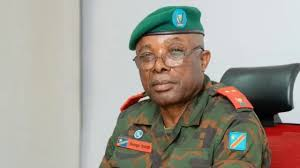
President Félix Tshisekedi has suspended the spokesperson of the Armed Forces of the Democratic Republic of Congo (FARDC), Général-Major Sylvain Ekenge, after he made public statements accused of spreading hate speech and genocidal ideology, particularly targeting women of Tutsi ethnicity.
According to the Congolese Press Agency (ACP) and several media outlets in Kinshasa, General Ekenge was suspended on Monday, December 29, 2025. The decision followed remarks he made during a televised program that quickly sparked national and international outrage.
ALSO READ: 71% of Rwandans Do Not Visit National Museums, Cultural Report Reveals
Controversial Remarks on National Television
On Saturday, while appearing on the national television station RTNC, Ekenge used inflammatory language drawn from the so-called “Ten Hutu Commandments.” These texts are historically linked to incitement against Tutsis and were widely used before and during the 1994 Genocide against the Tutsi in Rwanda.
One of the commandments claims that any Hutu who marries a Tutsi woman is a traitor. Other statements portray Tutsis as dishonest and promote false narratives that suggest they deserve violence. Human rights observers have long warned that such rhetoric fuels ethnic hatred and violence.
Statements Made During Plateau Special
During the program Plateau Special, Ekenge was asked about the term “ubwenge,” which some people in the DRC use to describe alleged hidden manipulation. He claimed this so-called “ubwenge” was a tactic used by “Rwandans, especially Tutsis,” a statement widely criticized as stigmatizing and dangerous.
Referring again to the Ten Hutu Commandments, written by Joseph Gitera, Ekenge said that anyone who marries a Tutsi woman today “must be cautious,” describing Congolese Tutsi families as belonging to “traitors.” He further alleged that such marriages involve surveillance and that children born from these unions are part of a broader conspiracy—claims experts say are false and deeply harmful.
Accusations Against Rwanda and Public Backlash
Ekenge also accused the Rwandan government of institutionalizing this alleged mindset and teaching it to children from an early age. Observers noted that his remarks appeared deliberate and structured, raising concerns about their intent and impact.
The Plateau Special episode containing these statements aired on Saturday but was removed from YouTube on Sunday night following public backlash.
National and International Reactions
On social media, many users condemned Ekenge’s remarks, warning that such language risks reviving ethnic violence and destabilizing the region. Several civil society voices described the statements as a step backward for peace and coexistence.
Belgium’s Minister of Foreign Affairs, Maxime Prévot, expressed deep concern, saying the remarks were unacceptable for a government official and strongly condemning all forms of hate speech.
Responses From AFC/M23 and Rwanda
The AFC/M23 coalition also criticized Ekenge’s comments, stating that portraying Tutsi women as enemies is a deliberate political act with serious psychological consequences for the population. The group warned that when authorities allow dehumanizing language—especially against women and children—to spread unchecked, it becomes political responsibility rather than simple speech.
Rwanda’s Minister of Foreign Affairs, Olivier Nduhungirehe, also condemned the remarks, linking them to genocidal ideology, cooperation with the FDLR militia, and attacks against Congolese Tutsis and Banyamulenge. He said the statements revived colonial-era narratives that created ethnic divisions and contributed to the Genocide against the Tutsi.
Political Implications and Ongoing Conflict
Nduhungirehe added that pressure from international partners or political embarrassment may have influenced President Tshisekedi’s decision to suspend General Ekenge.
The AFC/M23 maintains that its struggle includes opposing poor governance, violence, hate speech, killings, and forced displacement, particularly against Kinyarwanda-speaking Congolese communities, including Tutsis.
Related posts:
 Japan Must Be Stopped at Any Cost,” North Korea Says Over Nuclear Weapons Claim
 We invited a man into our home at Christmas and he stayed with us for 45 years
 Ashesi Graduate Faces Post-Graduation Plagiarism Penalty
 Burundi: Congolese Refugees Seeking to Return Home ‘Beaten and Killed’
 Taiwan Suspends Xiaohongshu for One Year Over Security Concerns
 Zelenskyy US Security guarantees announced after high-level talks with Trump
 71% of Rwandans Do Not Visit National Museums, Cultural Report Reveals
 AFC/M23 Vows to Counter Civilian Threats in Walikale, Minembwe Amid Ceasefire Violations
 M23 Rebels Demand SADC Withdrawal After Clashes in Goma
 WhatsApp faces European antitrust investigation over artificial intelligence
 Bruce Willis’ Life Caught Between Survival and Decline
 Mount Kilimanjaro helicopter crash kills five during rescue mission
 RDB Announces Conclusion of Landmark Arsenal Sponsorship Deal in 2026
 When Faith Is Weaponized: Pope Leo’s Warning to World Leaders
 Harvard Stands Up to Trump: But for How Long Can It Hold the Line?
 Mogadishu municipal elections mark historic step toward direct democracy in Somalia
 US promises 15-year security guarantee to Ukraine amid peace talks
 Syria protests live: Deadly sectarian clashes erupt after mosque bombing
 Utah Prosecutors Reveal Note Written by Suspect Before Killing of Charlie Kirk
 Veteran German Diplomat Visits M23-Held Goma
This topic really needed to be talked about. Thank you.