







Eating enough fibre does more than support digestion. Research now shows it can also protect brain health, slow cognitive decline, and improve overall wellbeing.
Fibre-rich foods include wholegrains, fruits, vegetables, pulses, nuts, and seeds. However, most people still do not eat enough of this essential nutrient.
Scientists say increasing fibre intake is one of the simplest and most effective dietary changes people can make for long-term health.
A Global Fibre Deficit
Despite its benefits, fibre intake remains low worldwide.
In the United States, about 97 percent of men and 90 percent of women fail to meet daily fibre recommendations. In the United Kingdom, more than 90 percent of adults also fall short. Similar patterns appear in many other countries.
Experts warn that low fibre intake has become one of the leading dietary risk factors for poor health.
How Fibre Works in the Body
Fibre is a type of carbohydrate that the body cannot fully digest. Instead of breaking down, it moves through the gut largely unchanged.
As a result, fibre increases stool size and helps people feel full for longer. It also slows digestion, which prevents sharp rises in blood sugar.
Studies show that people who eat more wholegrains tend to have lower body weight and less abdominal fat than those who eat refined grains.
According to John Cummings, emeritus professor of experimental gastroenterology at the University of Dundee, a high-fibre diet can also help people live longer.
Fibre and Reduced Disease Risk
Research consistently links fibre intake to lower disease risk.
A large review found that people who consumed the most fibre had a 15 to 30 percent lower risk of death than those who consumed the least. Around 25 to 30 grams per day produced the strongest benefits.
Adequate fibre intake reduces the risk of heart disease, stroke, type 2 diabetes, and colon cancer. Researchers estimate it could prevent 13 deaths per 1,000 people.
The Gut Microbiome Connection
Fibre plays a crucial role in feeding beneficial gut bacteria.
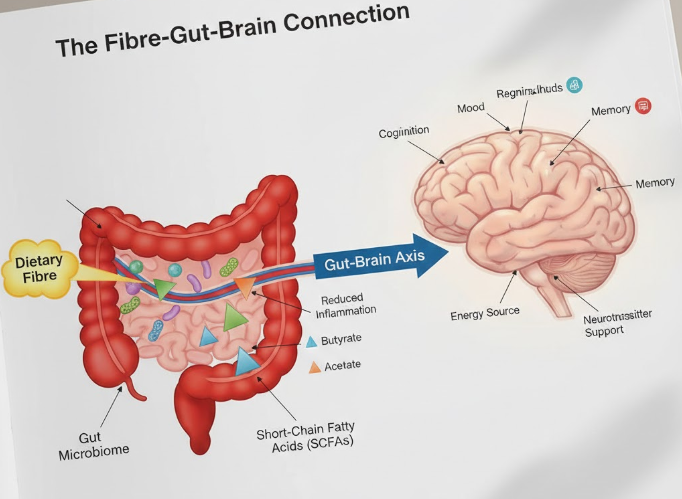
When gut microbes break down fibre, they produce short-chain fatty acids such as acetate, propionate, and butyrate. These compounds provide energy to cells and support overall health.
Butyrate, in particular, helps maintain the gut lining. This reduces the chance that harmful substances enter the bloodstream and affect the brain.
How Fibre Protects the Brain
Scientists now believe fibre has a direct impact on cognitive health.
According to Karen Scott, professor of gut microbiology at the Rowett Institute at the University of Aberdeen, higher fibre intake supports the gut-brain axis. This is the communication pathway linking the gut and the brain.
“The more fibre you eat, the more butyrate is produced,” she explains. “As a result, cognition can be better preserved.”
A 2022 study of more than 3,700 adults found that people with the highest fibre intake had a lower risk of dementia. Those with the lowest intake faced a higher risk.
Another study involving adults over 60 also showed better cognitive performance among those who ate more fibre.
Evidence from Clinical Trials
While many studies show strong links, newer research suggests a direct causal effect.
In a randomised controlled trial involving twins, participants who consumed a daily prebiotic fibre supplement showed improved cognitive test results within three months. Those who took a placebo did not.
Researchers also found changes in the gut microbiome, including higher levels of beneficial bacteria such as Bifidobacterium.
Mary Ni Lochlainn, a clinical lecturer in geriatric medicine at King’s College London, led the study. She says the findings show promise for using diet to support brain health in older adults.
“The microbiome is flexible,” she explains. “Certain microbes are clearly linked to better health outcomes.”
Fibre, Mood, and Mental Health
Higher butyrate levels are also linked to better sleep, reduced depression, and improved mental wellbeing.
Research shows that people with Alzheimer’s disease tend to have fewer butyrate-producing bacteria and higher levels of gut inflammation. Although these findings are observational, they support growing evidence linking gut health to brain function.
How to Eat More Fibre
Experts say increasing fibre intake does not need to be complicated.
Eating a wider variety of plant-based foods helps build a diverse gut microbiome. Pulses such as lentils, peas, and beans are especially rich in fibre.
Simple changes can help. For example:
- Replace white bread and pasta with wholegrain versions
- Mix brown and white pasta to improve taste
- Choose wholegrain breakfast cereals
- Add beans or peas to soups, stews, and pasta
- Snack on apples, popcorn, nuts, and seeds
For people who struggle to chew or swallow, fibre supplements can also help.
A Simple Change with Big Benefits
Experts agree that fibre offers one of the strongest health returns of any dietary change.
“Increasing fibre intake is the single most beneficial thing people can do for their overall health,” Scott says.
As research continues, fibre is no longer just about digestion. It is now central to brain health, longevity, and healthy ageing.
Related posts:
 Nearly One in Four Births Were Caesarean Deliveries
 Over 42,000 People Infected With Tuberculosis in Seven Years
 Gicumbi Residents Raise Safety Concerns Over Stray Dogs
 Food Hygiene Identified as a Major Factor in Preventing Diseases in Rwanda
 Over 400,000 Rwandans Diagnosed With Malaria in Three Months
 WHO Calls for Health Taxes on Sugary Drinks and Alcohol
 France Sees More Deaths Than Births in 2025
 Ukrainians Encouraged to Use Heated Sex Toys to Cope With Extreme Winter Cold
 29% of Men and 23% of Women Unaware of HIV Status
 Over 500 Children Killed by Malaria in Rwanda Over the Last Five Years
 Rwanda to Produce Medical Radionuclides
 Gaps in Childhood Immunization Persist as Parents Cite Challenges in Huye
One thought on “How Fibre Protects the Brain and Slows Cognitive Decline”