






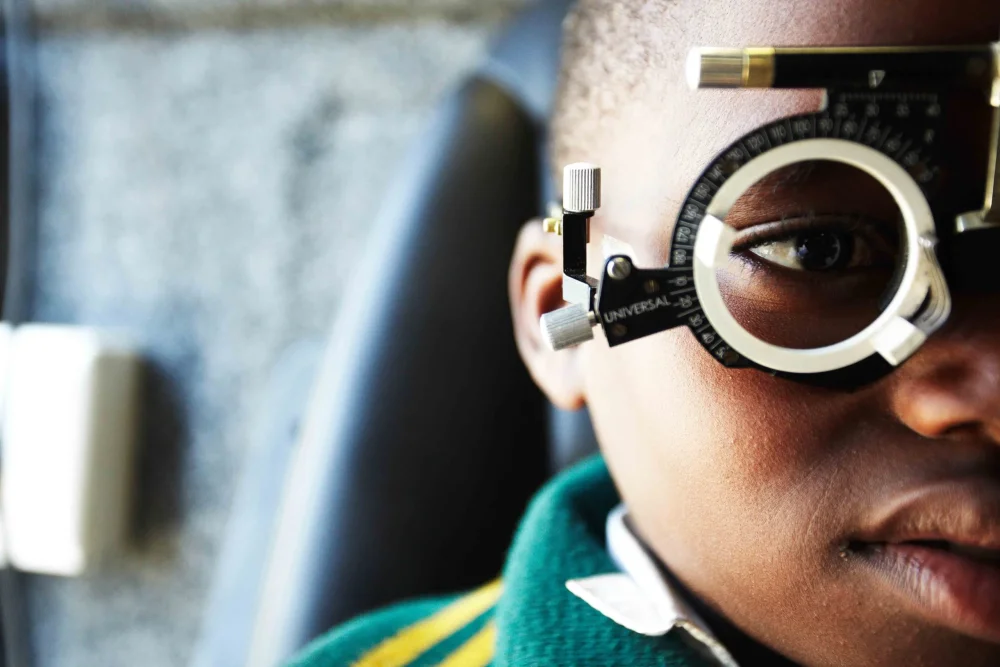
Health experts warn that half of the global population could suffer eye disease by 2050, mainly due to myopia and untreated vision conditions.
If left untreated, these eye diseases could lead to severe vision loss or blindness.
Rising Global Eye Disease by 2050
Medical researchers estimate that eye disease could affect billions worldwide by 2050.
Myopia, also known as short-sightedness, is the fastest-growing condition.
Experts say the problem is worsening each year.
As a result, vision disorders may cost the global economy over 173 billion dollars annually.
Millions Already Lack Eye Treatment
According to Rohto Pharmaceutical, over 1.1 billion people had untreated eye conditions in 2020.
However, projections show this number could reach 1.8 billion by 2050.
Rohto Pharmaceutical has provided eye care services for more than 100 years.
The company began operations in 1909.
Technology Use Drives Vision Problems
Increased screen use is a major cause of rising eye disease by 2050.
Many adults report eye strain, headaches, and blurred vision.
Extended use of phones, computers, and tablets worsens eye fatigue.
Consequently, digital lifestyles are accelerating vision problems.
Children at Growing Risk
Myopia cases among children have tripled over the last 30 years.
Today, one in three children globally has some form of vision impairment.
Poor eyesight affects learning and academic performance.
Experts warn this trend threatens future productivity.
Age-Related Eye Diseases Increasing
More than 200 million adults worldwide suffer vision loss linked to macular disease.
This condition damages the central part of the eye.
Without early treatment, permanent blindness may occur.
Therefore, early screening remains critical.
Research and Solutions Underway
Rohto Pharmaceutical is developing new technologies for eye treatment.
These include advanced tools that analyze eye movement and focus patterns.
Researchers aim to detect eye disease earlier.
The goal is to restore vision and slow disease progression.
Health experts urge regular eye checks and reduced screen exposure.
Preventive care could limit the global eye disease crisis by 2050.
Related posts:
 Rwanda needs 500 million dollars for outbreaks
 Join Rwanda’s Premier Start Up and win prizes
 Gisagara Leaders Call on Investors to Invest in the District
 Why the Rich and Powerful Could Not Say No to Jeffrey Epstein
 Applications for the MEST AI Startup Program are now open!
 Panic Grips TikTok Users Duped by “End of the World” Prophecy
 From a Young Trader to a Business Leader: The Story of Alex Nyamwasa
 5 reasons why Israel must forced to strike Iran.
 Rwanda to Begin DNA Testing for Unborn Babies in 2026
 Mastercard and Microsoft Team Up to Bring AI Shopping to Consumers
 Bisimwa Fires Back at Tshisekedi for Linking President Kagame to AFC/M23
 Rwanda’s Tourism Revenue Hits $647M in 2024, Targets $700M Boost with New Attractions and Global Events
 OpenAI Warns of Rising Cybersecurity Risks of upcoming AI model
 U.S. Reveals Hamas Planning Major Attack on Gaza Civilians
 Supermoon Visible in Rwanda on December 4
 Job at Isange Coffee shop Supervisor
 Rwanda: Small and Medium Enterprises Unlocking New Opportunities Through Technology
Job: Reconciliation Officer at ASA
Rwanda: Small and Medium Enterprises Unlocking New Opportunities Through Technology
Job: Reconciliation Officer at ASA
 Europe: Apple Announces Major Investment in Renewable Energy Project
 Spiro Rwanda Marks Two Years of Electrifying Progress in Sustainable Mobility
888slot không giới hạn số lần rút tiền/ngày – bạn thắng bao nhiêu, rút bấy nhiêu, miễn là đủ điều kiện theo quy định. TONY01-04H
lixi88 hỗ trợ nạp tiền qua MoMo, ZaloPay, ngân hàng nội địa – thao tác đơn giản, xử lý trong 30 giây. Rút tiền về tài khoản chỉ sau 5 phút! TONY01-16