






Members of the Rwandan Senate have raised serious concerns over the persistently high cost of animal feed, warning that the situation is pushing many livestock farmers into financial losses despite their heavy investment in animal husbandry.
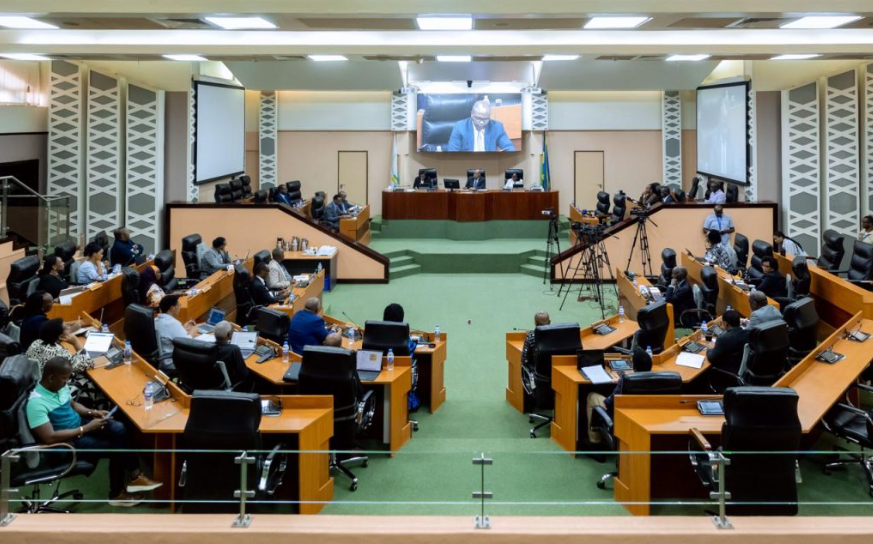
The concerns were expressed during a Senate plenary session held with the Minister of Agriculture and Animal Resources (MINAGRI), which focused on government measures to address challenges related to the availability and affordability of animal feed.
Animal Feed Remains Insufficient and Expensive
According to a report by the Rwanda Governance Board (RGB), 57.9 percent of citizens say that animal feed is insufficient, both in availability and affordability. The report highlights a major weakness in the livestock value chain that continues to affect farmers across the country.
Senator Mukabalisa Domitille said the high cost of animal feed does not match the income farmers earn from livestock products.
“Livestock farmers buy animal feed at very high prices, yet the income they generate from milk, meat, or eggs does not match their investment. In reality, they feed animals, but the animals do not feed them,” she said.
Concerns Over Export of Local Animal Feed
Senator Mureshyankwano Marie Rose expressed concern over the exportation of locally produced animal feed while domestic farmers struggle to access it.
“It is worrying to see animal feed exported abroad while local farmers cannot access it or are forced to buy it at extremely high prices,” she noted.
Senators called on MINAGRI to prioritize local livestock farmers by introducing policies and practical interventions that lower feed costs and improve the sustainability of livestock farming in Rwanda.
Government Outlines Measures to Reduce Costs
In response, the Minister of Agriculture and Animal Resources, Dr. Ndabamenye Telesphore, assured the Senate that the Government is implementing several strategies to address the problem.
“We are strengthening the capacity of local animal feed processing industries and increasing the production of crops used in animal feed manufacturing in order to reduce costs on the market,” he said.
Dr. Ndabamenye added that the Government is encouraging private sector investment in animal feed production to increase supply and improve quality.
Livestock Sector Key to Rwanda’s Economy
Livestock farming remains a vital sector of Rwanda’s economy, contributing about 3 percent of the national Gross Domestic Product (GDP).
MINAGRI says the Government’s objective is to modernize the livestock sector by 2029, making it profitable for farmers and a stronger source of national revenue.
Statistics from the Ministry show that 50 percent of Rwandan households are engaged in livestock farming, mainly for the production of meat, milk, and eggs. This highlights the sector’s importance to livelihoods and overall economic development.
Related posts:
 Kirehe: 90 Families Receive Cows through Rwanda’s Girinka Program
 Gisagara: Over 36,000 Cows Distributed to Residents in Five Years
 U.S. Banks Report Strong Q4 Profit Growth
 NYAGATARE: Poorly Planned Warehouses Raise Public Concern
 Huye: Residents Say Access Roads Left Them Landless Without Compensation
 Rwanda’s Aviation Fuel Storage Reaches 12 Million Litres
 Elderly Women in Huye Say Poverty Exit Project Failed
 Rwanda Targets Reduction in High Cost and Shortage of Animal Feed
 Rwanda Expands Its Digital Footprint
 Sovu Industrial Zone Brings New Hope to Huye Residents