



Iran internet shutdown protests escalated on Friday as authorities imposed severe nationwide internet restrictions. The government aimed to curb expanding demonstrations driven by soaring inflation and economic hardship.
As a result, Iran became largely cut off from the outside world. Phone calls failed to connect, several flights were cancelled, and local news websites updated only intermittently. Meanwhile, protests continued to spread across all provinces, prompting officials to tighten control over information.
Khamenei accuses protesters of serving foreign interests
Meanwhile, Supreme Leader Ayatollah Ali Khamenei accused protesters of acting on behalf of U.S. President Donald Trump. He warned that Iran would not tolerate what he described as “mercenaries for foreigners.”
According to Khamenei, vandals destroyed public property to please the U.S. president. He also urged Trump to “manage your own country” instead of interfering in Iran’s affairs.
At the same time, authorities said they accept peaceful economic protests. However, they vowed to confront violent unrest using security forces.
Economic crisis fuels nationwide demonstrations
The protests began late last month amid Iran’s worsening economic crisis. Over the past year, the rial lost nearly half its value against the U.S. dollar. In addition, inflation rose above 40% in December.
Initially, demonstrations focused on economic issues. However, they soon evolved into direct criticism of the ruling authorities. Protesters now chant slogans openly targeting Iran’s leadership.
According to human rights groups, dozens of people have died since the unrest began. Consequently, the protests have become the country’s most significant wave of unrest in three years.
Opposition figures call for continued protests
Meanwhile, Iran’s fragmented opposition abroad called for more demonstrations. Reza Pahlavi, the exiled son of Iran’s former shah, urged citizens to continue protesting.
“The eyes of the world are upon you,” he said. “Take to the streets.”
However, President Trump later said he would not meet Pahlavi. He also expressed doubts about formally backing him, despite earlier remarks suggesting possible support for protesters.
State media blames opposition groups for violence
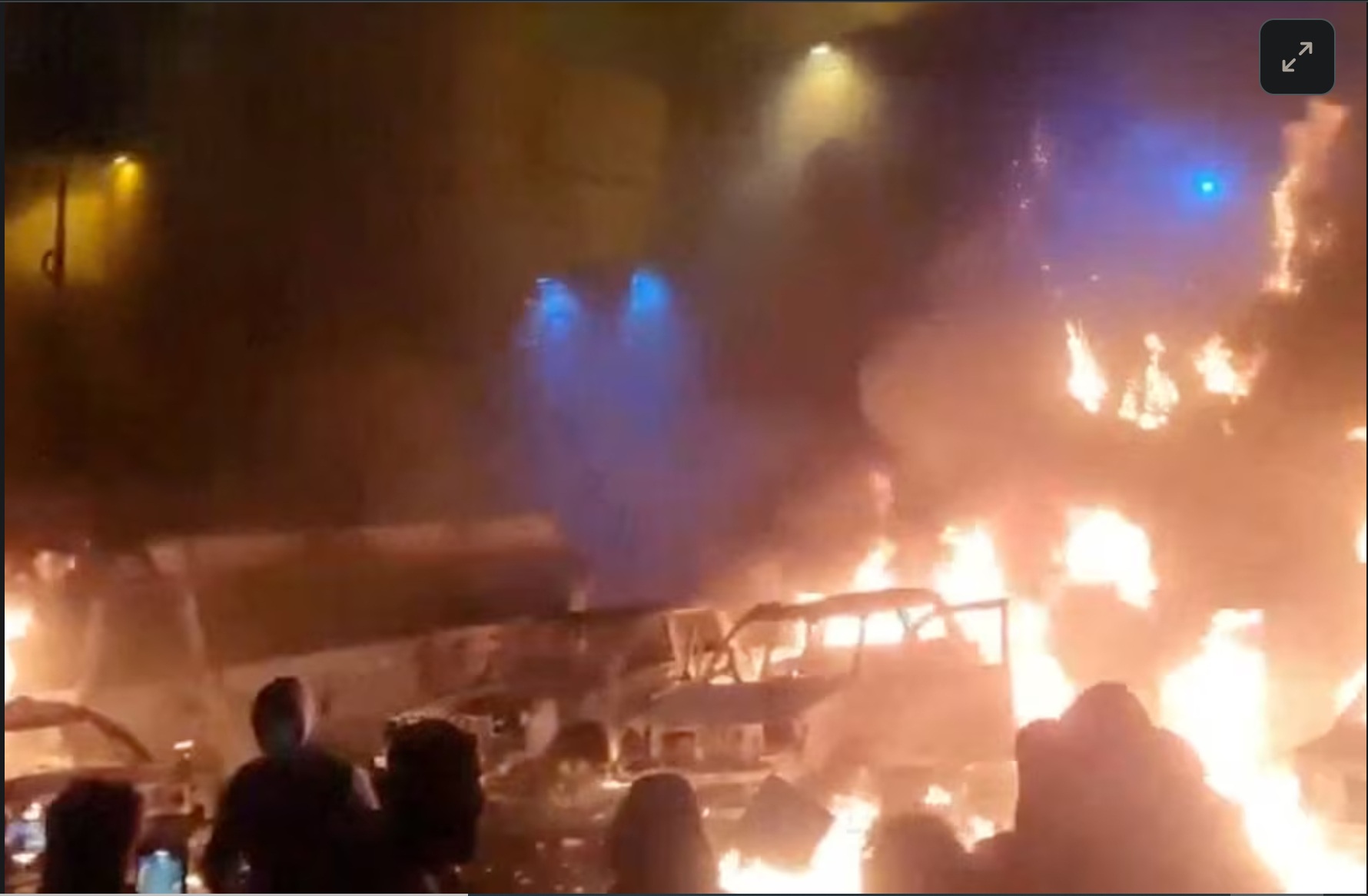
Iranian state television aired footage showing burning buses, cars, and motorbikes. It also showed damage to metro stations and banks. Officials blamed the violence on the People’s Mujahedin Organisation (MKO), an opposition group that emerged after the 1979 Islamic Revolution.
In Rasht, a city near the Caspian Sea, a state TV reporter described the scene as a “war zone.” He claimed that many shops had suffered extensive destruction.
International pressure grows Amid Sanctions
Meanwhile, international pressure on Iran continues to grow. Global sanctions linked to its nuclear program remain in force. As a result, Iran faces mounting diplomatic and economic challenges.
On Friday, a French diplomatic source urged Tehran to show “maximum restraint” toward protesters.
Although the unrest has not yet reached the scale of the 2022 women’s rights protests following the death of Mahsa Amini, analysts see it as the most serious internal challenge since then.
ALSO READ: US. Protests Erupt Nationwide After Two Immigration Officer Shootings in Two Days
Related posts:
 Utah Prosecutors Reveal Note Written by Suspect Before Killing of Charlie Kirk
 Trump Warns Venezuela’s New President, Threatens Second Military Strike
 Rwanda to Integrate Mental Health in Justice System
 M23 Rebels Demand SADC Withdrawal After Clashes in Goma
 US promises 15-year security guarantee to Ukraine amid peace talks
 Mount Kilimanjaro helicopter crash kills five during rescue mission
 Maduro Tells US Court He Remains President
 Trump Pushes Greenland Purchase Talks, Refuses to Rule Out Military Action
 71% of Rwandans Do Not Visit National Museums, Cultural Report Reveals
 Trump Revives Plan to Bring Greenland Under U.S. Influence Amid Security Concerns
 We invited a man into our home at Christmas and he stayed with us for 45 years
 Veteran German Diplomat Visits M23-Held Goma
 IShowSpeed Plans to Visit Mountain Gorillas in Rwanda During Africa Tour
 Bruce Willis’ Life Caught Between Survival and Decline
 MPs Debate Points-Based System for Traffic Offences
 Trump Proposes 50% Increase in US Military Budget
 Japan Must Be Stopped at Any Cost,” North Korea Says Over Nuclear Weapons Claim
 US Senate Advances Measure to Curb Trump’s Military Power on Venezuela
 US Strikes Venezuela as Trump Claims Maduro Was Captured
 Plot to Kill Burkina Faso Leader Foiled, Junta Says
Không phải ngẫu nhiên mà xn88BET có hàng triệu thành viên. Uy tín được xây dựng từ năm 2019 giúp thương hiệu này đứng vững trước mọi đối thủ cạnh tranh. TONY01-29H