




Animal feed prices continue to rise across Rwanda, putting pressure on livestock farmers and threatening meat, milk, and egg production.
The issue has gained attention as senators carry out nationwide consultations from January 20 to January 28. The discussions focus on livestock development, especially access to affordable and quality animal feed.
Farmers and feed producers say cereal shortages and heavy reliance on imports are the main reasons behind the rising costs.
Feed Prices More Than Double
Livestock farmers say feed prices have increased sharply over the past two years.
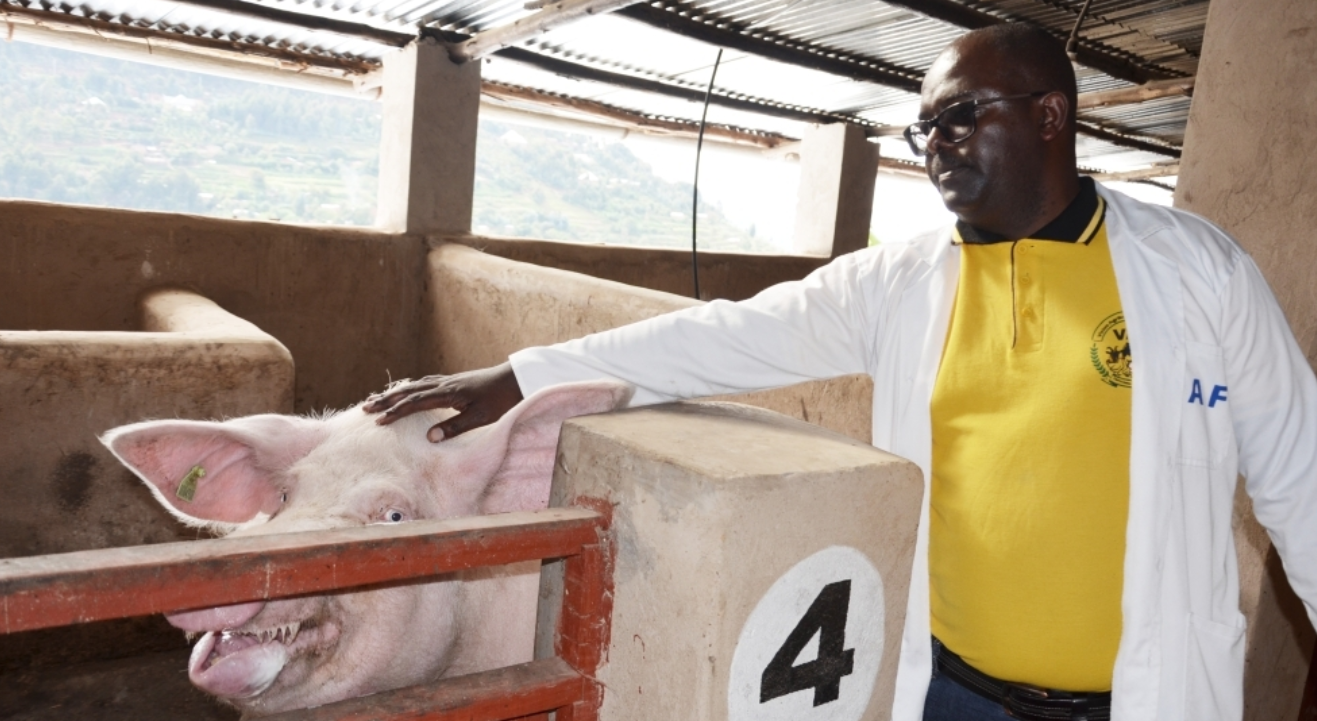
Jean-Claude Shirimpumu, a pig farmer from Gicumbi District and chairperson of the Rwanda Pig Farmers’ Association, said prices have more than doubled since 2022.
“In 2022, one kilogramme of pig feed cost about Rwf270. Even Rwf300 was expensive. Today, it costs around Rwf600,” he said.
He warned that many farmers can no longer afford to continue production.
Competition With Human Food Needs
Shirimpumu explained that animal feed relies heavily on cereals that people also eat, especially maize and soybeans.
“Cereals make up more than 70 per cent of animal feed,” he said. “But maize production cannot meet demand from both people and livestock.”
Because of this shortage, feed producers depend on imports, which increases costs further.
Farmers Struggle to Make Profit
While feed prices have risen sharply, prices for livestock products have increased only slightly.
In 2022, when feed cost about Rwf300 per kilogramme, a kilogramme of live pig sold for around Rwf2,200. Today, feed costs about Rwf600, but the live pig price averages only Rwf2,500.
Pork now sells for between Rwf4,000 and Rwf5,000 per kilogramme in butcheries.
Jean de Dieu Hakizimana, chairperson of the Rwanda Poultry Industry Association, said high feed prices are the biggest challenge for poultry farmers.
“Feed factories exist across the country, but prices remain high. Many farmers produce eggs or meat at a loss,” he said.
He added that feed prices increase every two to three months due to maize shortages and imported soybeans. A kilogramme of layer feed now costs more than Rwf700.
Heavy Dependence on Imports
Feed manufacturers say limited local raw materials keep prices high.
Pacifique Mutaganzwa, Human Resources Manager at Gorilla Feed, said imports expose producers to foreign exchange losses, especially as the Rwandan franc weakens.
Soybean meal, which makes up about 40 per cent of feed, is mostly imported from India. It costs about Rwf1,000 per kilogramme at entry. Vitamins and concentrates also come from abroad.
Maize accounts for about 50 per cent of feed. Most of it comes from local farmers, but once stocks run out, companies import maize at higher prices.
“When maize costs Rwf600 per kilogramme and you add premixes, feed prices rise quickly,” Mutaganzwa said.
Local Production Still Low
Mutaganzwa said Rwanda does not yet produce enough crops for both people and animals.
“What people eat is what animals eat,” he said. “Even maize bran rarely drops below Rwf400 per kilogramme.”
Although Gorilla Feed can produce up to 5,000 tonnes per month, it currently produces about half that amount due to shortages and high input costs.
Industry players agree that increasing local production of maize, soybeans, and cassava is the long-term solution.
Government Seeks Solutions
Speaking to senators on January 19, Telesphore Ndabamenye, Minister of Agriculture and Animal Resources, said Rwanda must rethink land use to increase cereal production.
He stressed the need to expand fodder production and build reserves of by-products such as maize bran and molasses.
Ndabamenye highlighted the Food Basket Sites (FoBaSi) programme, launched this fiscal year to boost productivity through focused investment.
“Our national maize yield averages two tonnes per hectare. In Food Basket Sites, we aim for at least six tonnes,” he said.
Government data shows Rwanda needs more than 874,000 tonnes of maize each year. In 2024, production reached just over 627,000 tonnes, forcing the country to import more than 137,000 tonnes.
Ndabamenye said irrigation, mechanisation, better access to finance, and full use of feed factories operating below capacity are key to reducing imports and stabilising feed prices.
Related posts:
 Transfer talk and Gossip, Manchester United, Arsenal & Chelsea are ready for striker Viktor Gyökeres
 Fast Track KYC Enables Earlier Wallet Activation for Ecosystem Participation for New Users
 Diseases spread by kissing
 Pi Network’s Bold $314,159 Valuation Signals a New Era for Crypto and Decentralized Trust
 Job Opportunity at King Faisal Hospital Rwanda
 Job opportunities at unguka
Job: Senior Accountant, Inventory & Fixed Assets
Job opportunities at unguka
Job: Senior Accountant, Inventory & Fixed Assets
 Colombian President Criticizes U.S. After Losing Visa
 Create mifotra account in 5 steps and start making money now
Job at The Office of the Auditor General (OAG)
Create mifotra account in 5 steps and start making money now
Job at The Office of the Auditor General (OAG)
 Pi Network and the True Forex Community: Redefining Global Finance
 Michael Bay Pledges to Spotlight Baby Gorilla He Named in Hollywood
 Pi App Studio Introduces Major Updates to Boost Customization and Ecosystem Connectivity
 OpenAI’s Value Reaches $500 Billion
 Pi Network Sets Its Sights on Global Blockchain Leadership with Open Network Launch
 Beyond Market Cap: How Pi Network’s $34 Quadrillion Utility Vision Could Redefine Crypto
Job of Billing and Recovery Accountant at AOS Ltd
Apply for Cobus Drivers job at RwandAir Limited
Beyond Market Cap: How Pi Network’s $34 Quadrillion Utility Vision Could Redefine Crypto
Job of Billing and Recovery Accountant at AOS Ltd
Apply for Cobus Drivers job at RwandAir Limited
 INNOVATION ECOSYSTEM COORDINATOR JOB
Job opportunities: Apply for Data scientist Officer at BNR
INNOVATION ECOSYSTEM COORDINATOR JOB
Job opportunities: Apply for Data scientist Officer at BNR