




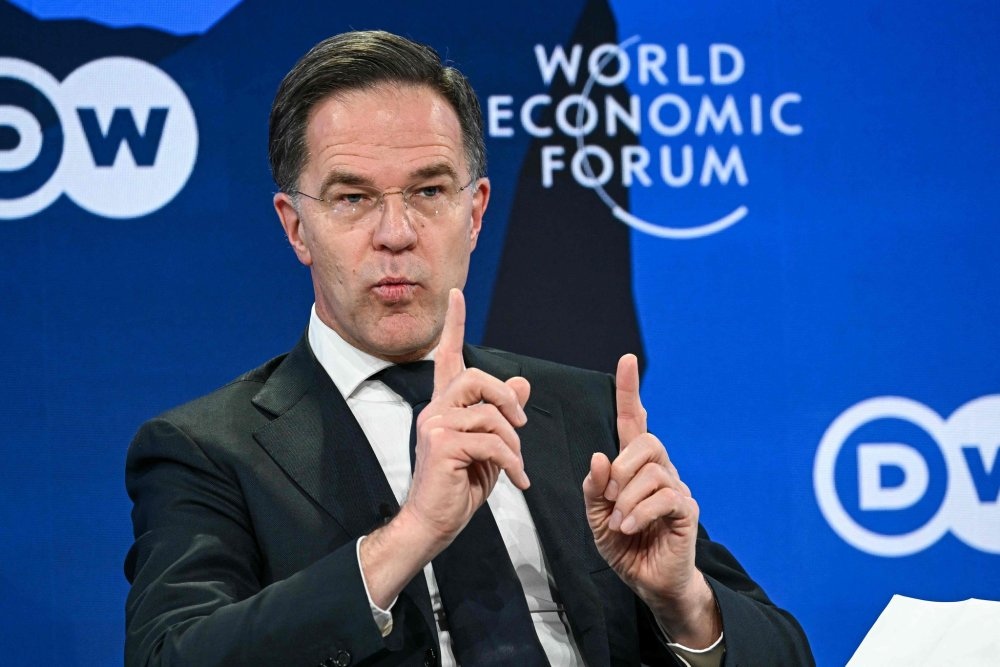
The Secretary General of the North Atlantic Treaty Organization (NATO), Mark Rutte, has said that Europe should consider itself fortunate that Donald Trump is in power, arguing that the pressure applied by the former U.S. president has pushed European countries to take greater responsibility for their own security.
Rutte made the remarks during the World Economic Forum (WEF) currently taking place in Davos, Switzerland, an event also attended by President Trump.
Trump’s Pressure Changed Europe’s Security Approach
According to Rutte, although Trump’s rhetoric may not appeal to everyone, his leadership played a crucial role in forcing Europe to reduce its reliance on the United States and invest more seriously in defense.
“People may not like what I am saying because I am supporting President Trump, but I truly believe Europe should be grateful that he is there,” Rutte said.
“He made Europe take its own security seriously.”
Rutte noted that for many years, several European countries failed to meet NATO’s defense spending targets, despite growing global security threats.
Defense Spending Increased Under Trump’s Influence
He highlighted that countries such as Spain, Italy, and France were reluctant to allocate at least 2 percent of their Gross Domestic Product (GDP) to defense before Trump exerted sustained pressure on NATO allies.
Rutte added that Trump views him as the leader who helped Europe move away from what he described as political complacency following the end of the Cold War in 1991.
NATO Agrees to Raise Defense Budget Target
NATO member states have now agreed to significantly increase defense spending, with a new target of 5 percent of GDP by 2035, following a proposal initially introduced by President Trump.
The move reflects growing concerns over global instability and renewed geopolitical tensions, particularly in Europe.
Greenland Tensions Add to Transatlantic Strain
Rutte’s remarks come amid ongoing tensions related to Greenland, after Trump suggested that the United States should have full military access to the island.
The comments sparked diplomatic friction between the U.S. and several European countries, particularly Denmark, which administers Greenland.
At one point, Trump threatened to increase tariffs on countries contributing troops to Greenland, though he later softened his stance, saying the matter would be resolved through dialogue rather than force.
Related posts:
 China, Russia & Iran Exercises Begin in South Africa
 Trump Announces U.S. Withdrawal from U.N. Agencies
 US and Russian Envoys Hold Talks about Ukraine peace plan
 Ukraine, France and UK Sign Declaration on Multinational Forces
 ”Europe will not accept the law of the strongest” Macron said to Trump
 Iran State TV Hack: Hackers broadcast exiled crown prince Amid protests
 Trump to Meet Colombian President at White House
 Germany Defends Greenland’s Sovereignty after Trump’s speech
 Trump Pushes Greenland Purchase Talks, Refuses to Rule Out Military Action
 Uganda election results 2026: Museveni takes early lead as deadly violence erupts
 Putin Receives Invitation to Join Trump’s “Board of Peace”
 Ruto Proposes Death Penalty for Drug Traffickers in Kenya
 MPs Debate Points-Based System for Traffic Offences
 Khamenei warns protesters as Iran faces widespread internet blackout
 Life of Ugandan opposition leader Kizza Besigye in danger, wife warns
 Trump Warns Venezuela’s New President, Threatens Second Military Strike
 Trump Seeks New Ties With Venezuela After Madulo capturing
 Canada Voices Growing Worry It Could Be Next After Trump’s Greenland Signals
 Touadéra Re-elected President of Central African Republic
 Uganda election violence: At least seven killed as Museveni secures majority