




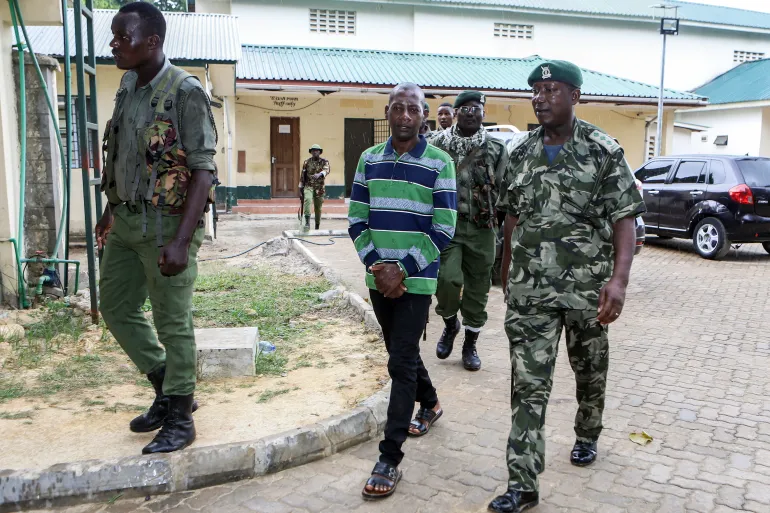
The Paul Mackenzie cult deaths case has entered a new phase. Kenyan prosecutors have charged the self-proclaimed preacher and seven associates over 52 additional deaths in Kilifi County.
On Wednesday, the Office of the Director of Public Prosecutions confirmed the charges. Prosecutors accused Mackenzie and his co-defendants of organized criminal activity, radicalization, and facilitating terrorist acts.
The suspects denied all charges in court. Judges scheduled the next hearing for March 4.
Prosecutors outline new allegations
According to prosecutors, Mackenzie promoted an extreme belief system. He allegedly urged followers to reject government authority. Furthermore, investigators say he encouraged acts linked to terrorism.
Prosecutors claim Mackenzie directed operations in Kwa Binzaro. They also allege he continued giving instructions after police detained him in 2023.
Earlier, authorities had already charged him with murder and terrorism. Those charges relate to the Shakahola Forest tragedy. That disaster ranks among the worst cult-related cases in recent history.
Shakahola Forest deaths shocked Kenya
Investigators recovered more than 400 bodies from Shakahola Forest by 2025. Most victims died from starvation, according to autopsy reports. However, pathologists found signs of strangulation and suffocation on some bodies.
Later, authorities discovered more graves in Kwa Binzaro. The site lies about 30 kilometers from Shakahola. Prosecutors say Mackenzie oversaw activities in both locations.
Authorities accuse leaders of the Good News International Church of ordering followers to starve. They allegedly told members to prepare for the end of the world. Mackenzie, however, denies these accusations.
Government tightens scrutiny after Paul Mackenzie cult deaths
The scale of the Paul Mackenzie cult deaths has alarmed Kenyan authorities. As a result, officials now seek stricter oversight of fringe religious groups.
In addition, the Kenyan Senate conducted an investigation. A state-funded human rights body also released findings. Both reports suggest authorities could have acted earlier.
Consequently, lawmakers now debate stronger regulation measures. They aim to prevent similar tragedies in the future.
Related posts:
 Uganda election results 2026: Museveni takes early lead as deadly violence erupts
 Russia Attack Ukraine Energy Grid, Leaving Millions Without Power in Freezing Cold
 37-Year-Old Woman Killed by Lightning as Heavy Rains Hit Gisagara
 US promises 15-year security guarantee to Ukraine amid peace talks
 Utah Prosecutors Reveal Note Written by Suspect Before Killing of Charlie Kirk
 Zelensky Ukraine Russia US talks seen as step toward ending war
 Mogadishu municipal elections mark historic step toward direct democracy in Somalia
 Uganda election violence: At least seven killed as Museveni secures majority
 Harvard Stands Up to Trump: But for How Long Can It Hold the Line?
 Iran State TV Hack: Hackers broadcast exiled crown prince Amid protests
 Supreme Court Reviews State Bans on Transgender Athletes
 Cuba Accuses US of Killing 32 Soldiers During Venezuela Operation
 Ashesi Graduate Faces Post-Graduation Plagiarism Penalty
 WhatsApp faces European antitrust investigation over artificial intelligence
 Life of Ugandan opposition leader Kizza Besigye in danger, wife warns
 IShowSpeed Plans to Visit Mountain Gorillas in Rwanda During Africa Tour
 Attack Reported at US Vice President JD Vance’s Home
 Tshisekedi Suspends FARDC Spokesperson Over Hate Speech Targeting Tutsi Women
 Global pressure forces xAI to limit Grok image features
 United States Suspends Issuance of Certain Visas to Tanzanian Citizens