



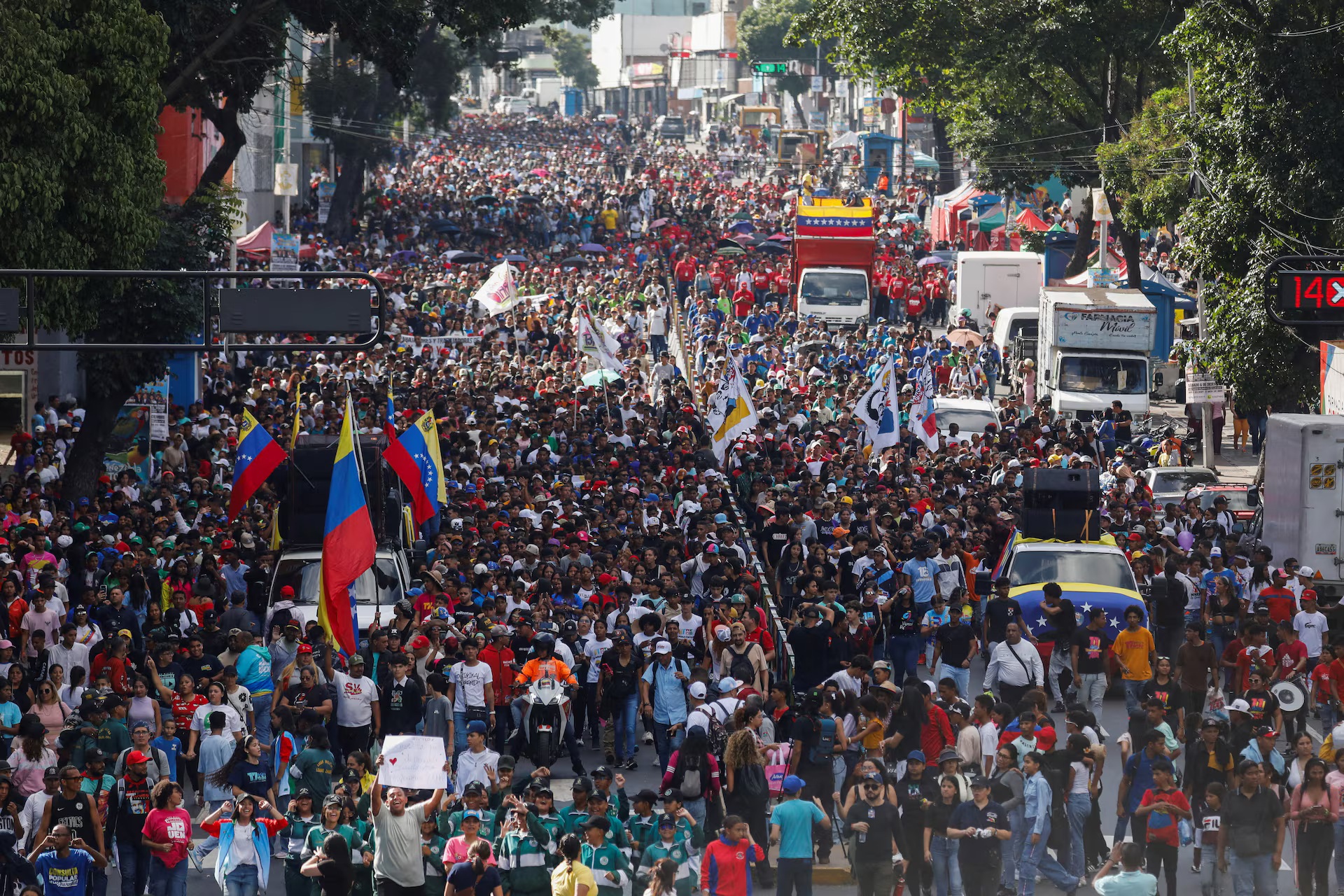
Socialist Party support in Venezuela is showing visible cracks as distrust, internal divisions, and shrinking financial benefits undermine the ruling party’s grip on power following the capture of President Nicolás Maduro by U.S. forces.
In Maracaibo, Venezuela’s main oil-producing city, members of the ruling United Socialist Party (PSUV) conducted door-to-door visits weeks after Maduro’s removal to assess loyalty among registered supporters. According to one organizer, roughly half of those contacted said they no longer supported the party.
“The response is very bad,” the organizer said. “There is division among us.”
Reuters could not independently verify the canvassing results. However, interviews conducted in three other regions reflected similar patterns of declining support and internal strain.
Fractures Spread Across the Party Base
Reuters spoke with 13 PSUV members and local leaders across four states, all of whom described growing fractures within the party. Many expressed uncertainty about their political future and deep concerns about economic stability.
Several sources said the government’s long-standing patronage system which relied on food parcels, bonuses, and financial incentives to secure loyalty has weakened since Maduro’s capture. Five sources confirmed that some benefits and contributions had stopped entirely.
Eight party members reported declining participation at the local level. Two estimated that attendance at marches and meetings had dropped by as much as 70%.
Rising Distrust and Fear of Reprisals
Six interviewees described growing suspicion among party loyalists, particularly toward interim President Delcy Rodríguez. Several said local leaders encouraged members to report colleagues suspected of losing faith in the party, a tactic long used to suppress dissent.
All sources requested anonymity due to fear of retaliation. Reuters withheld identifying details to protect their safety.
There are no recent public figures on PSUV membership. While declining participation was reported across geographically distant states, Reuters could not assess conditions nationwide. Media restrictions and fear of reprisals continue to limit open reporting in Venezuela.
Leadership Under Pressure
The Venezuelan government and the PSUV did not respond to Reuters’ requests for comment.
Since Maduro’s removal, Rodríguez has repeatedly called for national unity and framed the crisis as a threat to Venezuela’s sovereignty. She has also pledged economic recovery while denouncing Maduro’s detention as a kidnapping.
At the same time, Rodríguez has moved to comply with U.S. demands to reopen Venezuela’s oil sector to American companies. She has also met with the CIA director to discuss cooperation against drug trafficking.
Analysts say weakening Socialist Party support in Venezuela could complicate Rodríguez’s efforts to consolidate power. Reuters has previously reported that she faces internal rivalry from Interior Minister Diosdado Cabello, who leads the PSUV and maintains close ties to security forces and pro-government colectivos.
A Party at a Crossroads
As desertions grow and economic incentives fade, the ruling party faces one of its most serious internal challenges in decades. Whether the PSUV can maintain cohesion without Maduro and without the patronage system that sustained loyalty remains uncertain.
Related posts:
 UBS Banked Ghislaine Maxwell after Epstein’s arrest, documents show
 Army widow trying to stay positive after Trump comments
 New START Treaty Expiry Alarm: Medvedev Warns World of Unchecked Nuclear Powers
 Trump Pushes Greenland Purchase Talks, Refuses to Rule Out Military Action
 Starmer Makes Historic Visit to China
 One Year After AFC/M23 Took Goma, Residents Say Nights Are Now Peaceful
 Trump Warns Venezuela’s New President, Threatens Second Military Strike
 Rwanda to Integrate Mental Health in Justice System
 Nyirubutama Appointed Deputy Presidential Security Advisor
 US and Iran Open Communication Channels
 Trump Proposes 50% Increase in US Military Budget
 Japan restarts world’s largest nuclear plant as Fukushima memories resurface
 Burundian Journalist Receives Four-Year Prison Sentence
 US Senate Advances Measure to Curb Trump’s Military Power on Venezuela
 Plot to Kill Burkina Faso Leader Foiled, Junta Says
 Ugandan President Museveni re-elected to seventh term amid disputed election
 Iran State TV Hack: Hackers broadcast exiled crown prince Amid protests
 Russia reacts to Trump-Europe split over Greenland as arctic stakes rise
 Kenya, Rwanda Formalise KPA to Boost Regional Trade
 US Warns Iran of Severe Consequences Over Protest Crackdown