




Syria protests turned deadly on Sunday as violent clashes broke out between Alawite demonstrators and pro-government counter-protesters in several parts of the country, killing at least three people and injuring dozens more.
Deadly clashes break out during Syria protests
Violence erupted during demonstrations in coastal and central Syria after hundreds of Alawites took to the streets to protest a deadly mosque bombing in Homs. Pro-government counter-protesters confronted demonstrators, triggering stone-throwing and physical fights.
An Associated Press photographer in Latakia reported that counter-protesters hurled rocks at Alawite demonstrators. Some protesters later beat a man who crossed into their ranks. Security forces intervened to separate the groups and fired shots into the air to disperse the crowds.
Officials confirmed that at least three people died and around 60 others suffered injuries. Authorities have not released full casualty details.
Mosque bombing sparks nationwide demonstrations
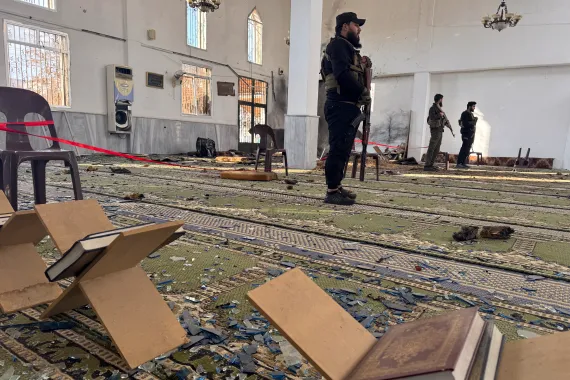
The protests followed a bombing at an Alawite mosque in Homs that killed eight worshippers and wounded at least 18 others during prayers. The attack intensified existing sectarian tensions and sparked outrage within the Alawite community.
Ghazal Ghazal, an Alawite leader living abroad, called for the demonstrations. Ghazal heads the Supreme Alawite Islamic Council in Syria and the Diaspora and urged supporters to demand protection and political reforms.
Calls for federal governance grow louder
During the antigovernment rallies, demonstrators chanted slogans calling for a federal system of governance. Protesters argued that decentralization could protect minority groups and reduce sectarian violence.
Security forces maintained a heavy presence throughout the protests. Despite their efforts, confrontations continued in several locations.
A History of sectarian violence in Syria
Syria has experienced repeated waves of sectarian violence since the fall of former President Bashar al-Assad in December 2024. Rebel forces overran government positions, ending nearly 14 years of civil war.
In March, Assad loyalists ambushed security forces, triggering days of violence that killed hundreds, most of them Alawites. Since then, sporadic attacks have targeted Alawite communities.
Many Alawites have also reported discrimination in public employment and arbitrary detention of young men without formal charges.
Assad’s fall and its aftermath
Under the Assad dynasty, Alawites dominated key government and military positions. Bashar al-Assad, himself an Alawite, fled to Russia after rebels seized control of Damascus.
His departure reshaped Syria’s political landscape but left deep sectarian divisions unresolved. Analysts warn that continued unrest could destabilize the country further.
Related posts:
 Goma Residents Protest Against AFC/M23 Withdrawal From Uvira
 Veteran German Diplomat Visits M23-Held Goma
 AFC/M23 Vows to Counter Civilian Threats in Walikale, Minembwe Amid Ceasefire Violations
 Utah Prosecutors Reveal Note Written by Suspect Before Killing of Charlie Kirk
 Former Russian Diplomat Sentenced to 12 Years for Spying for the United States
 Putin will meet D. Trump face to face in Alaska
 Japan Must Be Stopped at Any Cost,” North Korea Says Over Nuclear Weapons Claim
 Somalia condemns Israel’s recognition of Somaliland, citing Gaza displacement fears
 Bruce Willis’ Life Caught Between Survival and Decline
 Ashesi Graduate Faces Post-Graduation Plagiarism Penalty
 M23 Rebels Demand SADC Withdrawal After Clashes in Goma
 When Faith Is Weaponized: Pope Leo’s Warning to World Leaders
 We invited a man into our home at Christmas and he stayed with us for 45 years
 Mount Kilimanjaro helicopter crash kills five during rescue mission
 Mogadishu municipal elections mark historic step toward direct democracy in Somalia
 Vatican City has welcomed a new leader for the world’s 1.4 billion Catholics
 WhatsApp faces European antitrust investigation over artificial intelligence
 Harvard Stands Up to Trump: But for How Long Can It Hold the Line?
 RDB Announces Conclusion of Landmark Arsenal Sponsorship Deal in 2026
 Burundi: Congolese Refugees Seeking to Return Home ‘Beaten and Killed’
I wish I had read this sooner!