


Hackers successfully disrupted Iranian state television satellite transmissions, broadcasting footage of exiled Crown Prince Reza Pahlavi. The broadcast urged security forces not to “point your weapons at the people.” This incident represents the latest disruption amid widespread nationwide protests in Iran.
The attack highlights vulnerabilities in Iran’s state TV infrastructure and raises questions about internal dissent and external influence.
Footage aims to influence security forces
The video aired across multiple channels of Islamic Republic of Iran Broadcasting (IRIB). It included clips of Crown Prince Reza Pahlavi and Iranian security personnel, claiming some forces had “laid down their weapons and swore allegiance to the people.”
A graphic on the broadcast read: “This is a message to the army and security forces. Don’t point your weapons at the people. Join the nation for the freedom of Iran.”
The Fars News Agency, which is closely linked to Iran’s Revolutionary Guard, acknowledged the disruption, describing it as caused by “an unknown source.”
Historical context of media hacks in Iran
This is not the first time Iranian airwaves have been hijacked. In 1986, The Washington Post reported the CIA supplied Crown Prince Pahlavi’s allies with a miniaturized TV transmitter for an 11-minute clandestine broadcast.
In 2022, multiple Iranian channels broadcast footage of the opposition group Mujahedeen-e-Khalq, calling for the death of Supreme Leader Ayatollah Ali Khamenei.
Rising death toll from protests
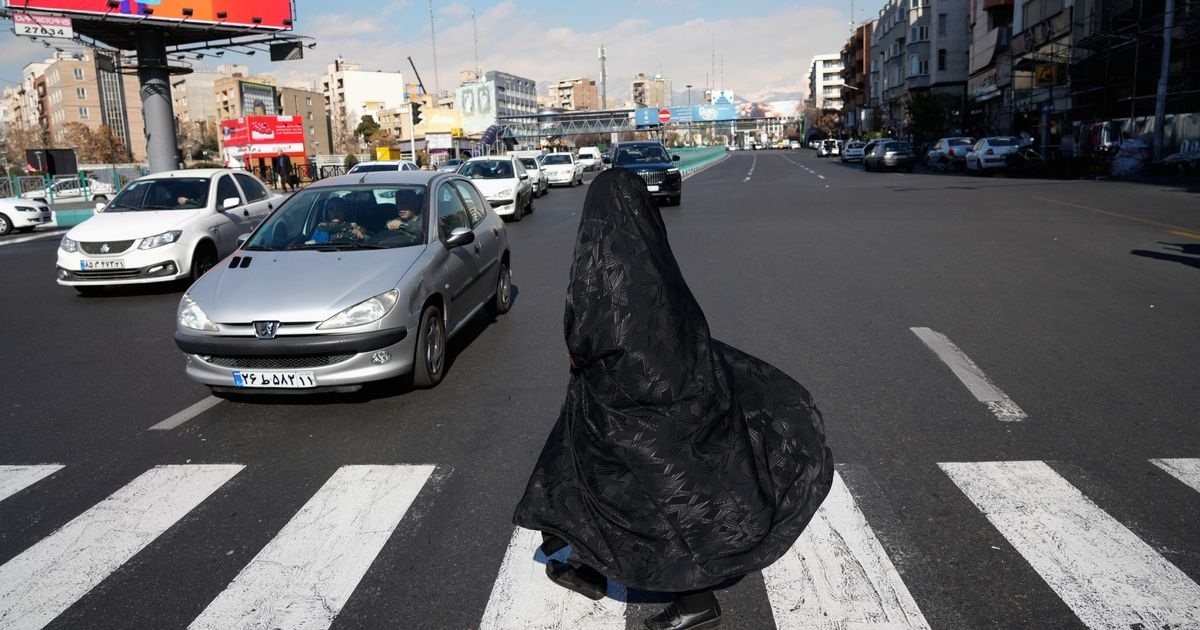
The nationwide protests began on December 28 over Iran’s struggling economy. Activists report at least 3,941 deaths, with over 25,700 arrests. President Khamenei acknowledged “several thousand” fatalities but blamed the United States.
“While the killers and seditious terrorists will be punished, Islamic mercy and leniency will be applied to those who were deceived and did not have effective roles,” stated Iran’s president, judiciary chief, and parliament speaker.
US military response
Tensions with the United States escalated following the crackdown. The USS Abraham Lincoln aircraft carrier and accompanying vessels moved through the Strait of Malacca en route to the Middle East. This development signals heightened monitoring and potential deterrent measures by Washington.
For current U.S. military movements, see US Navy official updates.
International reactions
The World Economic Forum withdrew the invitation for Iranian Foreign Minister Abbas Araghchi to speak at Davos, citing the civilian deaths. Likewise, the Munich Security Conference rescinded invitations to Iranian officials.
Iran’s ambassador to Switzerland criticized the decision, calling it an “unreasonable act” influenced by “anti-Iranian currents and radical American-Zionists.”
What the Iran State TV hack means
The Iran state TV hack demonstrates both technological vulnerabilities and ongoing political tensions within the country. It shows how opposition voices, including exiled figures like Crown Prince Reza Pahlavi, can exploit broadcast channels to reach the Iranian populace despite tight media controls.
This hack is likely to influence both domestic sentiment and international responses. For more coverage of Iranian protests, visit Human Rights Watch – Iran.
MORE STORIES:
 Khamenei warns protesters as Iran faces widespread internet blackout
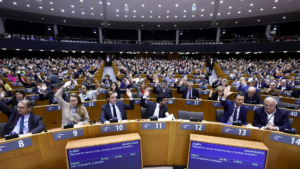 Rwanda’s Foreign Minister Tells EU Parliament It Has No Authority Over Rwanda
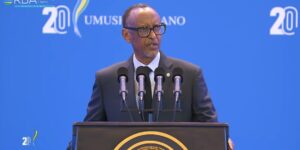 President Kagame warns leaders they will be held accountable at any time
 Colombia President Warns US Over Threats of Arrest Like Venezuela’s Maduro
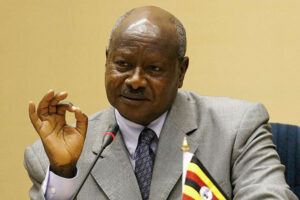 Uganda election results 2026: Museveni takes early lead as deadly violence erupts
 Trump Announces U.S. Withdrawal from U.N. Agencies
 Uganda anti homosexuality law arrests: Two women detained in Arua
 Ashesi Graduate Faces Post-Graduation Plagiarism Penalty
 Ugandan President Museveni re-elected to seventh term amid disputed election
 Man dies as tree crushes caravan during storm Goretti in Cornwall
Hi, itss good poet oon the topic of meeia print, wee alll understand medika is a great sourc oof data.