




Iran warns of retaliation after the United States began withdrawing some military personnel from key Middle East bases, signaling rising tensions as President Donald Trump threatens possible action over Iran’s violent unrest.
A U.S. official confirmed on Wednesday that the withdrawals were precautionary, citing heightened regional risks. The move followed warnings from senior Iranian officials that Tehran would target U.S. bases in neighboring countries if Washington launches strikes.
U.S. Drawdown Signals Growing Tensions
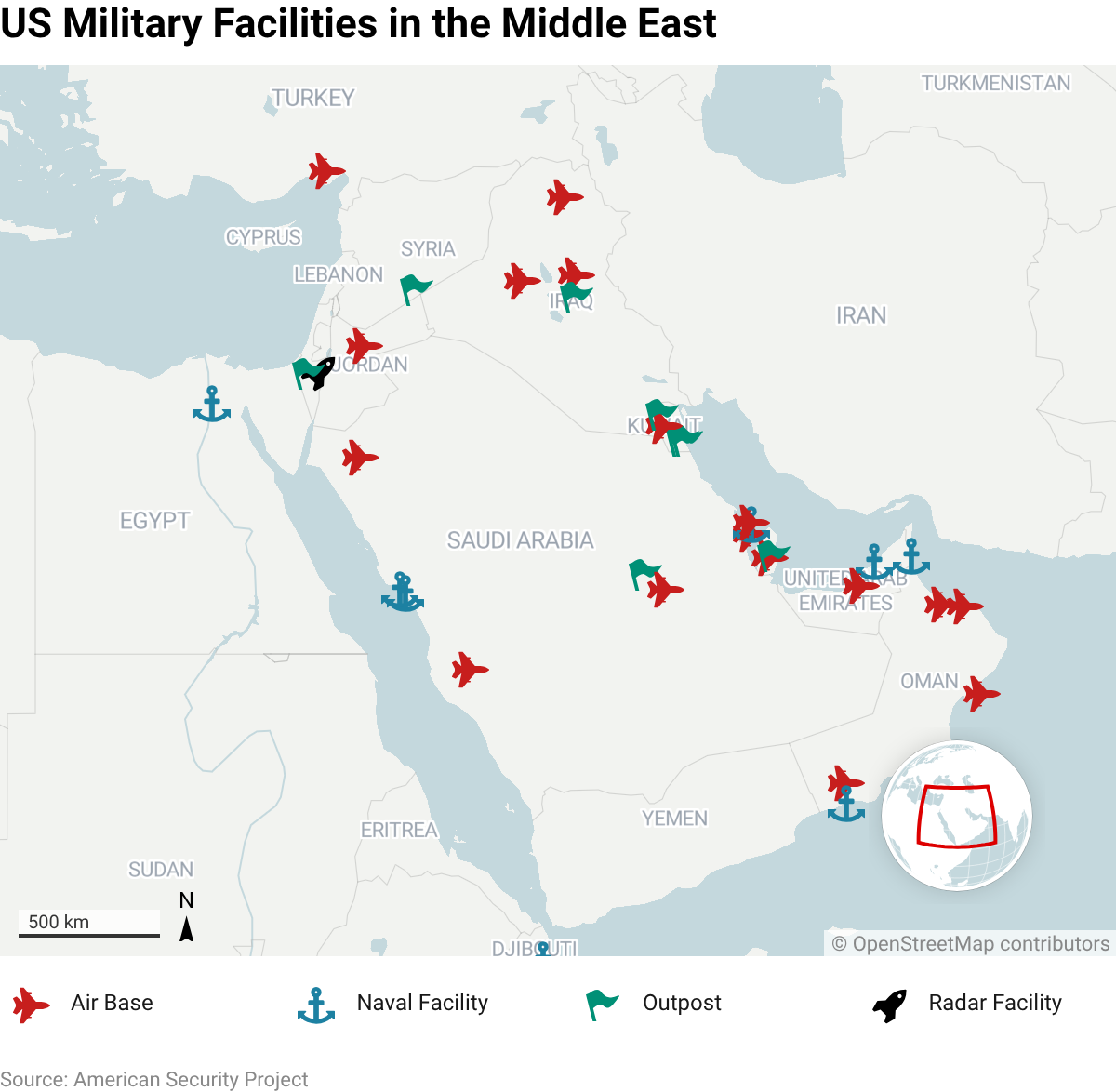
The United States has started pulling some personnel from strategic bases across the region, including Al Udeid Air Base in Qatar, the largest U.S. military installation in the Middle East. Qatari authorities confirmed the drawdown, describing it as a response to regional instability.
European and Israeli officials said U.S. military intervention now appears likely, with some suggesting action could come within 24 hours. However, Washington has not officially confirmed any strike plans.
Iran Threatens U.S. Bases in the Region
A senior Iranian official said Tehran had warned countries hosting U.S. bases including Saudi Arabia, the UAE, Qatar, Turkey, and Bahrain that they would face retaliation if Washington attacks Iran.
Iran has also suspended direct diplomatic contacts between Foreign Minister Abbas Araqchi and U.S. Special Envoy Steve Witkoff, further escalating tensions.
Trump Escalates Rhetoric Over Iran Protests
President Trump has repeatedly threatened to intervene in support of Iranian protesters. In an interview with CBS News, he promised “very strong action” if Iran executes demonstrators and urged citizens to continue protests, saying “help is on the way.”
Iranian authorities accuse the U.S. and Israel of fueling the unrest, which they describe as acts of terrorism rather than peaceful demonstrations.
Deadliest Unrest Since 1979 Revolution
The protests, which began two weeks ago over economic hardship, have escalated into the most violent unrest since Iran’s 1979 Islamic Revolution.
- Iranian officials report over 2,000 deaths
- Rights group HRANA has verified 2,403 protester deaths
- More than 18,000 arrests have been recorded
French Foreign Minister Jean-Noël Barrot called the crackdown “the most violent repression in Iran’s contemporary history.”
Regional Diplomacy Intensifies
Iranian officials have increased diplomatic outreach to prevent escalation. Araqchi has held talks with leaders in Qatar, the UAE, and Turkey, while Iran’s security chief contacted Qatari officials to urge restraint.
Despite the unrest, Western officials say Iran’s government does not appear close to collapse, noting that security forces remain firmly in control.
Human Rights Concerns Grow
Rights groups warn of accelerating executions and mass trials. Kurdish rights organization Hengaw reported that a 26-year-old protester faced execution, though confirmation remains unclear.
Iran’s chief justice has ordered fast-tracked trials for those accused of violent acts during the protests.
As Iran warns of retaliation, U.S. troop movements and Trump’s escalating rhetoric suggest a volatile standoff. While diplomacy continues behind the scenes, the risk of military confrontation grows amid Iran’s deadliest internal crisis in decades.
Related posts:
 7,000 Year Old Stone Wall Found Beneath the Sea in France
 Supreme Court Reviews State Bans on Transgender Athletes
 Vatican City has welcomed a new leader for the world’s 1.4 billion Catholics
 Goma Residents Protest Against AFC/M23 Withdrawal From Uvira
 US. Protests Erupt Nationwide After Two Immigration Officer Shootings in Two Days
 AFC/M23 Vows to Counter Civilian Threats in Walikale, Minembwe Amid Ceasefire Violations
 Boat Capsize in Northern Nigeria Leaves at Least 25 Dead
 Burundi: Congolese Refugees Seeking to Return Home ‘Beaten and Killed’
 Trump signs emergency order protecting Venezuelan oil funds
 Four killed, five injured in deadly head-on crash on Bolton’s Wigan road
 Somalia condemns Israel’s recognition of Somaliland, citing Gaza displacement fears
 Ashesi Graduate Faces Post-Graduation Plagiarism Penalty
 Uganda Shuts Down Internet Ahead of Elections
 Colombia President Warns US Over Threats of Arrest Like Venezuela’s Maduro
 Nigeria: Gunmen Kill 30 Civilians in Niger State Attack
 Former Russian Diplomat Sentenced to 12 Years for Spying for the United States
 Putin will meet D. Trump face to face in Alaska
 Man dies as tree crushes caravan during storm Goretti in Cornwall
 Kirehe: Police shoot motorcycle taxi murder suspect during escape attempt
 Khamenei warns protesters as Iran faces widespread internet blackout