





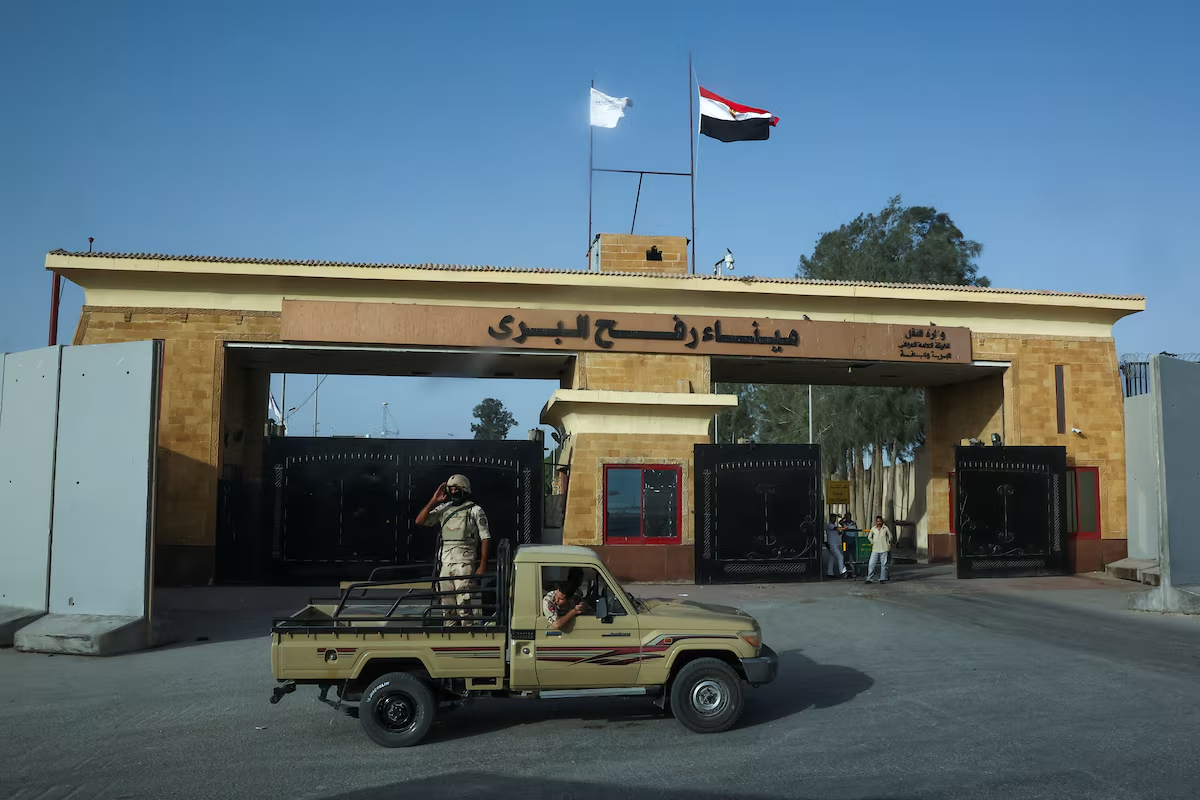
Rafah crossing reopening plans have been confirmed by Israel, which says the border point between Gaza and Egypt will open to pedestrian traffic only after a military operation to recover the last Israeli hostage body concludes.
According to a statement released late Sunday by Prime Minister Benjamin Netanyahu’s office, the crossing will remain closed until Israeli forces complete efforts to locate the remains of Master Sgt. Ran Gvili, the final Israeli hostage still unaccounted for in Gaza.
Rafah crossing reopening tied to hostage recovery
Israeli authorities said the military has launched a targeted operation in northern Gaza based on several intelligence leads regarding the possible location of Gvili’s remains. Officials emphasized that reopening the Rafah crossing depends on exhausting all intelligence efforts.
“Once the operation is complete, Israel will open the Rafah Crossing,” Netanyahu’s office stated.
The Rafah crossing is Gaza’s only major exit point not directly controlled by Israel and serves as a critical route for civilians, medical evacuations, and humanitarian movement.
Background to the Rafah crossing closure
The crossing was expected to reopen during the initial phase of a ceasefire agreement reached in October between Israel and Hamas, part of a broader U.S.-backed initiative to end the war.
However, Israel later conditioned the Rafah crossing reopening on:
- The return of all living Israeli hostages
- A full effort by Hamas to recover the bodies of deceased hostages
All hostages have since been returned except for Gvili’s remains.
The Gaza side of the crossing has been under Israeli military control since 2024, limiting movement for Gaza’s more than two million residents.
U.S. Role in Rafah crossing reopening plan
As part of U.S. President Donald Trump’s 20-point peace framework, Israel agreed to a limited reopening of Rafah for pedestrian movement only, subject to strict inspection procedures.
Earlier this week, Ali Shaath, head of a U.S.-backed transitional Palestinian committee, said the crossing could open soon. Israel later clarified that reopening would only follow completion of the hostage recovery operation.
Washington has confirmed that the plan has entered its second phase, which includes:
- Further Israeli troop withdrawals from Gaza
- Hamas yielding control of Gaza’s civil administration
Movement restrictions likely at Rafah crossing
Sources familiar with Israeli planning told Reuters that Israel intends to limit the number of Palestinians entering Gaza through Rafah, allowing more people to exit than enter, citing security concerns.
If implemented, these measures could significantly affect humanitarian access and civilian mobility.
Why Rafah crossing reopening matters
The Rafah crossing reopening is crucial for:
- Medical evacuations
- Family reunification
- Aid worker movement
- Diplomatic and humanitarian operations
Until the crossing reopens, Gaza remains largely sealed off from the outside world.
Related posts:
 Minneapolis ICE shootings put Trump immigration crackdown at center of election-year fight
 US Senate Advances Measure to Curb Trump’s Military Power on Venezuela
 Army widow trying to stay positive after Trump comments
 Trump visa suspension: U.S. Halts visa processing for 75 Countries
 Burundian Journalist Receives Four-Year Prison Sentence
 Trump Seeks New Ties With Venezuela After Madulo capturing
 ”Europe will not accept the law of the strongest” Macron said to Trump
 Trump comments criticized by mother of soldier killed in Afghanistan
 Putin Receives Invitation to Join Trump’s “Board of Peace”
 US and Russian Envoys Hold Talks about Ukraine peace plan
 Ruto Proposes Death Penalty for Drug Traffickers in Kenya
 Canada Voices Growing Worry It Could Be Next After Trump’s Greenland Signals
 Rwanda to Integrate Mental Health in Justice System
 Russia reacts to Trump-Europe split over Greenland as arctic stakes rise
 US Warns Iran of Severe Consequences Over Protest Crackdown
 Plot to Kill Burkina Faso Leader Foiled, Junta Says
 Trump Proposes 50% Increase in US Military Budget
 Army widow reacts to Trump comments on fallen soldiers
 Ugandan President Museveni re-elected to seventh term amid disputed election
 One Year After AFC/M23 Took Goma, Residents Say Nights Are Now Peaceful