
Rwanda has completed the transition of domestic interoperable retail payments to eKash, creating a unified system through which customers can transfer money instantly between bank accounts and mobile money wallets.
Effective from 14 July 2026, person-to-person transfers processed through the national payment system carry a maximum fee of Rwf20 per transaction. Customers can transfer up to Rwf10 million at a time, although individual financial institutions may apply lower transaction or daily limits under their internal risk-management policies.
The transition was completed in line with Directive No. 45/2026 issued by the National Bank of Rwanda on 9 January 2026. eKash is operated by RSwitch as Rwanda’s national instant payment infrastructure.
The system connects banks, electronic money issuers, Savings and Credit Cooperatives and microfinance institutions through a single national payment platform. It allows money to move between different financial institutions without requiring each provider to establish a separate technical connection with every other participant.
Before the full rollout, interoperability depended largely on individual agreements and integrations between banks and mobile money providers. This made transfers between different institutions more technically complex and, in some cases, more expensive for customers.
eKash replaces this fragmented arrangement with a shared payment infrastructure. Each participating institution connects to the national system once, enabling customers to send and receive money regardless of the bank or mobile money provider they use.
Customers can now conduct bank-to-bank, bank-to-wallet, wallet-to-bank and wallet-to-wallet transfers through the same interconnected platform. The transfer process remains available through familiar channels, including mobile banking applications, internet banking platforms and Unstructured Supplementary Service Data services commonly known as USSD.
Users do not need to open a separate eKash account, download another application or replace their existing bank accounts and mobile money wallets. Their transactions are processed through eKash while they continue using the services provided by their financial institutions.
The new arrangement is also expected to make cross-institutional transfers more affordable. The maximum fee for person-to-person transfers is Rwf20 and is paid by the sender. Banks and electronic money providers may charge a lower amount or provide the service without a fee, depending on their pricing decisions.
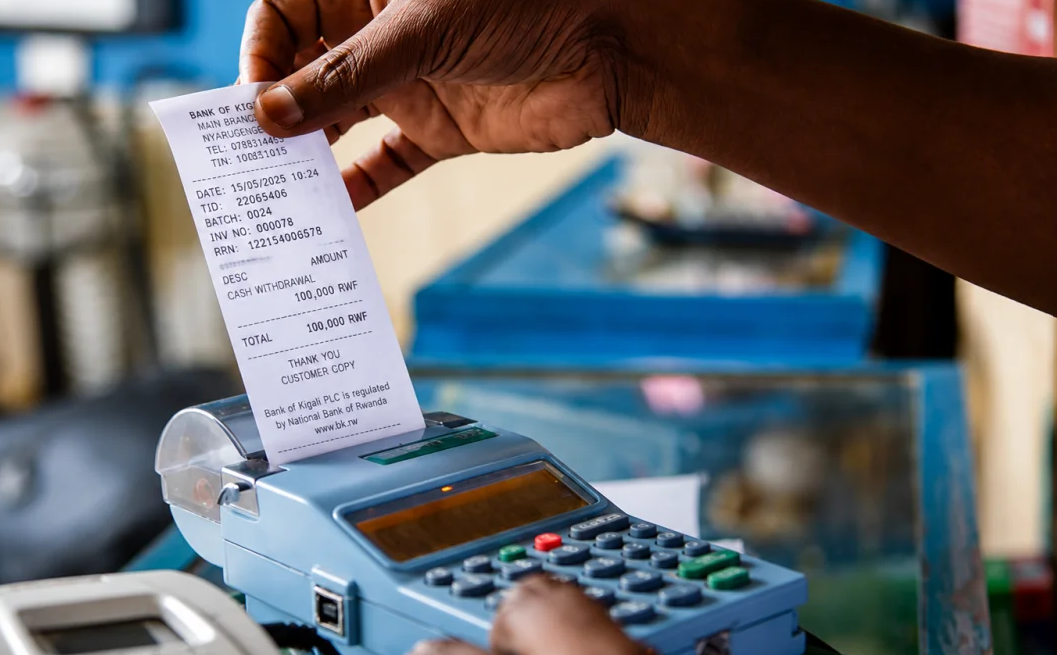
Previously, customers could face considerably higher charges when moving large amounts between banks and mobile wallets. For example, transferring between Rwf5 million and Rwf10 million from a Bank of Kigali account to a mobile wallet could attract a Rwf5,000 fee.
Merchant payments processed through eKash do not attract an eKash transaction charge for either the customer or the merchant. This allows buyers to pay participating businesses from their preferred bank account or mobile wallet, even when the merchant’s payment code was issued by another financial institution.
The payment system supports transactions of up to Rwf10 million, allowing it to accommodate everyday transfers as well as larger payments made by businesses and individuals. However, banks and electronic money issuers retain the authority to impose lower limits to protect customers and manage financial risks.
Launched in 2022, eKash initially concentrated on connecting mobile money providers. It later expanded to include commercial banks, SACCOs and microfinance institutions as Rwanda worked towards a more integrated national payment ecosystem.
The platform now connects 22 financial institutions, including commercial banks, MTN Mobile Money Rwanda, Airtel Money Rwanda, SACCOs and microfinance institutions.
The unified system is expected to support financial inclusion by making digital payments more accessible to people and businesses across different financial networks. It may also help financial institutions develop digital savings products, merchant services, data-supported lending and other services using shared payment infrastructure.
Further development of eKash is expected to include the integration of additional government payment services and support for cross-border instant payments. The National Bank of Rwanda will continue supervising the system’s performance, availability, customer protection measures and complaint-handling processes.
Customers who experience problems or need information about charges and transaction limits are advised to contact the bank, mobile money provider or financial institution through which they access the service.