


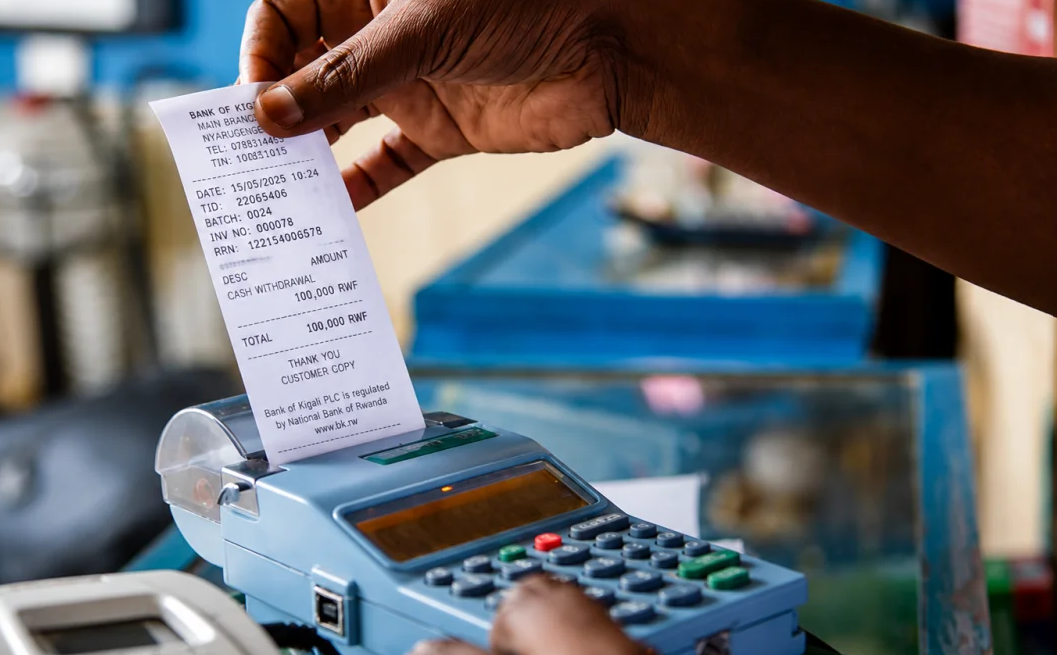
Rwanda plans to exempt businesses and individuals with annual turnover below Rwf2 million from mandatory use of Electronic Billing Mac ministerial order.
The measure forms part of tax reforms approved by the Cabinet to simplify compliance for small businesses while maintaining reliable records of commercial transactions. Alternative recording methods would be introduced for taxpayers who do not use an EBM.
The Rwanda Revenue Authority said the reforms are intended to update the EBM framework after approximately 13 years of implementation. The authorities aim to respond to changes in business operations and digital payments without weakening tax administration.
The proposed order would also allow buyers to initiate electronic invoices when sellers fail to issue them promptly. However, the seller would still be required to confirm the invoice before the transaction record becomes complete.
What to Know:
- Businesses and individuals earning less than Rwf2 million annually would no longer be required to use EBMs.
- Alternative systems would be introduced to ensure that transactions remain properly recorded.
- Buyers would be permitted to initiate electronic invoices when sellers delay issuing them.
- A buyer-initiated invoice would still require confirmation from the seller.
- The reforms seek to simplify compliance without removing small businesses from the tax-administration system.
Small Businesses to Use Alternative Recording Methods
The proposed EBM exemption does not mean that qualifying businesses would operate outside Rwanda’s tax-administration framework. They may still be required to maintain transaction records and fulfil other legal obligations that apply to their activities.
Official RRA guidance already identifies persons with annual turnover below Rwf2 million as exempt from income tax. The proposed reform addresses the separate question of whether such taxpayers should also be required to operate an EBM. l Ntegano, the Director General for Tax Policy at the Ministry of Finance and Economic Planning, said alternative measures would be considered where EBMs are not suitable. The objective is to recognise the different conditions under which taxpayers operate while preserving effective transaction monitoring.
The precise alternative systems, reporting procedures and technical requirements were not specified in the published report. These details would need to be established through the final ministerial order and implementation guidance.
Digital Payments May Support Transaction Records
Electronic payments could provide one possible way of recording transactions among businesses that are exempted from EBM use.
Angello Musinguzi, Tax and Regulatory Partner at Garnet Partners Limited, suggested that digital platforms linked to mobile money and other electronic payments could help authorities monitor transactions.
His comments represented a professional assessment rather than a confirmed government implementation plan. The final methods will depend on the regulations and systems adopted by the relevant authorities.
Using digital payment records could reduce compliance costs for very small businesses. It could also help the tax administration obtain transaction information without requiring every trader to operate a conventional EBM.
However, digital payment records may not cover cash transactions. Any alternative system would therefore need clear rules explaining how different forms of payment should be documented.
Buyers Could Initiate Electronic Invoices
Another proposed change would allow a buyer to begin generating an electronic invoice when a seller fails to issue one or delays the process.
The invoice would not become final automatically. The seller would first have to review and confirm the information entered by the buyer.
This arrangement could help customers obtain proof of purchase while encouraging sellers to record transactions on time. It could also reduce disputes involving missing or delayed invoices.
The proposal reflects a wider effort to involve both buyers and sellers in tax compliance. Nevertheless, the final order would need to explain how sellers receive invoice requests, how long they have to respond and how disputed transactions are handled.
Why Rwanda Is Revising The EBM System
Rwanda introduced EBM use in 2013 to support accurate invoicing, improve business records and reduce tax evasion. The machines transmit transaction information to the tax administration and are particularly important for monitoring Value Added Tax. digital payments and software-based invoicing have expanded, the government has sought to modernise the system. The proposed reforms aim to distinguish between large or VAT-registered businesses and very small taxpayers whose revenue may not justify the cost and administrative demands of operating an EBM.
According to RRA figures reported by The New Times, the authority collected Rwf3,956.4 billion during the 2025/26 fiscal year. This represented 104.2 per cent of its Rwf3,795.4 billion target.
The report published on 13 July 2026 did not state when the proposed EBM exemption would take effect. Businesses would therefore need to continue following existing requirements until the final ministerial order and official implementation instructions are issued.
MORE STORIES:
 Global Oil Prices Decline Following Positive US and Iran Talks
 White House Accuses China of Large-Scale AI Model Copying
 UAE to Exit OPEC After Nearly 60 Years
 Rwanda Introduces VAT on Digital Services
 Tesla Announces Major Investment Strategy
 Oil Prices Fall as Tensions Between Iran and the United States Ease