




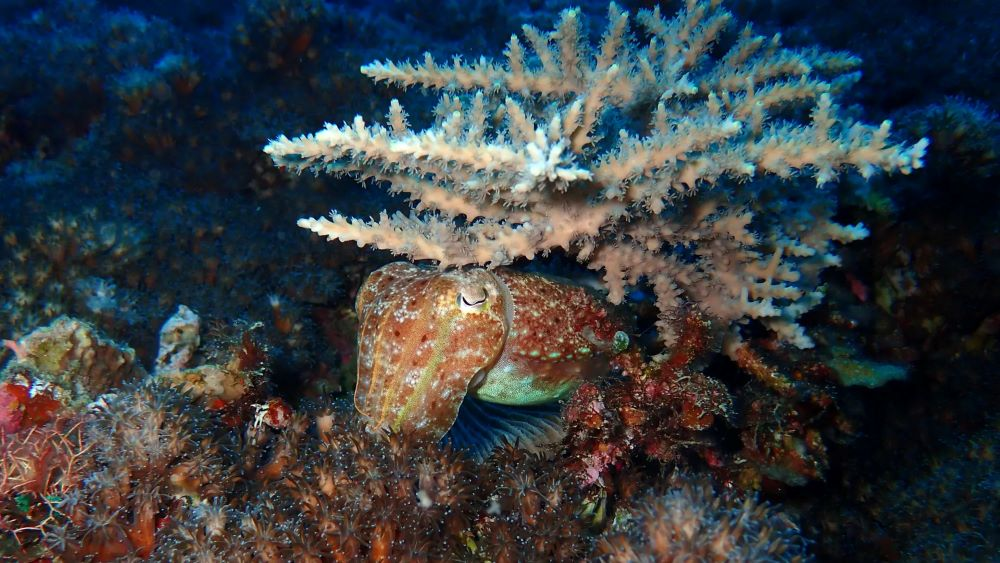
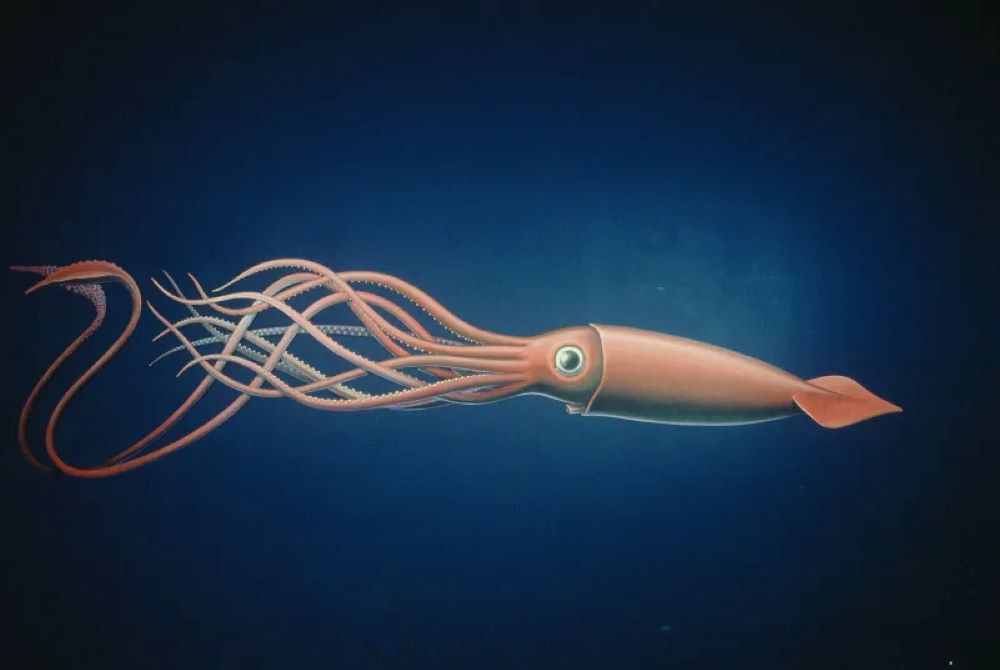
A new study published in Nature Ecology & Evolution has revealed how squid and cuttlefish survived one of Earth’s most catastrophic extinction events and later expanded across global oceans.
These marine animals, known for rapid movement and advanced camouflage, have long challenged scientists due to their limited fossil record and complex genetics. The latest findings now provide a clearer picture of their evolutionary history.
Tracing the Origins of Squid and Cuttlefish
Researchers from the Okinawa Institute of Science and Technology analyzed large scale genetic datasets alongside newly sequenced squid genomes.
This approach enabled scientists to build the most detailed evolutionary tree of squid and cuttlefish to date. The study suggests that their ancestors originated in deep ocean environments millions of years ago.
Unlike many marine species, these organisms evolved in conditions that were less visible in the fossil record, making genetic analysis essential for understanding their development.
Survival During a Global Extinction Event
Around 66 million years ago, Earth experienced the Cretaceous–Paleogene extinction event, which eliminated approximately 75 percent of all species, including dinosaurs.
Despite the scale of destruction, squid ancestors survived. Scientists believe they found refuge in deeper ocean zones where oxygen levels remained stable and environmental changes were less severe.
These deep sea habitats likely protected them from the acidification and temperature shifts that affected shallow marine ecosystems.
Expansion Into New Ocean Environments
Following the extinction event, squid and cuttlefish gradually expanded into new habitats, including coastal waters and coral reefs.
The study describes this process as a “long fuse” evolutionary pattern. Species evolved slowly over extended periods before rapidly diversifying when environmental conditions improved.
This adaptive strategy allowed them to occupy a wide range of ecological niches across the oceans.
Implications for Marine Science
Today, squid and cuttlefish are among the most diverse and behaviorally complex marine animals. Their ability to change color, communicate, and adapt to different environments highlights their evolutionary success.
The research offers valuable insights into how species can survive extreme global disruptions and later thrive under changing conditions.
It also provides a framework for studying other marine organisms with limited fossil records.
Risks and Opportunities for Future Research
Understanding how squid adapted to past environmental changes may help scientists predict how marine species respond to current challenges such as climate change and ocean acidification.
However, gaps remain in the fossil record and genetic data, meaning further research is needed to fully understand their evolutionary pathways.
The study opens new opportunities for exploring marine biodiversity and the resilience of ocean ecosystems.

amrwp4