




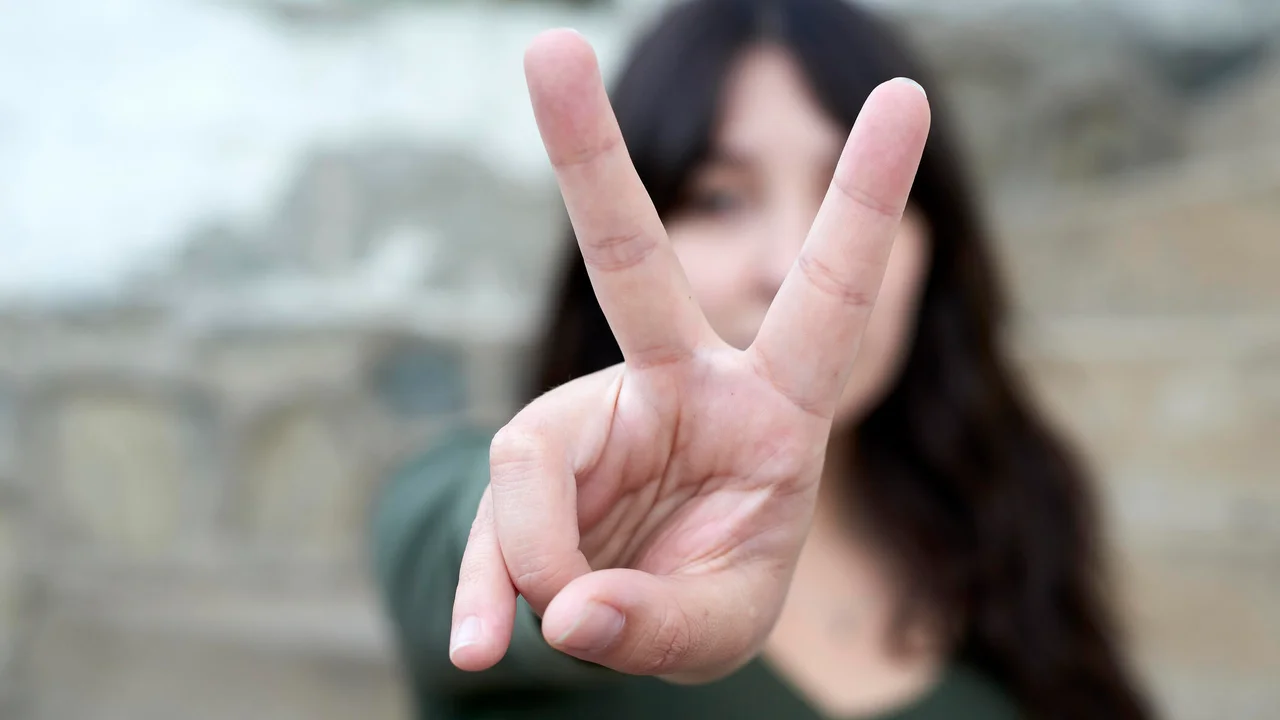
A new online privacy concern has gained attention on social media. Posts claim that hackers can extract fingerprints from photos, especially selfies where people make peace signs, and use artificial intelligence to recreate biometric data.
The claims have generated thousands of reactions online. Some users expressed concerns about AI and privacy, while others said they may change how they take photos.
However, cybersecurity experts say most people do not need to worry.
Can Fingerprints Really Be Taken from Photos?
Experts say it is technically possible to extract fingerprints from high-resolution photos under certain conditions.
The concern gained attention after a Chinese television program aired a segment in April. During the demonstration, an expert showed how fingerprints visible in a peace sign selfie taken from close range could potentially be extracted digitally.
If someone successfully copied a fingerprint, they could theoretically use it to target systems that rely on fingerprint authentication.
Unlike passwords, fingerprints cannot be changed once compromised.
Experts Say the Risk Is Very Low
Despite the possibility, cybersecurity specialists stress that the risk remains extremely low for ordinary social media users.
Justin Cappos, a cybersecurity expert and professor at New York University, said the average person is far more likely to face other everyday risks than become a victim of fingerprint theft through a photo.
According to experts, criminals would need a very clear, high-resolution image that shows fingerprint details in exceptional quality.
Even then, extracting usable biometric data requires significant technical expertise, specialized tools, and a clear target.
Previous Cases Show It Is Possible
Researchers and hackers have demonstrated similar techniques in the past.
The same year, security researchers at cryptocurrency company Kraken successfully recreated a fingerprint from a photographed print left on a surface. They used image editing software, a printer, and other materials to produce the replica.
These examples showed that fingerprint cloning is possible under controlled conditions.
Why Most People Are Unlikely Targets
Even if a criminal obtained a fingerprint image, they would still face several obstacles.
First, they would need access to the physical device or security system protected by that fingerprint. This could include a laptop, smartphone, bank terminal, or secure facility.
Second, creating a usable fingerprint replica requires time, effort, and technical skills.
For these reasons, experts believe attackers would focus only on high-value targets, such as government officials, executives, researchers, or people with access to sensitive facilities.
Most social media users are unlikely to attract that level of attention.
Bigger Cybersecurity Threats Exist
Experts warn that phishing attacks remain a far greater danger than fingerprint theft.
Phishing scams often arrive through emails, text messages, social media messages, or fake websites designed to steal passwords, banking details, and personal information.
These attacks affect millions of people every year and require much less effort from criminals.
As a result, cybersecurity professionals recommend focusing on strong passwords, two-factor authentication, software updates, and caution when opening links or attachments.
What Should Social Media Users Do?
While there is no need to panic, users should remain aware of how much personal information they share online.
Privacy settings, careful photo sharing, and strong account security remain good practices.
For now, experts agree that fingerprint theft through selfies remains largely a theoretical threat for most people rather than a widespread cybercrime method.
As AI technology continues to evolve, security researchers will continue monitoring whether such techniques become more practical for attackers in the future.

MORE STORIES:
 OpenAI Launches ChatGPT Health to Analyze Medical Data
 AI Tools for Students Explained: A Simple Guide
 Rising Popularity of Short Videos
 AI Homework Use Surges Among Students, Raising Concerns Over Critical Thinking Skills
 Nvidia Unveils Self-Driving Car Tech as AI Expansion Accelerates
 AI Tutors Reshape the Future of Education
 Intron Expands Sahara AI Speech Platform to 57 Languages
 Meta AI Chief Says Current Models Lack Intelligence
 Nvidia Unveils AI Technology to Power Fully Autonomous Vehicles
 Google Expands Quantum Computing Research with Neutral Atom Technology
Excellesnt post. I absolutely love thhis website. Thanks!
s4583a
ik1x5g