


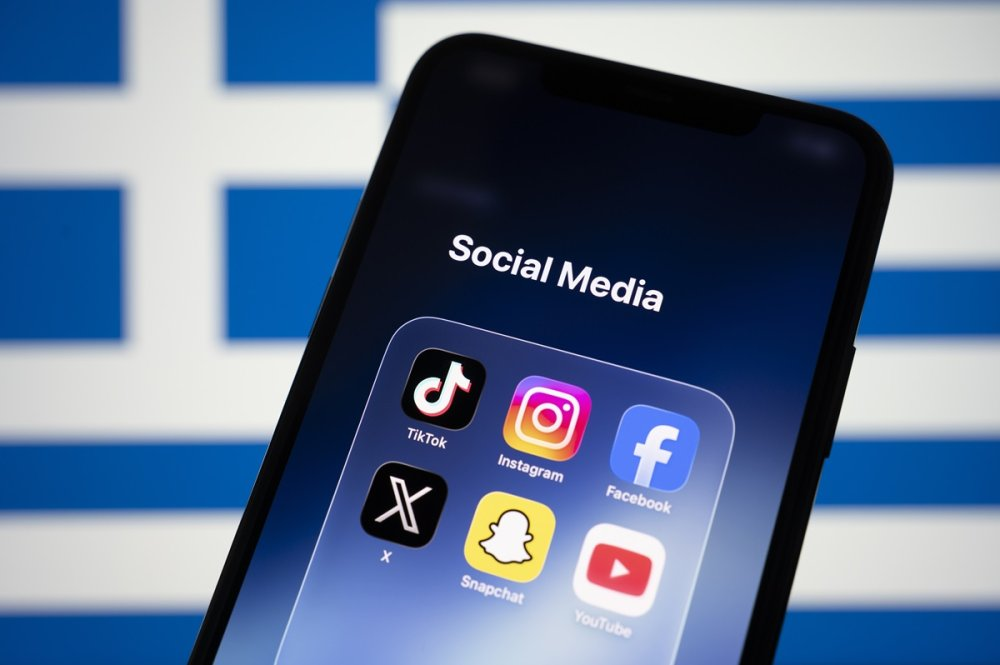
Greece has announced plans to restrict access to social media platforms for children under the age of 15, starting January 1, 2027. The decision reflects growing concern about the impact of digital platforms on children’s health and well being.
Focus on Mental Health and Sleep Issues
Lawmakers aim to address rising cases of sleep disruption and mental health challenges linked to excessive social media use. Officials note that children born after 2012 face higher exposure to online content, which may affect their development and daily routines.
The proposed law will go through parliamentary approval, with strong political backing expected.
Part of a Broader Global Trend
Greece joins a growing number of countries taking action to regulate children’s access to social media. For example, Australia has already removed millions of accounts belonging to users under 16. Similarly, France plans to introduce similar restrictions in the 2026 to 2027 academic year.
This trend highlights increasing global concern about digital safety and youth protection.
Public Support and Ongoing Doubts
Surveys across Europe show strong public support for such measures. Around 79 percent of respondents favor restricting social media use for children under 16. Support remains particularly high among parents.
However, doubts persist about enforcement. In United Kingdom, more than half of respondents question whether such laws can work effectively. Similar concerns appear in other countries, despite general support for the idea.
Challenges in Implementation
One of the biggest challenges lies in verifying user age online. Without reliable systems, enforcing restrictions may prove difficult. To address this, Greece has called on the European Union to introduce unified regulations and develop stronger age verification technologies by 2027.
Implications for Tech Companies
If implemented, the policy could force social media platforms to adopt stricter controls and compliance systems. Companies may need to invest in new technologies to verify user identity while protecting privacy.
At the same time, this creates opportunities for innovation in digital safety tools and age verification systems.
Future Outlook
As more countries consider similar policies, international cooperation will likely shape the future of online regulation. Governments will need to balance child protection with digital rights and access to information.
Conclusion
Greece’s decision marks a significant step in regulating social media use among young users. While the policy aims to improve well being, its success will depend on effective enforcement and collaboration across Europe.
MORE STORIES:
 Airbus Surpasses Boeing in Passenger Aircraft Sales
 Starcloud Secures $170 Million to Build Space Based Data Storage Infrastructure
 Trump Appoints Dan Scavino to Lead White House Personnel Office, Names Sergio Gor Ambassador to India
 Bitcoin Falls Below $78,000 After Warsh’s Fed Nomination Shakes Markets
 MTN Rwanda and Mastercard Introduce Virtual Card, Revolutionizing Digital Payments
 SpaceX Provides Free Starlink Access During Natural Disasters
 WASAC moves water connection services to IremboGov platform
 Tobacco Smoke: A Serious Health Threat
 China’s 16-Ton Jiutian Drone Completes Historic First Flight
 U.S. Reveals Hamas Planning Major Attack on Gaza Civilians
Thank you for being so generous with your knowledge.
I’ve gained a much better understanding thanks to this post.
Such a simple yet powerful message. Thanks for this.
5cj4m1