




Artificial Intelligence is no longer a futuristic concept. It powers chatbots, image creators, music generators, smart assistants and productivity tools used daily by millions of people. However, despite its growing presence, many still misunderstand how AI actually works.
This guide explains what AI is, how modern AI tools function, and how to use them effectively through better prompting.
What Artificial Intelligence Really Is
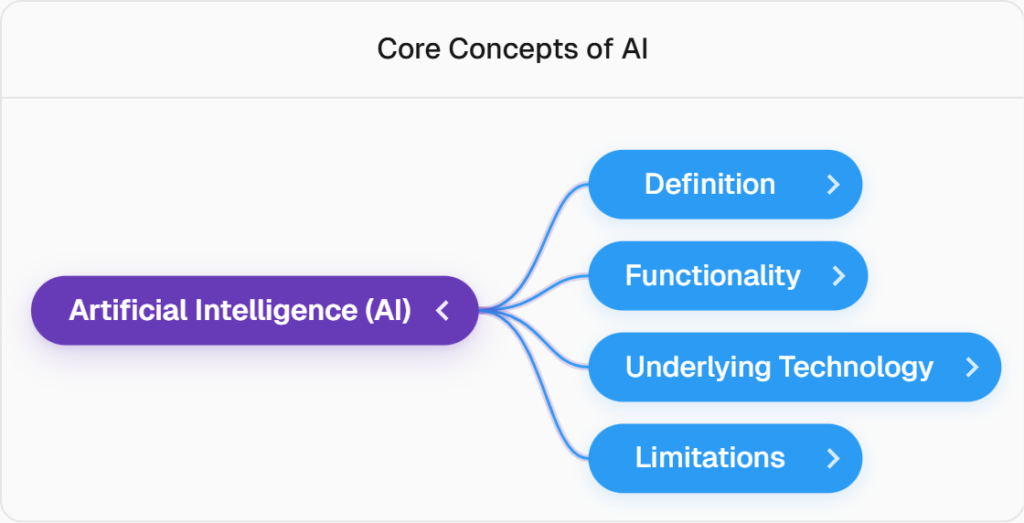
Artificial Intelligence refers to computer systems designed to mimic aspects of human intelligence. These systems can recognize patterns, solve problems, make predictions and generate content.
However, most AI today is narrow and specialized. It does not think independently or possess consciousness. Instead, it follows learned statistical patterns.
At the heart of modern AI are neural networks. These are mathematical models inspired loosely by the human brain. Neural networks learn by analyzing massive amounts of data, such as text, images, videos or audio. When the system makes a prediction and gets it wrong, it adjusts internal parameters. Over time, through millions or billions of adjustments, it becomes better at identifying patterns.
AI does not experience emotions. It does not have intuition. It predicts what is most likely to come next based on data.
Types of AI Tools Available to Consumers
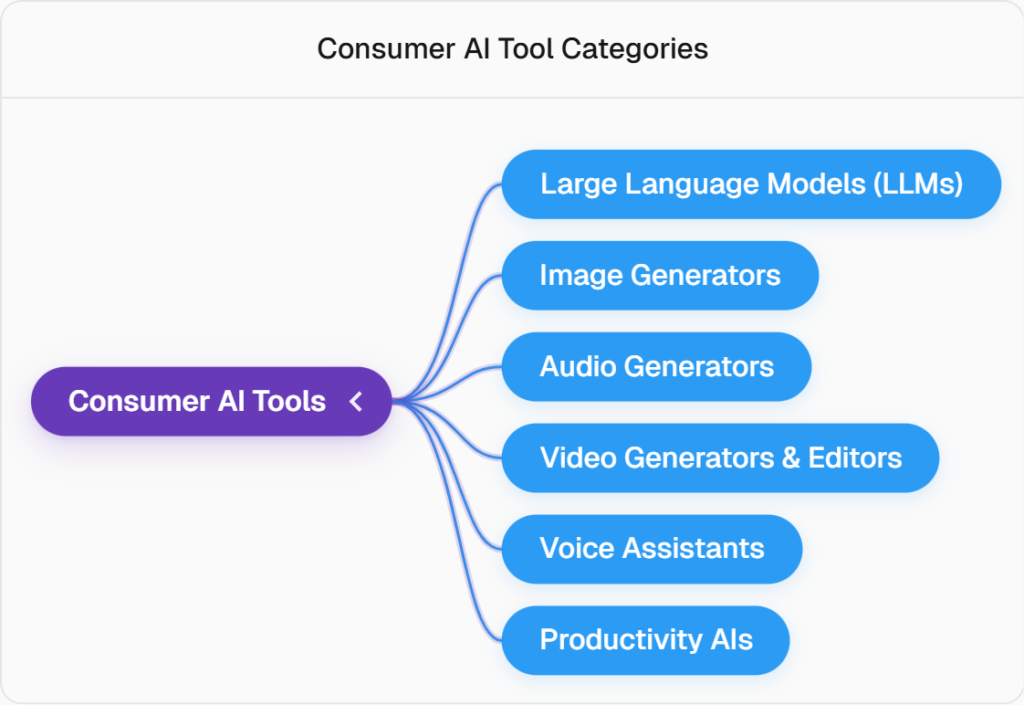
Today, AI appears in multiple forms. The most common consumer categories include:
- Large Language Models
- Image Generators
- Audio Generators
- Video Generators and Editors
- Voice Assistants
- Productivity AI Tools
Each category uses different techniques but follows the same core principle: learning patterns from data.
Large Language Models (LLMs)
Large Language Models such as ChatGPT, Gemini, Claude, Mistral and Grok generate text using an architecture called Transformers. These models break input into smaller units, analyze relationships between words using attention mechanisms, and predict the most probable next word.
Because of this design, LLMs can write essays, summarize documents, generate code and answer questions conversationally.
How to Prompt LLMs Effectively
For larger models, natural language instructions usually work well. You can write as you would to a human.
For smaller models, more structured prompts may improve accuracy.
Best practices include:
- Be descriptive and clear
- Assign a role such as “act as a marketing expert”
- Specify constraints, for example word count or tone
- State what should not be included
Clear inputs consistently produce stronger outputs.
Image Generators
Image generation models are trained on millions of labeled images. They learn how words correspond to visual elements. Most modern systems use a diffusion process, which starts from random noise and gradually refines it into a coherent image.
Popular tools include DALL-E, Midjourney and Adobe Express.
AI-generated images sometimes appear slightly unnatural in lighting, contrast or texture. These subtle differences can reveal synthetic origins.
Prompting Image Generators
Effective image prompts focus on visual detail:
- Colors and lighting
- Composition and perspective
- Texture and materials
- Mood and atmosphere
Negative prompts are equally important. For example, you can specify “no blurry edges” or “no distorted hands.”
Precision dramatically improves results.
Audio Generators
Audio AI tools fall into two main categories: text-to-speech systems and music generators.
Text-to-speech models such as Eleven Labs and Speechify convert written text into realistic speech. They analyze tone, pacing and emphasis using probability-based modeling.
Music generators such as Suno and Muar learn relationships between melody, rhythm and harmony. They synthesize music based on descriptive inputs.
Prompting Audio Tools
Music generation often involves adjusting parameters such as:
- Tempo
- Genre
- Mood
- Instrumentation
Text-to-speech systems require fewer prompts. Typically, users paste text, select a voice and adjust delivery style.
Video Generators and Editors
Video AI combines spatial and temporal modeling. It learns not only how objects appear but how they move over time.
There are two main types:
- Text-to-video generation, where tools like Sora, Runway or Pika generate scenes from scratch.
- AI-assisted editing, where platforms like Descript or InVideo assemble scripts, footage and voiceovers automatically.
Prompting Video AI
Video prompts should include:
- Scene description
- Camera movement such as pan or zoom
- Object motion
- Lighting and mood
Keep instructions vivid but focused on essentials.
Voice Assistants
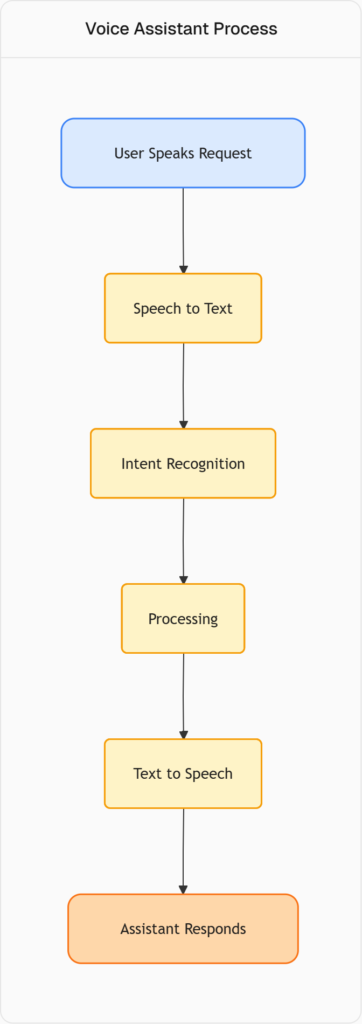
Voice assistants such as Google Assistant, Siri and Alexa operate through three stages:
- Speech-to-text conversion
- Intent recognition
- Text-to-speech response
Unlike generative tools, these systems prioritize task execution over creativity.
Prompting is minimal. Users speak naturally, and the system interprets intent.
Productivity AI Tools
Productivity AI integrates directly into applications such as email platforms, CRM systems and workflow tools.
Examples include:
- Email rewriting and summarization
- Task automation between apps
- CRM data organization
- Meeting transcription and summaries
These tools enhance efficiency rather than generate creative content. Prompting is often limited to button-based controls or parameter settings.
General AI Prompting Principles
Regardless of the tool type, effective prompting follows universal principles:
- Be specific and detailed
- Define desired tone or format
- Provide context
- Set clear boundaries
- Iterate and refine
AI systems respond to clarity. Vague instructions lead to vague outputs.
Practice improves performance. Prompting is becoming a core digital skill.
Final Perspective
Artificial Intelligence is not magic. It is a pattern recognition engine trained on vast data. Its strength lies in prediction, synthesis and automation. Its limitations lie in consciousness, emotion and independent purpose.
As AI tools expand, understanding how they work becomes essential. The more clearly you define your intent, the more effectively AI can translate it into results.
In the modern digital landscape, the ability to articulate instructions precisely may matter more than technical coding skills.
AI does not replace intelligence. It amplifies it when used thoughtfully.
MORE STORIES:
 AI Becomes Daily Habit as Consumers Shift From Search to Chatbots
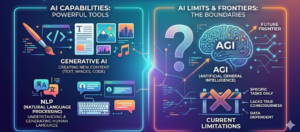 AI Capabilities and Limits: Generative AI, NLP, AGI Explained
 Intron Expands Sahara AI Speech Platform to 57 Languages
 Rwanda Seeks Re Election to ITU Council
 Ascent Africa Invests in Clarence AI Platform
 AI Alarmism Surges in Early 2026 as Risks and Pace Collide
 Samsung AI Factory Strategy Transforms Supply Chain Automation
 Google I/O 2026: Everything We Expect From Google’s Biggest AI and Android Event
 Apple Prepares AI Powered Siri With Agent Like Capabilities
 Macron India Visit Centers Africa AI Partnership
Howdy would you mind stating which blog platform you’re working with? I’m planning to start my own blog soon but I’m having a tough time selecting between BlogEngine/Wordpress/B2evolution and Drupal. The reason I ask is because your design and style seems different then most blogs and I’m looking for something completely unique. P.S Apologies for being off-topic but I had to ask!