




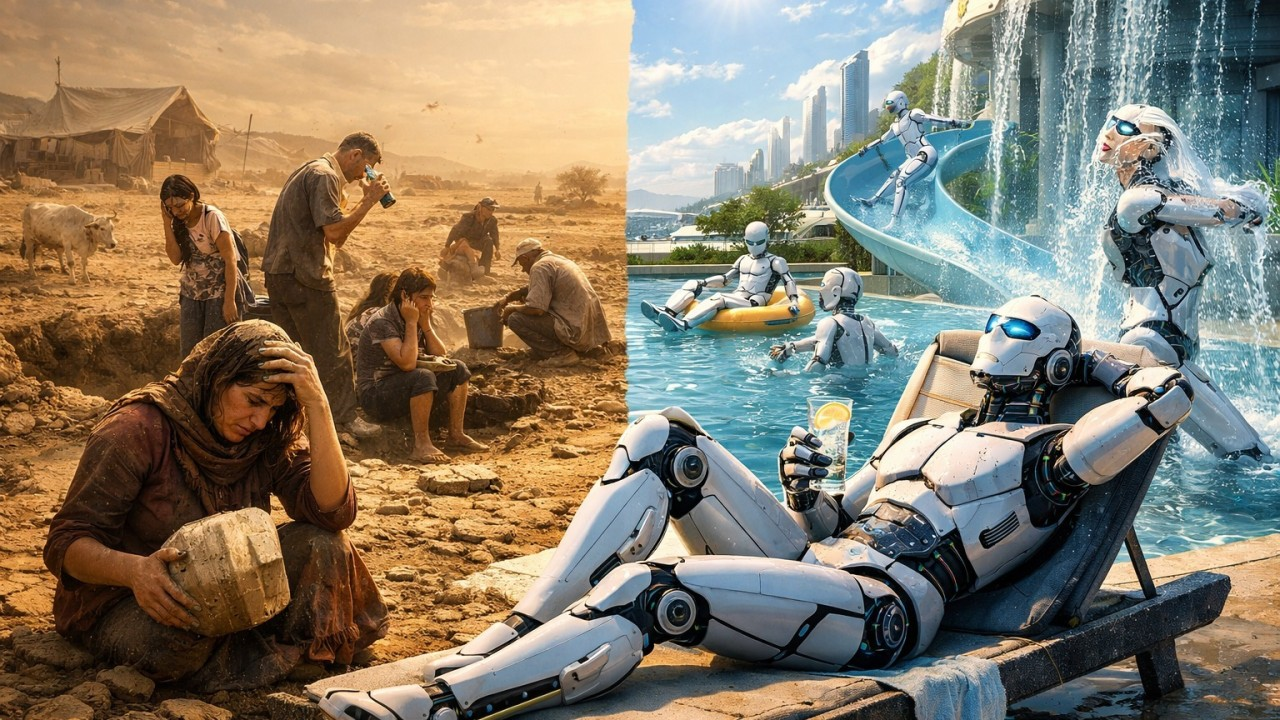
Artificial intelligence continues to transform industries, workplaces, and everyday life. Popular AI systems such as ChatGPT, Gemini, Claude, Microsoft Copilot, and Grok are helping users generate content, analyze information, and automate tasks at an unprecedented scale.
While these technologies offer significant benefits, researchers and environmental experts are increasingly examining their impact on natural resources, particularly water consumption.
Data Centers Depend on Large Volumes of Water
Recent studies conducted by researchers from Cornell University and New York University suggest that training and operating advanced AI models requires substantial computing power. These processes take place inside large data centers that generate significant heat and require cooling systems to maintain safe operating temperatures.
Many of these cooling systems rely on water. As a result, the rapid expansion of artificial intelligence has increased demand for water resources in regions that host large-scale computing facilities.
Training Advanced AI Models Can Be Resource Intensive
Researchers estimate that training some large AI models can consume hundreds of thousands of liters of clean water. In certain cases, the development of advanced generative AI systems may require approximately 700,000 liters of water during the training process alone.
The water is primarily used to cool servers and computing infrastructure rather than being consumed directly by the AI systems themselves. Nevertheless, experts argue that the growing scale of AI development could place additional pressure on local water supplies, especially in areas already facing water scarcity.
Environmental Risks Could Increase by 2027
Industry analysts believe water consumption linked to artificial intelligence may rise significantly over the next few years. The growing popularity of AI-powered tools, including image-generation platforms and large language models, continues to drive demand for more powerful data centers.
If current growth trends continue, environmental pressures related to water use could become more visible by 2027. Communities located near major data center hubs may face increased competition for water resources, particularly during periods of drought or extreme weather.
Industry Searches for Sustainable Solutions
Technology companies and researchers are exploring new ways to reduce the environmental footprint of artificial intelligence. Potential solutions include advanced cooling technologies, greater use of recycled water, improved energy efficiency, and the construction of data centers in locations with more sustainable water resources.
Organizations are also investing in research aimed at developing AI systems that require less computing power without compromising performance.
Balancing Innovation and Sustainability
Artificial intelligence remains one of the fastest-growing technologies in the world, offering opportunities across healthcare, education, business, and scientific research. However, experts emphasize that long-term growth must be balanced with responsible resource management.
As AI adoption continues to accelerate, governments, technology companies, and environmental organizations will likely face increasing pressure to ensure that innovation does not come at the expense of essential natural resources.
The challenge for the industry will be finding ways to support technological progress while protecting water supplies that communities, agriculture, and ecosystems depend upon.
MORE STORIES:
 How a Tiny Caribbean Island Got Rich from the .AI Domain Name
 OpenAI Launches $10B AI Deployment Venture
 SpaceX Prepares Historic Public Market Debut
 Nvidia Launches New AI-Powered RTX Spark Chip
 Google Staff Oppose Military Use of AI
 From Screenwriters to Doctors: The New Jobs Created by AI
 Apple Unveils a New Approach to AI Integration
 Google Expands Water Sustainability Commitments Amid AI Growth
 DeepSeek cuts prices on new AI model V4-Pro with 75% discount to attract developers
 General Motors Accelerates AI Transformation
ojwk2x
cl0dsy
When someone writes an piece of writing he/she maintains the thought of a user in his/her mind that how a user can be aware of
it. Therefore that’s why this article is perfect.
Thanks!