


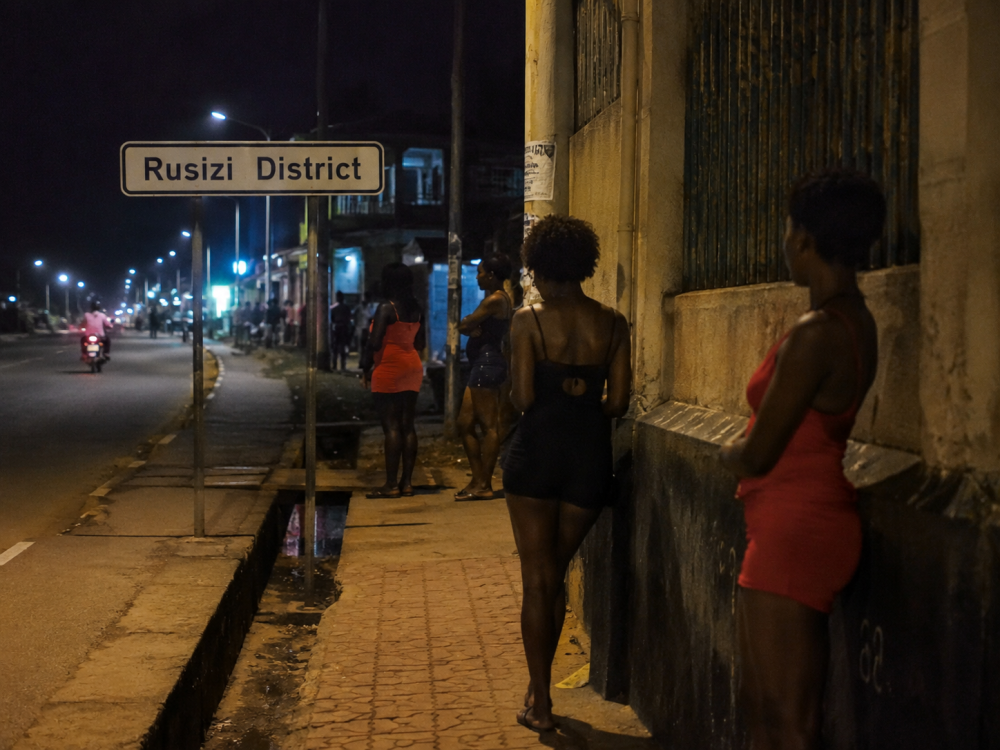
Health officials in Rusizi District have raised concerns about HIV transmission among sex workers in Kamembe, where some clients reportedly offer more money in exchange for sex without condoms.
According to Wenceslas Habarugira, a health official in Rusizi District, nearly half of sex workers in the area are living with HIV. The situation has increased concerns about condom use, financial pressure and other factors that may contribute to the spread of HIV.
Financial pressure affects condom use
Some sex workers in Kamembe say clients sometimes offer substantially higher payments when they agree to have sex without condoms.
One sex worker described situations where a client could offer RWF 50,000 instead of RWF 10,000, but demand sex without protection.
For people who depend on the income, such offers can create difficult decisions, particularly when financial needs are urgent.
Some workers also reported cases where clients initially agree to use condoms but later attempt to remove them during sex. Such behaviour can increase the risk of HIV and other sexually transmitted infections and raises concerns about consent and personal safety.
Another sex worker said men are often the ones who resist condom use, leaving women to decide whether to refuse the client or accept the increased health risk.
HIV prevalence in Rwanda
The Rwanda Demographic and Health Survey 2025, conducted by the National Institute of Statistics of Rwanda, NISR, reported that 2.2% of Rwandans aged 15 to 49 were living with HIV.
The prevalence was higher among women, at 2.8%, compared with 1.5% among men.
The survey also found a difference between urban and rural populations. HIV prevalence stood at 3.3% in urban areas, compared with 1.7% in rural areas.
Kigali recorded a prevalence of 3.7%, while the Northern Province recorded 1.0%.
These national figures provide broader context for the concerns raised by health officials in Rusizi, although the reported figure among sex workers represents a specific population and should not be compared directly with the general population rate.
Young people also report condom-use challenges
The issue also affects younger people involved in sex work.
A young sex worker, identified as Monique, said some clients she previously encountered did not want to use condoms. She said she refused when a client insisted on unprotected sex.
Another young man, Kubwimana, said some young men frequently resist condom use, even when their partners request protection.
Such situations can make HIV prevention more difficult, particularly when one person has less bargaining power in a sexual relationship.
Alcohol and money can increase risky behaviour
The Rwanda Biomedical Centre, RBC, says alcohol consumption and financial pressure can influence sexual behaviour.
Zephanie Nzeyimana, an RBC official working on HIV prevention among populations at higher risk, said heavy alcohol consumption can make consistent condom use more difficult.
He also explained that financial incentives can influence decisions when clients offer more money for unprotected sex.
This means HIV prevention efforts need to address more than awareness. They also need to consider economic vulnerability, alcohol use, access to prevention services and the ability of individuals to negotiate safer sex.
RBC promotes combination HIV prevention
RBC says it uses a combination prevention approach for people at higher risk of HIV infection.
The approach combines different prevention options so that individuals can use methods that fit their circumstances. These can include condoms, HIV testing, counselling and preventive medicines.
Preventive medicines such as PrEP can significantly reduce the risk of HIV infection when used appropriately. However, access to prevention services and correct use remain important for achieving the best protection.
Regular HIV testing also helps people know their status and access treatment early if they test positive.
The importance of safer sexual health services
The situation in Rusizi highlights the importance of making HIV prevention services accessible to people who face higher exposure risks.
Health programmes can strengthen prevention by providing confidential testing, condoms, counselling and information about HIV prevention medicines. They can also help people understand their rights and identify situations involving coercion or unsafe sexual practices.
At the same time, reducing stigma can encourage more people to seek HIV testing and treatment without fear of discrimination.
Economic vulnerability remains part of the challenge
The reports from Kamembe also demonstrate how economic circumstances can affect health decisions.
When a person faces financial hardship, an offer of substantially more money can make a risky decision appear attractive despite the potential consequences.
Addressing these underlying economic pressures could therefore complement medical HIV prevention programmes.
For Rwanda, continued progress against HIV will depend on combining healthcare interventions with education, community support and targeted services for populations facing higher risks.
Future outlook
The HIV situation in Rusizi shows that prevention remains an ongoing public health priority.
Strengthening access to condoms, testing, PrEP and other prevention services, while addressing alcohol use and financial vulnerability, could help reduce new HIV infections.
Health authorities, community organisations and individuals all have a role to play in ensuring that people can make informed decisions and access effective protection.
MORE STORIES:
 Uganda Votes as Museveni faces strong challenge
 Mount Kilimanjaro helicopter crash kills five during rescue mission
 Rwanda Among African Countries Set to Receive $40 Smartphones
 Trump Revives Plan to Bring Greenland Under U.S. Influence Amid Security Concerns
 Maduro Tells US Court He Remains President
 US Strikes Venezuela as Trump Claims Maduro Was Captured
 We invited a man into our home at Christmas and he stayed with us for 45 years
 China’s Seedance 2.0 Signals a New Era for AI-Generated Video
 Venezuela Earthquake Death Toll Surpasses 1,400 as Rescue Efforts Continue
 Japan restarts world’s largest nuclear plant as Fukushima memories resurface
Genrally I don’t lear post oon blogs, hpwever I would
like to saay tht thi write-up vdry forceed me to try annd doo so!
Yourr writing taste hhas bwen surporised me. Thak you,
qujte grat article. xnxx
OQUWSOqKtTXbLcvBD
UDKdjNaBBuHCbrCQdAQ
mYRlZpYuORZhcqxNoVLYdf
UAIJdtlKzwIzssKTcBPTHLL
titdXGWctkYCIDHtyFfo
FpBUDYLbDTnLqfFUgD
Please be extremely cautious of the questionable link posted below, as it is a phishing attempt that uses a fake domain registration renewal notice to scare you into entering your payment details on a fraudulent website controlled by cybercriminals.
LQlXnyrIzCdoSWcEjGsYRlDA
ojWtLOrxytEuRoClK
DVFzsaeJcddMwuwsYH
GbfzQbImRnJCwDBlxrTGDJV
SgslgLSQiZEBMNaG