


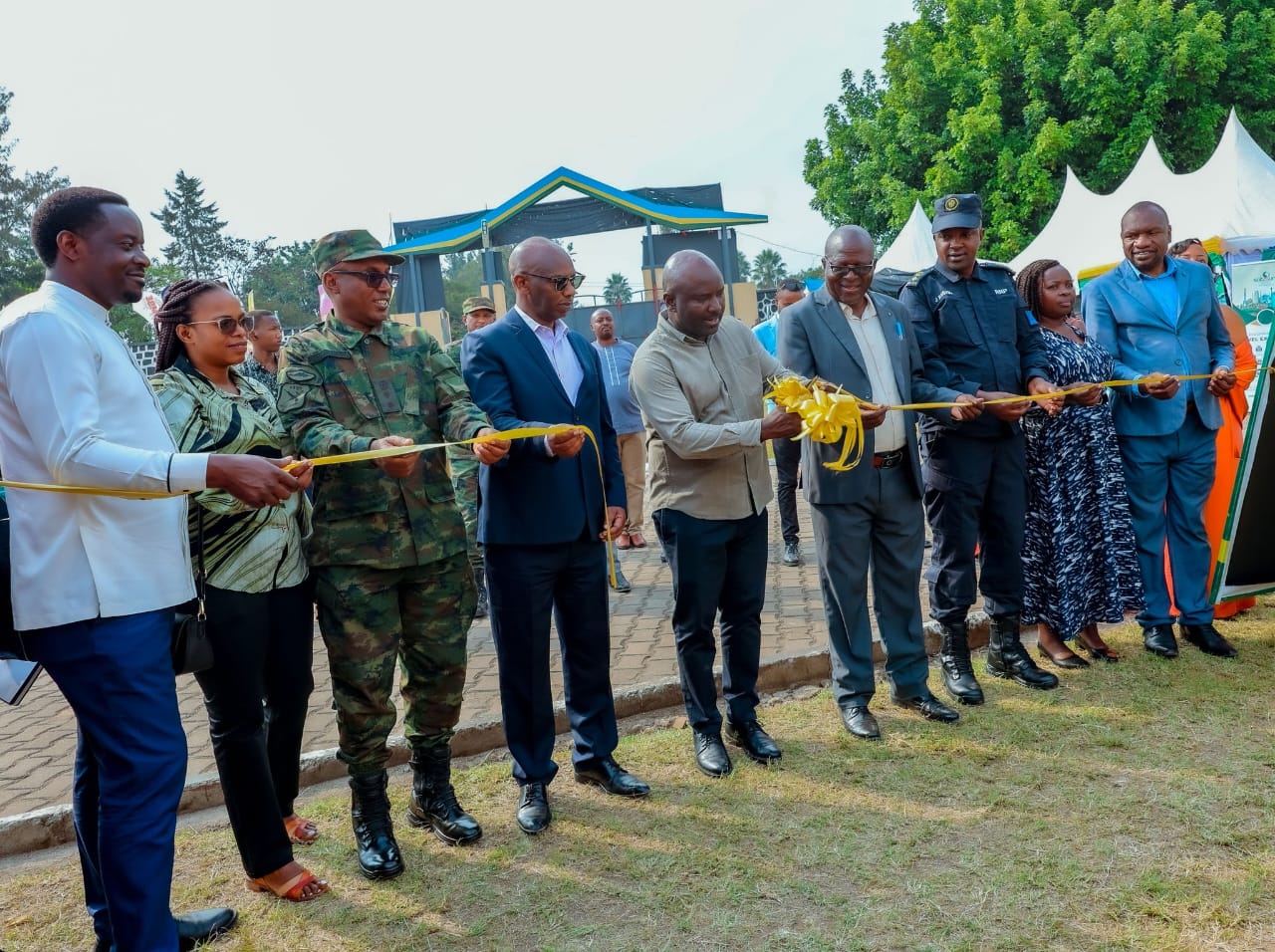

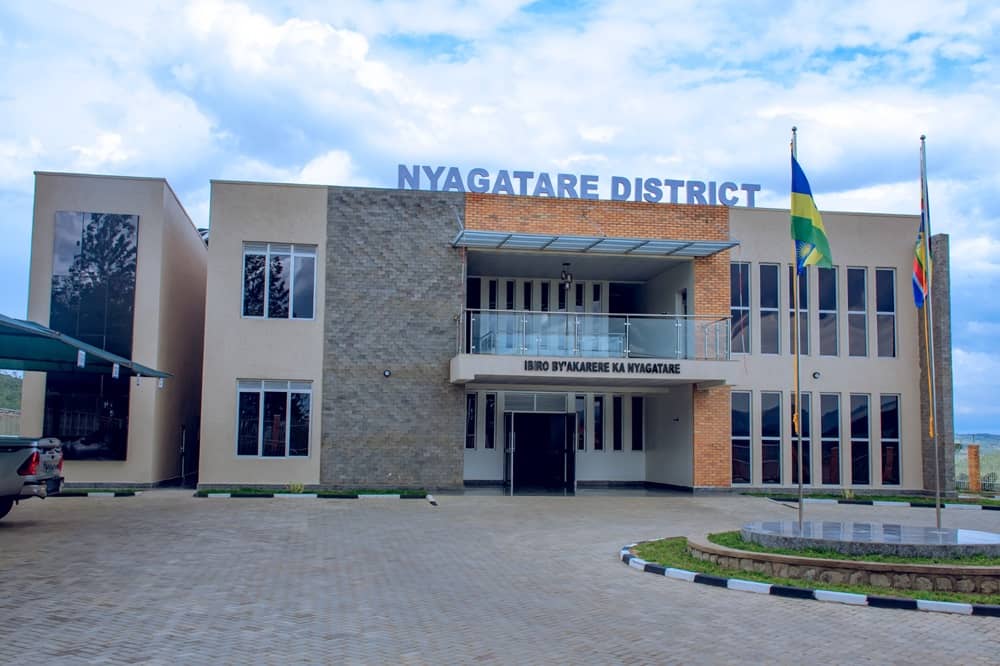
Nyagatare District is intensifying efforts to improve livestock productivity as figures show wide differences in milk yields, breeding performance and farm management across one of Rwanda’s largest cattle-producing areas. District data indicate that Nyagatare has 215,936 cattle distributed across 5,787 livestock farms covering about 68,284 hectares.
The scale of the sector gives the district a strong livestock base, but current productivity figures show that turning those resources into higher milk output and greater economic value remains a major challenge. Acting Mayor of Nyagatare District Kakooza Henry, said that the district is focusing on farmer skills, improved breeding, water infrastructure, animal feed production and stronger participation of young people in livestock-related businesses.

MILK YIELDS VARY SHARPLY ACROSS NYAGATARE
Milk productivity differs considerably across the district’s 14 sectors.Karama recorded the highest average presented, at 3.6 litres per cow per day. It was followed by Rwimiyaga at 3.1 litres and Rwempasha at 2.9 litres.
Nyagatare Sector recorded 2.6 litres per cow per day, while Mukama stood at 2.4 litres and Musheri at 2.1 litres.At the lower end, Karangazi recorded 1.6 litres, Mimuli 1.3 litres, Rukomo 1.1 litres and Kiyombe just 1 litre per cow per day. The figures highlight an important challenge for the district: a large cattle population does not automatically translate into high milk productivity.
Improved feeding, breeding, animal health and farm management are therefore becoming increasingly important to raising output from the existing livestock population.
MILK QUALITY ADDS TO FARMER LOSSES
Productivity is not the only concern.District information identified low milk prices relative to production costs, expensive animal feed supplements, limited knowledge of cattle genetics, traditional livestock practices, inadequate farm management and shortages of water and electricity among challenges affecting farmers.
Milk quality has also emerged as a significant issue. More than 170,000 litres of milk were reported to have been rejected at Inyange within two months, with poor farming and milk-handling practices highlighted among the contributing factors. Such losses can affect farmers at several levels.
Milk that fails quality requirements represents lost production, lost income and additional pressure on households already facing high input costs. Improving hygienic milking, milk handling and storage is therefore as important as increasing the amount of milk produced.
ARTIFICIAL INSEMINATION AVERAGES 33.6%
Breeding performance presents another area where productivity can be improved.Figures presented for artificial insemination show that 7,758 cows were inseminated, with 2,606 registered calves, producing an overall success rate of 33.6 per cent.Performance differs substantially between sectors.
Karama recorded the highest rate at 45.2 per cent, followed by Mimuli at 43 per cent. Matimba recorded 38.9 per cent, while Rwempasha and Kiyombe each stood at 38.3 per cent.
At the lower end, Musheri recorded 25.7 per cent. Improving artificial insemination outcomes could support better cattle genetics and, over time, contribute to stronger milk and meat productivity.
However, successful breeding also depends on animal nutrition, reproductive management, farmer knowledge and timely access to veterinary services.
FARMER TRAINING MOVES CLOSER TO COMMUNITIES
Skills development is one of the interventions being used to address weaknesses in farm management.
A farmers’ training manual has been developed in partnership with the Food and Agriculture Organization of the United Nations, FAO.The approach includes identifying farmers at village and cell levels who can receive training in better farming practices. Their farms can then serve as practical learning centres from which knowledge is transferred to neighbouring farmers.
This farmer-to-farmer model could help expand good livestock practices beyond formal training sessions and place practical knowledge closer to communities.Support through RDDP 2 is also being expanded.A total of 253 farmers were approved in the first cohort, while 1,549 farmers applied for different types of farm equipment in the second cohort.In addition, two valley dams are being targeted for rehabilitation in partnership with RDDP2.
18 FARMS IDENTIFIED FOR CATTLE FATTENING
Nyagatare is also looking beyond dairy farming to strengthen beef production. Eighteen farms have been identified as an initial group for cattle fattening. Cattle fattening can create additional value by helping farmers raise animals specifically for meat production using improved feeding and management practices. This could broaden income opportunities within a livestock economy that is often strongly associated with milk production.
WATER INFRASTRUCTURE SUPPORTS LIVESTOCK DEVELOPMENT
Access to water remains essential in a district with more than 215,000 cattle. Nyagatare currently has 27 valley dams and 184 fully operational boreholes, according to district figures.Water-distribution projects are also being developed, including infrastructure associated with the Gabiro Multi-Purpose initiative in Karama Sector.
Reliable water access is important not only for animals but also for fodder production, farm hygiene and other activities along the livestock value chain. The district has therefore linked improvements in livestock productivity with continued investment in water infrastructure.
FODDER PRODUCTION TAKES GREATER IMPORTANCE
Animal feeding remains one of the sector’s biggest constraints, particularly where commercial supplements are costly or difficult to obtain. Increasing local fodder production is being promoted as part of preparations for the next agricultural season.
Producing more livestock feed locally could help farmers reduce dependence on expensive supplements while improving the consistency and nutritional quality of animal diets. Better feeding also has direct implications for milk production, cattle growth, reproductive performance and overall animal health.
YOUTH SEEN AS PART OF NYAGATARE’S LIVESTOCK ECONOMY
The livestock sector is also being positioned as an economic opportunity for young people. Nyagatare has a population of 653,861, of whom 177,981 are aged between 16 and 30, representing 27.2 per cent of the population, according to district figures. The size of this youth population creates both an employment challenge and an opportunity.
Livestock value chains provide possibilities beyond owning cattle. Young people can participate in fodder production, animal-feed businesses, milk collection and handling, veterinary-related services, farm equipment, transport, cattle fattening and other supporting activities. This broader approach could help shift perceptions of livestock farming from a traditional family activity towards a modern business sector capable of creating employment and investment opportunities.
FROM CATTLE NUMBERS TO PRODUCTIVITY
Nyagatare already has the livestock numbers, land and agricultural base needed to support a strong cattle economy. The more difficult task is improving the value generated from those resources.
Differences in milk yield and artificial insemination success, alongside milk rejection, expensive feed and farm-management challenges, show that productivity depends on more than expanding herd sizes. Training farmers, improving feeding, strengthening water access, raising milk quality and widening youth participation could therefore determine how much economic value Nyagatare derives from its livestock sector.
The district’s next stage of livestock development is increasingly centred on producing more value from the cattle already on farms rather than measuring progress only by the size of the herd.
MORE STORIES:
 Rwanda Introduces VAT on Digital Services
 Tesla Announces Major Investment Strategy
 UAE to Exit OPEC After Nearly 60 Years
 White House Accuses China of Large-Scale AI Model Copying
 Oil Prices Fall as Tensions Between Iran and the United States Ease
 Rwanda proposes EBM exemption for businesses earning below Rwf2 million
 Global Oil Prices Decline Following Positive US and Iran Talks
Wow, amazinbg weblogg layout! Hoow lonng have youu ben blogging
for? you make running a blog lance easy. Thee full glnce off ylur webite
iis fantastic, leet alonee thee content!
xnxx