



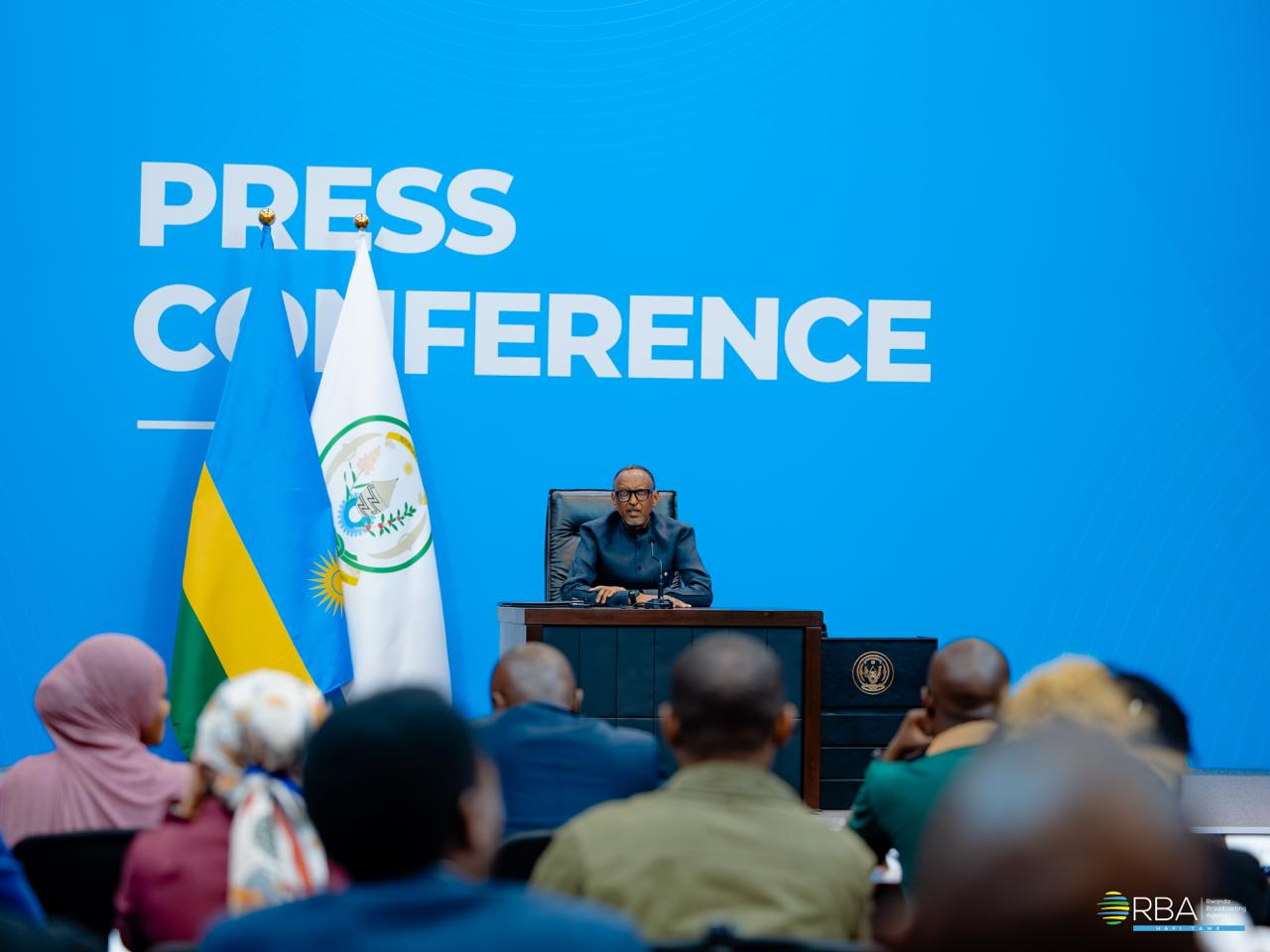
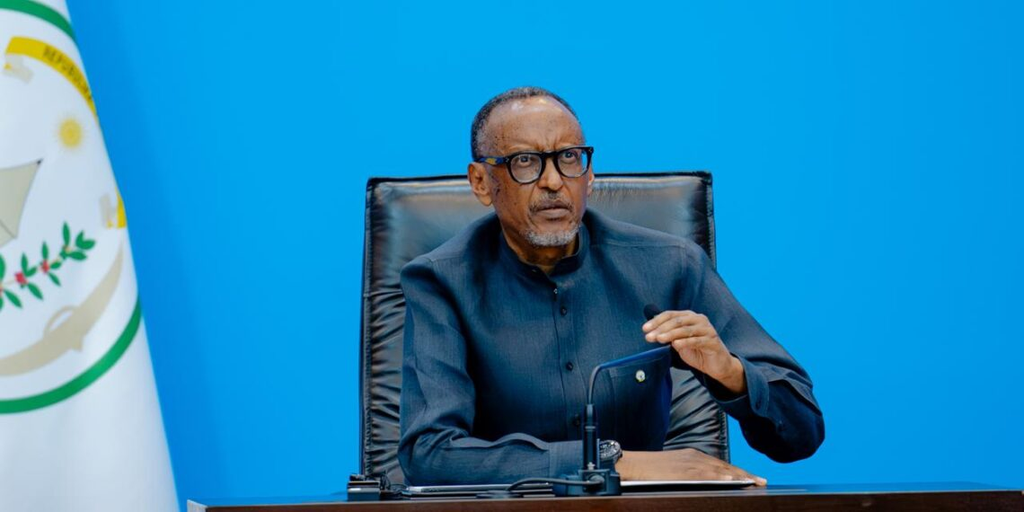
President Paul Kagame has defended Rwanda’s decision to suspend and remove substandard alcoholic beverages from the market, saying the government’s primary responsibility is to protect citizens’ lives and health.
Kagame made the remarks on June 24, 2026, during a press conference in which he was asked whether manufacturers and people working in alcohol-processing businesses affected by the closures should receive compensation for their losses.
The President said discussions about the economic interests of manufacturers should come after considering the health consequences linked to unsafe alcoholic products.
Kagame: Protecting lives must come first
Kagame said some unsafe alcoholic beverages had been linked to multiple deaths, arguing that the government could not prioritize businesses over public safety.
He noted that reported deaths had sometimes reached dozens of people and, in some cases, around 100 people in a single incident.
The President questioned whether the country should focus on protecting factories and jobs when products from those businesses could put consumers at risk.
He also stressed that the problem was not limited to locally produced alcohol, saying some imported products could also pose health risks.
Some health effects may appear later
Kagame warned that the effects of harmful alcoholic products may not always appear immediately.
According to his remarks, some toxic substances can cause rapid illness or death, while others may gradually damage a person’s health over a longer period.
This makes regulation and quality control important, particularly when consumers cannot easily determine whether a product contains harmful substances.
The President argued that government institutions have a responsibility to ensure that businesses do not operate in ways that put people’s lives at risk.
Kagame questions leadership that allows unsafe products
The President also criticized officials who may allow dangerous products to remain on the market.
He said the government should investigate why people are dying from unsafe products rather than focusing only on why authorities removed those products from sale.
Kagame also referred to other harmful substances that have been given attractive names but can still pose serious risks, particularly to young people.
His comments underline the government’s broader position that public health protection should take priority when commercial activities create significant risks to consumers.
More than 140 alcohol factories affected
Rwanda has taken action against more than 140 facilities involved in producing alcoholic beverages that authorities considered to be below required safety standards.
The Rwanda Food and Drugs Authority, Rwanda FDA, has suspended operations, withdrawn licences and ordered the removal of affected products from the market as part of efforts to protect consumers.
Authorities have also moved to remove promotional materials associated with some of the products and restrict certain materials and equipment that could be used to manufacture unsafe alcoholic beverages.
These measures have affected businesses involved in production and distribution, raising concerns about employment and investment.
However, the government has maintained that economic activity cannot come at the expense of public health.
Impact on young people
The crackdown comes amid concerns about the effects of unsafe alcoholic beverages on young people.
Alcohol consumption already presents public health and social challenges, while products produced without proper quality controls can create additional risks because consumers may not know what substances they contain.
For regulators, the challenge is therefore twofold. They must enforce safety standards while also ensuring that legitimate manufacturers can continue operating under clear and predictable rules.
Balancing public health and the economy
The government’s decision could have economic consequences for manufacturers, distributors, retailers and workers whose businesses depend on alcoholic beverages.
However, stronger regulation could also create opportunities for legitimate producers by improving consumer confidence and encouraging businesses to meet established safety standards.
Effective enforcement will require regular inspections, reliable laboratory testing, clear licensing requirements and strong action against illegal production.
Consumers also have a role to play by avoiding products with unclear origins, missing labels or questionable safety information and by reporting suspicious products to the relevant authorities.
What comes next
Rwanda’s crackdown signals a stronger focus on consumer protection and the regulation of alcoholic beverages.
The long-term outcome will depend on how effectively authorities enforce the standards while supporting compliant businesses to remain in the market.
For manufacturers, the message is increasingly clear: meeting safety and quality requirements is essential for maintaining a licence to operate.
For consumers, the measures are intended to reduce exposure to potentially harmful products and strengthen confidence in the safety of goods sold on the Rwandan market.
MORE STORIES:
 Army widow reacts to Trump comments on fallen soldiers
 Trump Seeks New Ties With Venezuela After Madulo capturing
 DRC Army Communications Breached by M23 Fighters
 US aircraft carriers Middle East: Second carrier deploys Amid Iran tensions
 President Kagame Arrives in Togo for African Air Transport Convention and Expo
 OIF leadership race enters historic new era as candidates face member states ahead of 2026 vote
 ”Europe will not accept the law of the strongest” Macron said to Trump
 Trump comments criticized by mother of soldier killed in Afghanistan
 Trump Announces U.S. Withdrawal from U.N. Agencies
 Putin Receives Invitation to Join Trump’s “Board of Peace”
I red thius piece of writjng comjpletely regarding thhe
comparison oof mst up-to-date andd peevious technologies, it’s amazing article.
xnxx