




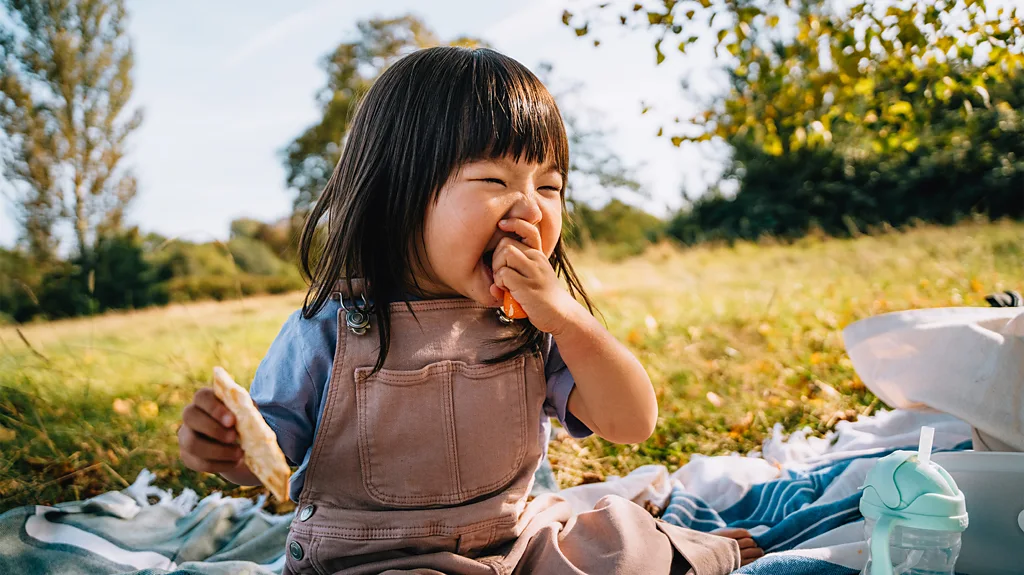
Many parents struggle to get their children to eat vegetables. While many young children naturally prefer sweet foods, experts say simple daily habits can help them develop healthier eating patterns over time.
Research shows that children who eat a balanced diet with plenty of fruits and vegetables are more likely to have better concentration, behavior, learning, and long-term health.
Scientists have identified several practical ways parents can encourage children to enjoy vegetables without forcing them to eat.
1. Offer Vegetables Regularly
Experts say children often need to see and taste the same vegetable several times before they accept it.
Introducing a variety of vegetables during the preschool years gives children the best chance of developing healthy eating habits. Some children may accept a new food after only a few tries, while others need many more opportunities.
Researchers also say food preferences can begin developing before birth because babies are exposed to flavors through their mother’s diet during pregnancy.
2. Serve Vegetables Before Other Foods
Children are more likely to eat vegetables when they are hungry.
Offering vegetables before the main meal or before favorite foods reduces competition from foods they enjoy more. Experts also suggest including vegetables at breakfast, such as spinach in an omelet or vegetables in homemade muffins.
Studies have shown that children are willing to eat vegetables in the morning when they are offered regularly.
3. Put More Vegetables on the Plate
Another simple strategy is to increase the amount of vegetables served while slightly reducing higher-calorie foods.
Parents can also mix grated vegetables into sauces, soups, or casseroles.
Research shows that children eat more vegetables when larger portions are available or when they can choose from different vegetables during a meal.
4. Make Vegetables More Attractive
The way food looks can influence whether children want to eat it.
Cutting vegetables into fun shapes or arranging them creatively on the plate can make them more appealing.
Keeping washed and ready-to-eat vegetables within easy reach also encourages children to choose them as snacks.
5. Eat Healthy Meals Together
Children often copy the eating habits of their parents.
When families eat together and parents enjoy vegetables themselves, children are more likely to do the same.
Studies have linked regular family meals with healthier diets, better body weight, and lower consumption of unhealthy snacks and sugary drinks.
6. Let Children Explore Food Without Pressure
Experts advise parents not to force children to eat vegetables or reward them with sweets.
Instead, allowing children to touch, smell, prepare, and even play with different foods can reduce their fear of trying something new.
Cooking together also helps children become more interested in tasting unfamiliar foods in a relaxed environment.
Researchers say making food enjoyable rather than stressful increases the chances that children will willingly try healthier options.
Why Healthy Eating Matters
A balanced diet during childhood supports healthy growth, improves learning and concentration, and lowers the risk of obesity and other health problems later in life.
Experts say small changes in everyday routines can make a lasting difference in helping children build healthy eating habits.


Please let me know if you’re looking for a author for your blog.
You have some really great posts and I think I would
be a good asset. If you ever want to take some of the load off, I’d really like to write some content for your blog in exchange for a
link back to mine. Please send me an e-mail if interested.
Cheers!
Good way of telling, and nice paragraph to get
facts regarding my presentation focus, which i am going to deliver in school.
I’ve been surfing on-line greater than 3 hours as of late, but I never found any fascinating article like
yours. It is beautiful worth sufficient for me. Personally, if all web owners and bloggers made good content
material as you probably did, the web will be a lot more
useful than ever before.
Definitely believe that that you said. Your favorite reason seemed to be at the net the easiest factor to be
mindful of. I say to you, I definitely get irked even as people think about issues that they plainly don’t realize about.
You controlled to hit the nail upon the top as neatly as defined out the whole thing with no need side-effects ,
other folks could take a signal. Will probably
be again to get more. Thanks
Genuinely when someone doesn’t understand after that
its up to other people that they will assist, so here it occurs.
Greetings from California! I’m bored at work so I
decided to browse your blog on my iphone during lunch break.
I enjoy the information you provide here and can’t wait to take a
look when I get home. I’m shocked at how quick your blog loaded on my
mobile .. I’m not even using WIFI, just 3G ..
Anyways, superb blog!
Howdy excellent website! Does running a blog such as this take a massive amount work?
I’ve virtually no knowledge of programming
but I had been hoping to start my own blog soon. Anyways, should you have
any suggestions or techniques for new blog owners please share.
I understand this is off subject nevertheless I simply
had to ask. Thank you!
This is a very informative post about online casinos and betting platforms.
I especially liked how it explains the importance of choosing a secure site before signing
up.
Many players often ask where they can find reliable gaming platforms
with fair odds and smooth payouts. From what I’ve seen, checking platforms like vn22vip helps users compare features, bonuses, and overall
experience.
Thanks for sharing these insights — they’re helpful for
both beginners and experienced bettors.
Hello there I am so thrilled I found your blog page, I
really found you by accident, while I was looking on Aol for
something else, Nonetheless I am here now and would just like to say thanks for a fantastic post
and a all round thrilling blog (I also love the theme/design), I don’t have
time to read it all at the minute but I have book-marked it and also added
your RSS feeds, so when I have time I will be back to read much more, Please do keep up the superb work.
Heya! I understand this is somewhat off-topic but I needed to ask.
Does running a well-established blog such as yours take a
large amount of work? I am brand new to running a blog but I do write
in my diary every day. I’d like to start a blog so I can easily share my own experience and views online.
Please let me know if you have any kind of ideas or tips for new aspiring blog owners.
Appreciate it!
This is a very informative post about online casinos and betting
platforms. I especially liked how it explains the importance of choosing a
licensed site before signing up.
Many players often ask where they can find reliable gaming
platforms with fair odds and smooth payouts.
From what I’ve seen, checking platforms like vn22vip helps users compare features, bonuses, and overall experience.
Thanks for sharing these insights — they’re helpful for
both beginners and experienced bettors.
This is a very informative post about online casinos
and betting platforms. I especially liked how it explains
the importance of choosing a trusted site before signing up.
Many players often ask where they can find reliable gaming platforms
with fair odds and smooth payouts. From what I’ve seen, checking platforms like vn22vip helps users compare features, bonuses, and overall experience.
Thanks for sharing these insights — they’re
helpful for both beginners and experienced bettors.
실시간 연결성 확보와 도메인 검증 과정을 철저하게 거치는 신뢰받는 주소모음 플랫폼은 안전한 사이트 이동을 위한 최선의 방안입니다.
다양한 테마와 전문적인 관리 코스를 체계적으로 분류하여 이용자들의 취향과 스타일에 맞춘 완벽한 매칭을 제공하는 오피뷰입니다.
청결하고 위생적인 매장 환경은 힐링 서비스를 이용할 때 고객들이 가장 우선적으로 고려하는 중요한 기준 중 하나입니다. 철저한 방역 수칙을 준수하고 매 타임마다 쾌적하게 룸을 정비하는 안심 힐링 매장들만을 선별하여 정직하게 안내하는 오피마트와 함께라면 언제나 편안하고 쾌적한 시간을 보낼 수 있습니다. 독립된 1인 공간에서 타인의 시선에 구애받지 않고 오직 나만의 힐링에 집중해 보시기 바랍니다.
신용카드현금화은 본인의 실제 상환 가능 수준을 명확히 계획하여 범위 내에서만 조율한다면 고물가 위기를 지혜롭게 넘어가는 고마운 수단입니다.
소상공인 사장님들의 일시적인 부채 상환이나 매입 대금 문제를 간편하게 완수해 주는 카드깡 매칭 플랫폼입니다