




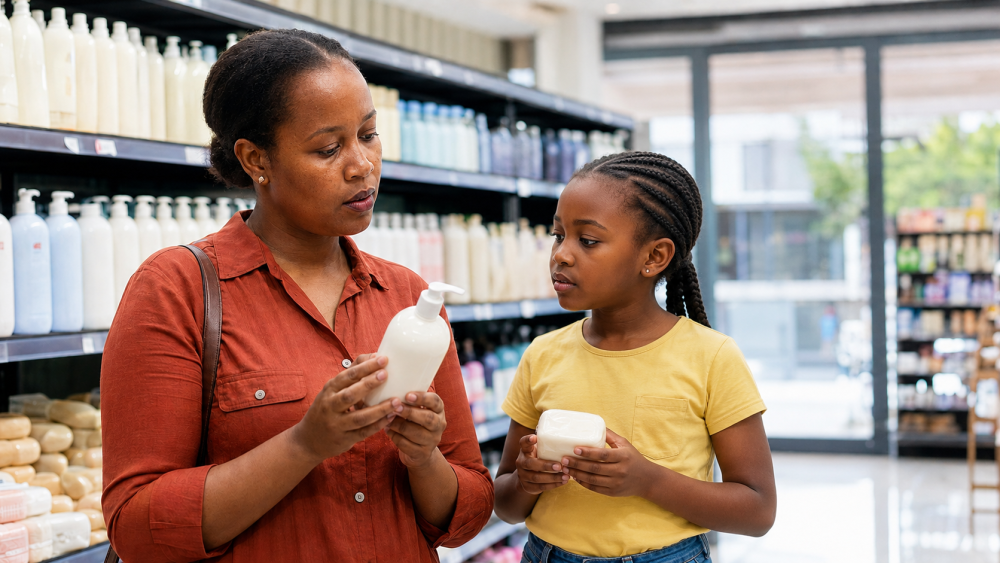
A chemical used in some fragrances, cosmetics and scented personal-care products may influence biological processes linked to puberty, according to a new study by researchers in the United States.
The research identified musk ambrette, a synthetic fragrance compound, as a chemical that may affect the part of the brain responsible for initiating puberty.
Researchers from the U.S. National Institute of Environmental Health Sciences studied thousands of chemicals to understand whether substances commonly found in medicines, consumer products and the environment could interfere with the biological signals that control puberty.
However, the researchers emphasized that the findings represent an early step in understanding the possible connection. The study does not establish that using soaps, perfumes, lotions or other products containing musk ambrette directly causes children to enter puberty earlier than expected.
How the chemical may affect the brain
The study focused on the hypothalamus, a region of the brain that plays an important role in regulating hormones and the body’s reproductive system.
Researchers found that musk ambrette may interact with cells in the hypothalamus and stimulate the production of gonadotropin-releasing hormone, or GnRH.
GnRH helps initiate a chain of hormonal changes associated with puberty. These changes eventually contribute to the production of hormones such as estrogen, testosterone and progesterone.
The researchers tested the chemical on human hypothalamic cells and zebrafish models. Their experiments showed that musk ambrette could trigger the production of GnRH.
Dr. Natalie Shaw, an endocrinology specialist who helped lead the research, said the study is among the first efforts to examine how environmental chemicals could potentially influence the brain mechanisms involved in the timing of puberty.
What is early puberty?
Puberty normally begins at different ages depending on the individual. However, medical experts generally consider puberty before age eight in girls and before age nine in boys to be unusually early.
Early puberty can sometimes have consequences for physical development and may require medical assessment to identify the underlying cause.
Researchers have previously linked early puberty to several factors, including genetics, nutrition, obesity, lifestyle and exposure to chemicals that can interfere with the body’s hormonal system.
The new research adds another possible environmental factor for scientists to investigate.
Researchers screened thousands of chemicals
The researchers examined approximately 10,000 chemicals found in medicines, environmental substances and dietary supplements.
They identified several compounds that could potentially influence the biological pathways associated with puberty.
Musk ambrette attracted particular attention because people can encounter it through fragranced consumer products.
The compound has been used as a fragrance ingredient and can be found in some scented products, although its use and availability vary depending on regulations and product formulations.
Researchers say its potential effect on the brain deserves further investigation because exposure to fragrance chemicals can occur repeatedly through everyday consumer products.
The study does not prove causation
Despite the findings, scientists are urging the public not to conclude that fragranced soaps, lotions or perfumes cause early puberty.
The research mainly examined biological mechanisms in laboratory settings. Scientists still need to establish whether the same process occurs in humans who encounter musk ambrette through everyday products.
Further studies will need to examine exposure levels in people, determine how much of the chemical enters the bloodstream and establish whether those concentrations can influence puberty.
Researchers may also need to conduct additional studies using appropriate animal models before drawing stronger conclusions about the chemical’s effects.
Dr. Apisadaporn Thambundit, an endocrinology specialist at UCLA, said the evidence currently available is not strong enough to justify new recommendations for parents.
Why the findings matter
The research could contribute to a wider scientific discussion about how environmental chemicals interact with the human endocrine system.
Scientists have increasingly examined substances known as endocrine-disrupting chemicals because they can potentially interfere with hormones that control important functions in the body.
Puberty represents one of the body’s major hormone-driven developmental processes. Understanding the factors that influence its timing could therefore help researchers better understand why some children experience significant changes earlier than others.
The findings could also encourage manufacturers and regulators to examine the safety of fragrance ingredients more closely, particularly when children may have repeated exposure.
What parents can do for now
Because the study does not establish a direct link between musk ambrette-containing products and early puberty, parents do not need to make sudden changes based solely on these findings.
However, families who want to reduce children’s exposure to unnecessary fragrance chemicals can check product ingredient labels and choose fragrance-free soaps, lotions and other personal-care products when practical.
Parents should also seek medical advice if a child shows signs of puberty unusually early. A healthcare professional can assess the child’s development and determine whether further testing is necessary.
More research is needed
The researchers say the next stage will involve determining whether musk ambrette produces similar effects in humans under real-world exposure conditions.
Scientists will also need to measure levels of the chemical in human blood and examine whether those levels are sufficient to affect the hormonal pathways involved in puberty.
If future research confirms a connection, regulators could eventually consider whether certain fragrance ingredients require additional safety assessments or restrictions.
For now, the study provides an important scientific lead rather than a final conclusion.
The research highlights a broader challenge in public health, identifying how everyday environmental exposures may interact with complex biological processes. As scientists continue investigating these links, consumers, manufacturers and regulators will need reliable evidence before making major decisions about product safety.
MORE STORIES:
 Nature Boosts Health in Just 20 Minutes
 Tanzania Strengthens Access to Advanced Erectile Dysfunction Treatment
 Late Diagnosis Remains a Major Challenge for Stomach Cancer in Rwanda
 Research shows how pornographic contents affect human brain especially children.
 France Confirms First Ebola Case
 Ai is becoming a valuable tool in reproductive medicine
 New Cancer Research Takes Center Stage at ASCO 2026
 Inside the Ebola Crisis in Congo: Fear, Denial, and a Fragile Health System
 Africa CDC Calls Urgent Meeting Over Ebola Case
 Research Finds Non-Legal Barriers Continue to Limit Access to Safe Abortion Services in Rwanda