



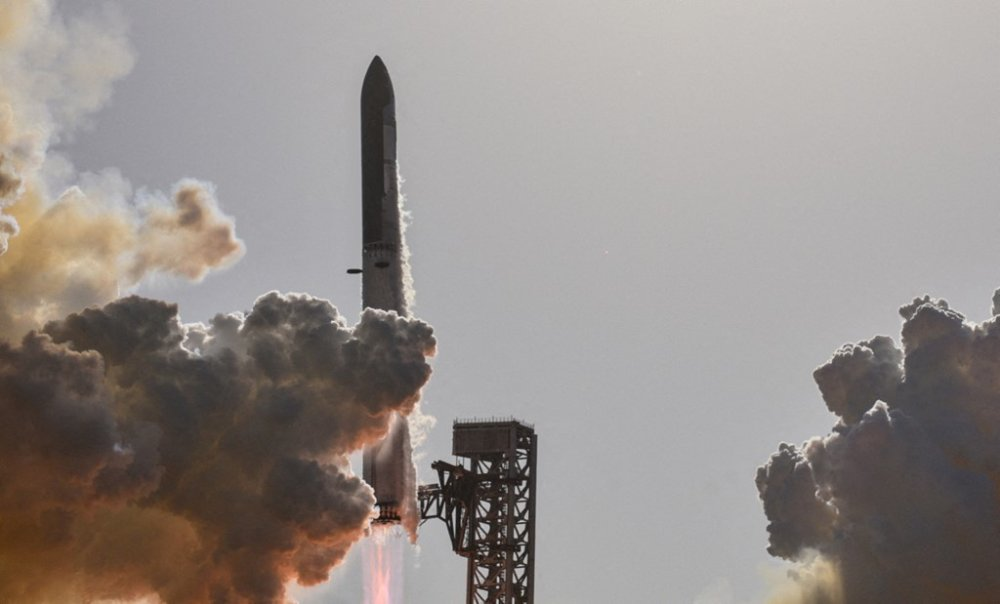
A roughly four-ton upper-stage section from a SpaceX Falcon 9 rocket crashed into the Moon on Wednesday, August 5, 2026, after drifting through space for more than a year.
The impact involved the upper stage of a Falcon 9 launched in January 2025 as part of a mission intended to deliver a spacecraft to the Moon. Unlike many rocket stages used for missions around Earth, this section did not return to Earth because the mission required additional energy to reach lunar orbit and the Moon.
How the crash happened
The rocket stage had a mass of about 4,000 kilograms. After completing its role in the lunar mission, it exhausted its available fuel and could no longer make significant course corrections.
Scientists had predicted that the object would collide with the Moon at around 7:35 a.m. UK time on August 5. The impact occurred at high speed and is expected to have created a new crater and a cloud of lunar dust.
Although researchers considered the possibility that telescopes might detect a brief flash at the moment of impact, observers did not immediately identify a clear visual signal.
Scientists expect spacecraft currently orbiting the Moon could eventually provide images of the impact site. Those observations may help researchers determine the size of the crater and study how lunar soil responds when struck by large objects.
Why did the rocket stage hit the Moon?
SpaceX did not deliberately send the rocket stage into the Moon. Instead, its trajectory changed over time under the influence of gravitational forces and solar activity.
Once the stage ran out of fuel, it had little ability to alter its path. As a result, its long-term trajectory eventually brought it into contact with the lunar surface.
The event highlights the difficulty of predicting the movement of large objects that remain in space after completing their primary missions.
A growing issue for space exploration
The crash did not pose a threat to Earth. However, scientists say it provides another example of the growing amount of human-made material traveling through space.
Rocket stages, satellites and other spacecraft can remain in orbit or on trajectories around the Earth, Moon and other destinations long after their missions end. As space activity increases, managing these objects will become increasingly important.
The issue could become more significant as governments and private companies prepare for more frequent lunar missions.
NASA plans to support a new era of lunar exploration, including missions designed to establish a more sustained human presence around and on the Moon. Private companies are also developing spacecraft and launch systems intended for lunar transportation and exploration.
What scientists could learn from the impact
The collision offers researchers an unexpected opportunity to study the Moon.
By examining the resulting crater, scientists may learn more about the physical properties of the lunar surface and how it reacts to high-speed impacts. Such information could also help researchers understand the risks that future lunar infrastructure may face from natural objects and human-made debris.
The event could therefore provide useful data for future missions, particularly as lunar exploration expands.
What happens next?
Researchers are expected to rely on lunar-orbiting spacecraft to locate and photograph the impact site. These observations could confirm the size and characteristics of the crater created by the Falcon 9 stage.
The incident also reinforces the need for better planning when missions send large objects beyond Earth’s orbit. Future spacecraft could require more precise disposal strategies or controlled trajectories to reduce the chance of unintended impacts.
As lunar missions become more common, space agencies and private companies will need to consider not only how to reach the Moon, but also what happens to spacecraft and rocket components after their missions end.
Future outlook
The Falcon 9 impact is unlikely to cause immediate problems for Earth or future lunar missions. However, it demonstrates that space traffic management will become more important as human activity beyond Earth increases.
Better tracking, improved trajectory planning and responsible disposal strategies could help reduce unwanted encounters with the Moon and other celestial bodies.
MORE STORIES:
 The Hidden Risks of Smart Toys for children under 5 years
 Google Expands AI Creative Tools
 Rwanda Partners with UAE, Malaysia for AI Boost
 Google Prepares New AI Driven Laptop
 NVIDIA helps Germany lead Europe’s AI manufacturing race
 Blue Origin Suffers Major Setback After New Glenn Rocket Explosion
 AI Explained Simply: A Beginner’s Guide for Everyone
 ChatGPT Integrated with Adobe Photoshop to Simplify Photo Editing
 AI Makes Workers Faster But Also Creates Friction and Mistrust at Work
 xAI Founders Depart as Company Undergoes Major Restructuring