


The United States said it carried out military strikes against Iranian targets over the weekend. Iran responded by saying it attacked an American military base. The incidents mark the third major escalation in a week around the Strait of Hormuz.
The latest developments come as efforts to reach a broader agreement between Washington and Tehran continue to face challenges.
US and Iran Exchange New Strikes
US Central Command (CENTCOM) said it launched self-defence strikes after what it described as aggressive actions by Iran. According to the US military, those actions included the shooting down of an American drone over international waters.
Iran’s Islamic Revolutionary Guard Corps (IRGC) said it targeted an air base used by US forces during operations against southern Iran.
US President Donald Trump commented on the situation in a post on Truth Social. He urged critics to remain calm and said he believed everything would work out well. Trump also stated that Iran wants to make a deal with the United States.
Kuwait Reports Missile and Drone Attacks
Kuwait announced that its air defence systems intercepted hostile missiles and drones early Monday. Air raid sirens sounded across the country, according to state news agency KUNA.
Later, Kuwait’s foreign ministry strongly condemned what it called repeated Iranian attacks. Officials described the incidents as a dangerous escalation and a direct assault on the country.
The ministry said Kuwait reserves the right to take all necessary measures to protect its territory and people.
US Military Details Weekend Operation
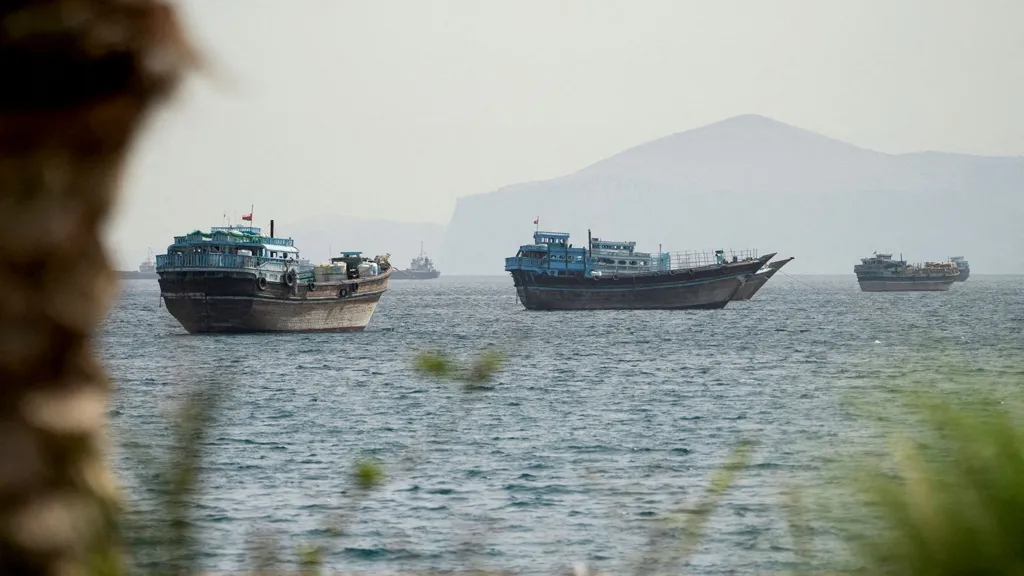
CENTCOM said US forces carried out strikes on Iranian radar systems and drone command sites in Goruk, near Iran’s southern coast, and on Qeshm Island in the Strait of Hormuz.
The US military said fighter jets struck air defence systems, a drone control station, and two drones that posed a threat to ships operating in regional waters.
CENTCOM added that no American personnel were injured during the operation.
Iran Condemns the Attacks
Iran’s foreign ministry criticized the US strikes and described them as a violation of the ceasefire.
The IRGC said it targeted a base that US forces allegedly used to attack a communications tower on Sirik Island in the Gulf.
Iranian military officials also warned that any future US attacks would trigger a much stronger response.
Negotiations Face New Challenges
The latest clashes came after negotiations aimed at ending months of conflict failed to make progress over the weekend.
According to CBS News, President Trump requested changes to a proposed agreement. The reported changes involve the Strait of Hormuz and the removal of highly enriched uranium.
Iran’s foreign ministry accused the United States of changing its position during the talks.
Spokesperson Esmail Baghaei said Washington had introduced new and contradictory demands. He argued that such changes would delay progress.
Iran’s chief negotiator previously said Tehran would not accept any agreement unless the country’s rights were fully protected.
Dispute Over Nuclear Talks
A ceasefire took effect on 8 April. However, the United States and Iran have not reached a permanent agreement.
Trump has repeatedly said negotiations remain active and that both sides are working toward a broader deal.
Last week, Trump and senior advisers met to discuss extending the ceasefire. The meeting ended without a final decision.
CBS News reported that the latest proposal includes a 60-day ceasefire and a plan to reopen the Strait of Hormuz. The waterway handles about one-fifth of global oil and liquefied natural gas shipments.
Reports also suggested the proposal could restart talks on Iran’s nuclear programme.
Baghaei rejected those claims on Monday.
“No negotiations have taken place on the details of the nuclear file. At this stage, our priority is ending the war,” he told reporters.
He also said ending the conflict in Lebanon remains an important condition for any agreement. According to Baghaei, Washington and Tehran have not yet reached a final conclusion.
Lebanon Conflict Adds Pressure
Lebanon became involved in the wider conflict on 2 March.
The Iran-backed Hezbollah group launched rockets into Israel after an Israeli strike killed Iran’s Supreme Leader Ali Khamenei.
Israel responded with air strikes across Lebanon and later launched a ground offensive.
MORE STORIES:
 Attack Reported at US Vice President JD Vance’s Home
 Mogadishu municipal elections mark historic step toward direct democracy in Somalia
 37-Year-Old Woman Killed by Lightning as Heavy Rains Hit Gisagara
 Utah Prosecutors Reveal Note Written by Suspect Before Killing of Charlie Kirk
 Uganda election results 2026: Museveni takes early lead as deadly violence erupts
 DJ Toxxyk Fined in Fatal Accident Case
 Supreme Court Reviews State Bans on Transgender Athletes
 Harvard Stands Up to Trump: But for How Long Can It Hold the Line?
 Global pressure forces xAI to limit Grok image features
 Trump purchases Netflix and warner bros bonds during major media bidding war
Verry good article. I am experijencing a feew of tese issues ass well..
ql8pj5
qpeki2